

Williams Akpan, Calabar
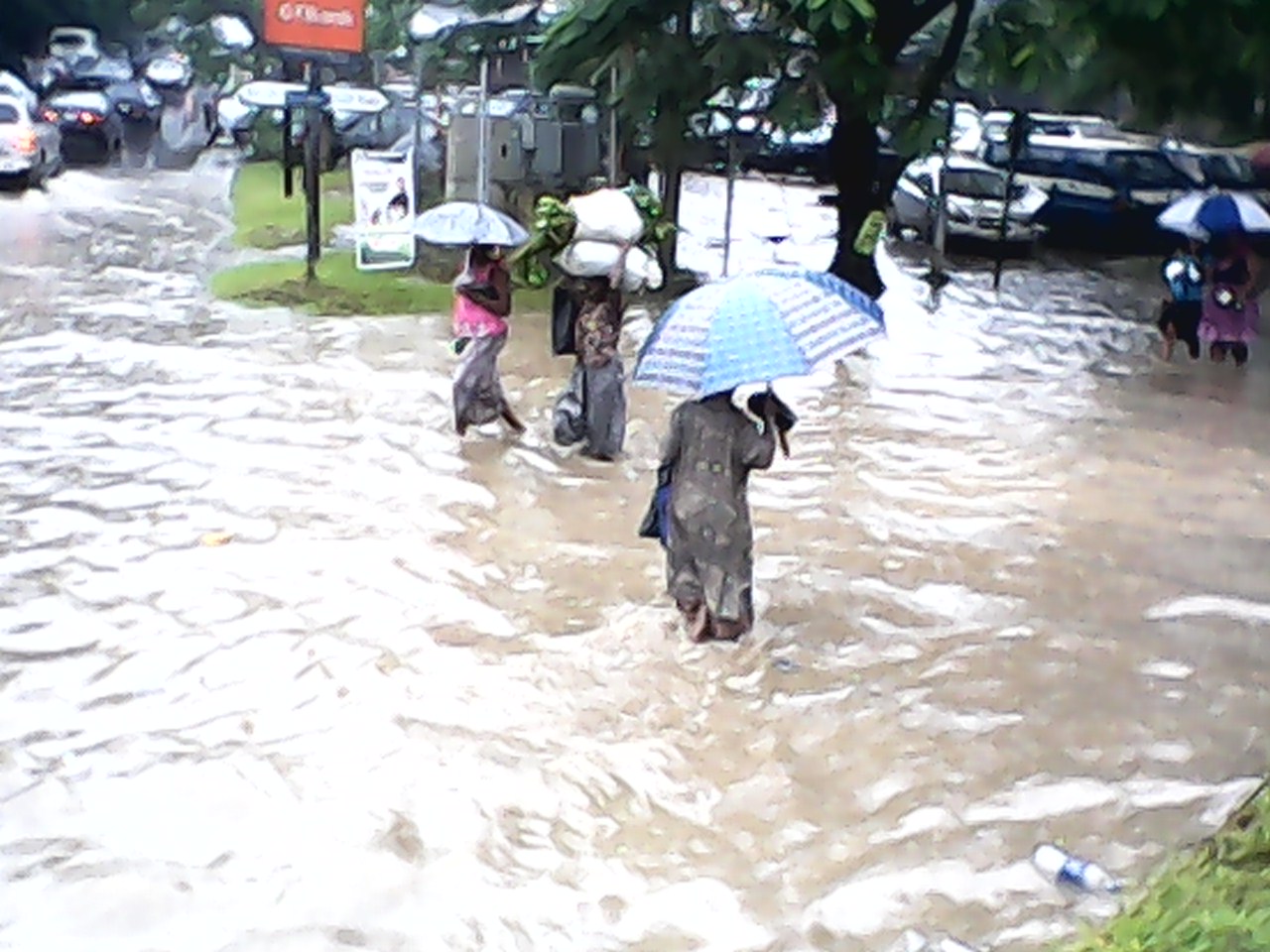
For 10 relentless days, rain pounded Ikot Awatim in Calabar Municipality as though the heavens had forgotten how to stop. Streets disappeared beneath rising floodwaters, drainage channels overflowed, and residents watched helplessly as deep gullies crept towards their homes.
What began as another spell of seasonal rainfall soon turned into one of the worst environmental disasters to hit the community in recent years. As floodwaters soaked the earth, the soil weakened until it could no longer support the buildings standing on it.
Residents described the scene as one of the most devastating natural disasters the community has witnessed in decades.
Then, after days of unrelenting rain, the ground suddenly gave way.
A massive landslide swept through part of Ikot Awatim, burying homes beneath tons of mud, rocks and concrete. Families were trapped inside as neighbours scrambled through the rubble with bare hands and digging tools in desperate attempts to save lives.
Among those caught in the tragedy was the family of Mr. Ubong Kingsley Edu, a security guard employed by a private security company.
Ironically, while Edu was away on night duty protecting other people’s property, disaster struck his own home.
The landslide buried five of his children as they slept. Hours later, rescuers recovered four lifeless bodies from the collapsed building.
The victims were 18-year-old Bright Kingsley Edu, 14-year-old Godswill Kingsley Edu, 12-year-old Richard Kingsley Edu and nine-year-old Daniel Kingsley Edu. Four young lives, each filled with dreams and promise, were extinguished in a single night.
Bright had recently completed the Senior Secondary School Certificate Examination and hoped to study Nursing Science at the university after improving her examination grades and passing the Unified Tertiary Matriculation Examination.
Godswill, a junior secondary school student, often spoke of becoming a university lecturer.
Richard, still in primary school, dreamed of becoming a lawyer. According to his father, he rarely returned from school without sitting down to read his books.
Daniel, the youngest, wanted to become a civil engineer. Like many children, he spoke excitedly about building roads and bridges one day, unaware that his own future would be buried beneath the earth.
Fighting back tears, Edu struggled to explain the pain of losing four children in one night.
“My children were kids that I loved so dearly. I invested everything I had to raise them. They were obedient, respectful and full of promise. But not everything we love in life can be protected.”
The night began like every other shift.
As Edu prepared to round off work, his phone rang repeatedly. It was his eldest son, Isaac.
“Dad, please come home,” Isaac pleaded.
When Edu arrived, there was no home to return to.
His house had become a mound of broken concrete, mud and twisted roofing sheets. Neighbours and youths from the community were already digging frantically, hoping to find survivors.
“I looked at the sky and asked the earth to swallow me too, but it refused,” Edu recalled. “I fainted before neighbours revived me.”
For nearly four hours, about 50 young men armed with shovels, hoes and other digging tools searched tirelessly beneath the debris.
Their determination saved one life.
Edu’s daughter, Imaobong Kingsley, was found alive beneath the rubble. She had been clutching a mobile phone with its flashlight switched on. The tiny beam of light guided rescuers to her location.
She was rushed to the Nigerian Navy Reference Hospital in Calabar, where doctors stabilised her condition.
Still struggling to comprehend her survival, Imaobong simply said:
“We leave everything in the hands of God. He alone knows what happened to us.”
Edu’s wife, Mrs. Aniedi Kingsley, escaped the tragedy because she was away from home, while their eldest children, Isaac and Blessing, had attended a church vigil that night. Both declined to speak publicly, overwhelmed by grief.
One neighbour, Mrs. Grace Bernard, lamented:
“Maybe if their mother had been at home, she could have woken them up and run away with them.”
The disaster extended beyond Edu’s family.
Twenty-three-year-old Jennifer Idoronyin Sunday, an Economics graduate of the University of Calabar, lost her 45-year-old father, Mr. Sunday Ibangha, after floodwaters destroyed their family home.
“We lost our shelter,” Jennifer said. “My mother and my injured younger sister are now staying with one of our uncles because we have nowhere else to live.”
Residents also confirmed the death of a tanker driver identified simply as Mr. Udo, whose house collapsed during the same night.
Another resident, Mrs. Kokonma Edem, said the landslide destroyed the fence surrounding her home and damaged the family’s borehole, leaving them without a reliable source of clean water.
Across Ikot Awatim, the destruction remains visible.
Roads have become nearly impassable as deep erosion cuts through access routes. Drainage channels have collapsed, leaving residents anxious each time dark clouds gather.
Inside many homes still standing, soaked mattresses, damaged furniture, ruined clothing and destroyed household items tell silent stories of lives abruptly interrupted.
Many displaced families now depend entirely on relatives, neighbours and churches for temporary shelter and food.
The Village Head of Ikot Awatim, Chief Bassey Patrick Offiong, said the community lies at the receiving end of a major drainage network and urged government to permanently redirect stormwater into safer channels leading to nearby rivers.
While welcoming Governor Bassey Otu’s condolence visit and emergency assistance, the traditional ruler appealed for permanent engineering solutions to prevent another catastrophe.
Governor Otu described the disaster as devastating during his visit and announced financial support for the bereaved family.
Survivors, however, said emergency relief alone would not solve the problem.
They appealed to the National Emergency Management Agency (NEMA), the Cross River State Emergency Management Agency (SEMA) and other relevant authorities to undertake comprehensive drainage expansion, erosion control projects and flood management systems.
Mr. Agu Ikwe, another resident, summed up the community’s plea:
“If proper water channels are created and drainage is expanded, this community can become safe and habitable again.”
For the Edu family, life has changed forever.
The surviving members now sleep in a single room beside what remains of their collapsed home. They sleep on the bare floor under mosquito nets stretched across open windows while neighbours, church members and relatives provide food, clothing and emotional support.
Meanwhile, traditional rulers and community leaders in Obutong Clan have dismissed reports alleging that residents planned to protest at the Cross River State Government House over the disaster.
Addressing journalists, Acting Chairman of the Obutong Traditional Council, Hon. Chief Effiong Etim Eso Archibong, described the reports as false.
“We have just returned from the inauguration of the Board of Trustees of our association when we heard that Obutong people wanted to stage a protest at the Governor’s Office. God forbid such a thing,” he said.
Archibong urged anyone communicating with the governor to ensure that only verified information was presented.
“Obutong cannot embark on any protest. It can never happen while I remain the head of this traditional council. Any statement suggesting that we planned a protest is false.”
Also speaking, the Supervisor for Environment in Calabar Municipality and Chairman of the ANTAN Board of Trustees representing the Obutong host community, Hon. Eso Eso Archibong, said the circulating memo alleging an impending protest was misleading.
According to him, the landslide was a natural disaster that should not be politicised.
“This landslide is enormous and requires collaborative intervention by the Federal, State and Local Governments. There is no protest. Rather, we are calling on government to come to our rescue.”
Rev. Harrison Richard Efa also appealed for urgent intervention, warning that continued rainfall could trigger another round of destruction.
“People are losing their homes and properties every day,” he said. “Government should hasten its intervention because the situation is pathetic. If nothing is done and heavy rain falls again, the erosion will spread and destroy more properties.”
Cross River State Emergency Management Agency Director-General, Efa Nyong, confirmed that six flood-related deaths have been recorded in the state this year, including five victims of the Ikot Awatim landslide and a one-year-old child who died in a separate flooding incident in Calabar South.
He said the government has identified 13 flood-prone local government areas, intensified public sensitisation campaigns with NEMA, commenced the clearing of blocked drainage channels, stockpiled emergency relief materials and begun planning permanent flood-control infrastructure and geotechnical studies in vulnerable communities.
The tragedy in Ikot Awatim is more than another disaster statistic.
It is the story of four siblings whose dreams ended beneath collapsing earth. It is the story of families left homeless overnight, of parents burying children, and of a community living in fear each time the rains return.
For residents, condolences are welcome, but they insist that lasting engineering solutions—not emergency visits after every disaster—are the only way to stop more homes from becoming graves and more families from suffering losses many believe are preventable.