
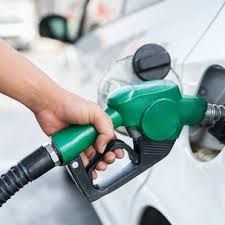
There is something deeply troubling about the Federal Government’s recent pronouncement of a N1,350 per litre fuel price cap at a time when Nigerians are being crushed by soaring food prices, prohibitive transportation costs and an unprecedented erosion of purchasing power.
Against the backdrop of another general election, the announcement raises an uncomfortable but unavoidable question: is the government genuinely responding to the suffering of the people, or is it attempting to convert their economic desperation into political capital?.
The distinction is crucial. In a country where millions struggle to afford basic necessities, fuel pricing is not merely an economic policy issue; it is a matter of political accountability, social justice and public trust. When a government presides over worsening hardship and subsequently announces measures intended to ease the pain, citizens are entitled to scrutinize not only the substance of those measures but also their timing, credibility and underlying political motivations.
The danger is that fuel pricing is becoming an instrument of political manipulation, with citizens’ suffering providing the backdrop for carefully timed promises of relief.
A government cannot reasonably expect applause for offering relief from a crisis that its own policies, implementation failures or inability to anticipate economic consequences may have aggravated. Nor should it be permitted to substitute dramatic announcements for demonstrable improvements in living conditions. The real measure of public policy is not what government officials proclaim at press conferences, but what ordinary Nigerians can afford in the marketplace, at the filling station and on their daily journeys.
The proposed N1,350 price cap per litre of fuel therefore demands more than political declarations. It requires a clear explanation of its economic rationale, the mechanism through which it will be enforced and the arrangements that will ensure compliance by the Nigerian National Petroleum Company Limited (NNPC) and commercial transport operators. Without such clarity, the announcement risks becoming an exercise in managing public perception rather than managing the economy.
The contradiction is particularly glaring when citizens are asked to interpret a proposed price ceiling as evidence of government concern while the broader cost-of-living crisis continues to deepen. Even if the cap is implemented beyond the initial 30 days experimentation window, what guarantees are there that a fifty naira cut in fuel price will culminate in any form of reduction in transport fares? What prevents traders from maintaining inflated prices for food and other essential commodities? And what assurance exists that any temporary reduction in fuel costs will translate into lasting improvements in household welfare?.
These are not peripheral questions. They go to the heart of whether the policy on fuel price cap is designed to deliver economic relief or merely generate favourable headlines. The same can be said of the Compressed Natural Gas (CNG) policy which is yet to manifest in the reduction of cost of transportation among the ordinary Nigerians.
The involvement of the NNPC and commercial vehicle operators in the N1,350 fuel price cap makes transparency even more imperative. If the government expects the national oil company to facilitate lower prices or transport operators to moderate fares, it must explain the financial and operational arrangements underpinning those expectations. Who bears the cost? How much longer will the intervention last after the first 30 days window? What happens when compliance becomes commercially unattractive? A policy whose implementation depends on unexplained concessions and unenforceable expectations is not a credible social intervention.
More fundamentally, the government must confront the political implications of asking Nigerians to endure economic pain in the expectation of eventual relief. Economic reforms may be necessary, but their legitimacy depends partly on how their costs are distributed, whether vulnerable citizens are protected and whether those in authority demonstrate consistency between their rhetoric and their actions.
It is precisely here that the electoral dimension becomes troubling. As elections approach, a government has an obvious incentive to demonstrate responsiveness, announce popular measures and present itself as the defender of a suffering population. There is nothing inherently wrong with introducing relief measures before an election. Indeed, government has a continuing obligation to improve citizens’ welfare, irrespective of the electoral calendar.
The problem arises when political expediency determines the timing, presentation or substance of economic interventions. If a government can announce a fuel price cap when electoral calculations make public anger particularly dangerous, Nigerians are entitled to ask why comparable urgency was not demonstrated when the hardship became unbearable. Why must relief appear to follow the political timetable rather than the severity of human suffering?.
Citizens must not be treated as electoral constituencies to be pacified periodically with economic promises, but as people whose welfare is a permanent obligation of government.
The broader economic consequences also expose the limitations of a fuel-price announcement presented as a solution to widespread hardship. Petrol prices affect transportation, agricultural production, food distribution and the cost of doing business. Yet a price cap alone cannot resolve the structural problems that sustain high living costs.
Without complementary measures to improve public transportation, support food production, strengthen distribution networks and encourage competition in the petroleum market, any relief may prove temporary and uneven.
The Federal Government must therefore move beyond political symbolism. It should publish the details of the proposed cap, establish independent monitoring mechanisms, disclose the costs of implementation and provide measurable evidence that consumers are benefiting. It must also explain how the policy fits into a coherent strategy for reducing inflationary pressures and protecting low-income households.
Ultimately, the credibility of the N1,350 pronouncement will depend on results, not intentions professed by government officials. If the policy delivers verifiable reductions in transportation costs and contributes to easing the burden on households, it deserves recognition. If it produces little more than publicity while the prices of food and essential services remain beyond the reach of ordinary citizens, the public will have every reason to question its sincerity.
Nigeria’s economic crisis must not become a theatre for electoral deception. The government cannot indefinitely demand patience for painful policies and then expect political gratitude for announcing relief without demonstrating its effectiveness.
Fuel pricing is too consequential to be reduced to campaign messaging. The welfare of Nigerians is too urgent to be subordinated to electoral calculations. A government that genuinely cares about the people does not merely announce relief when their votes become politically valuable; it makes their welfare the consistent measure of its policies, its priorities and its performance.
For a better society
_______________________________
Follow us across our platforms:
Instagram – https://www.instagram.com/championnewsonline/
Facebook – https://web.facebook.com/championnewsonline
LinkedIn – https://www.linkedin.com/company/champion-newspapers-limited/
https://x.com/championnewsng/
You can also like and comment on our YouTube videos.
https://youtu.be/QIBfD1tT80w?si=R4Qf3so2LxYu3GC2