
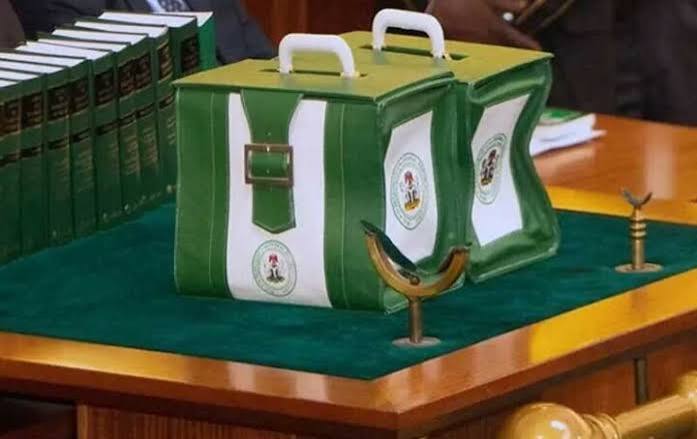
It is rather sad that Nigeria is currently running three budget cycles. The Federal Government must not allow the preparation of the 2027 budget to become another exercise in recycling old promises, unfinished projects and unresolved financial commitments. As the Budget Office of the Federation begins the process of receiving inputs for the 2027 Appropriation Bill, it is imperative that the government confronts one of the enduring weaknesses of Nigeria’s public finance system: the operation of overlapping budget cycles.
A budget is supposed to be a contract between government and the people. It tells citizens what government intends to do with public resources within a defined period. It provides the basis for planning, implementation, monitoring and accountability. But when one budget is still being implemented while another is being prepared, passed or extended, that clarity is seriously compromised. This is precisely the situation Nigeria must avoid henceforth.
For years, the country has struggled with delayed budget passage, late commencement of implementation and extensions that effectively blur the boundaries between fiscal years. The consequence has been particularly damaging to capital expenditures. Projects that ought to have been completed within a budget cycle are carried over, while new projects are added to the next budget. Before long, government is implementing several layers of commitments simultaneously, without Nigerians having a clear picture of which project belongs to which budget. This is not merely an accounting inconvenience. It is a serious governance problem which must be discouraged in the national interest.
When budget cycles overlap, accountability becomes difficult. Ministries, departments and agencies, MDAs, can blame delayed releases for poor performance, while the government can point to budgetary provisions as evidence of its commitment. The citizen, who is at the receiving end of this tardiness, meanwhile, sees little or no change on the ground in terms of budget implementation.
A road may appear in successive budgets. A hospital may receive another allocation year after year. A school project may be listed repeatedly without being completed. Government can therefore claim that money has been appropriated, while the people continue to ask the obvious question: Where is the project? This creates a dangerous disconnect between budget figures and actual development.
The National Assembly must take part of the blame for this abnormally. Its constitutional power of appropriation should not end with approving enormous figures for the executive arm of government. For taxpayers to get maximum benefit for public funds, legislators must interrogate the implementation of previous budgets before approving new ones. There should be no automatic assumption that every project carried over from one year deserves another allocation.
Indeed, before the 2027 budget is passed, we demand that the federal government should produce a comprehensive inventory of ongoing capital projects. Such an inventory should state when each project was first appropriated, its specific location, the amount approved, the amount released, the amount spent, its percentage of completion and the estimated amount required for completion. This simple requirement would expose the extent to which Nigeria has been budgeting repeatedly for projects that remain incomplete.
The Budget Office must also guard against the practice of dressing up old projects as new ones. A project should not escape scrutiny simply because its description has been changed or because it has been transferred between agencies. There must be a central mechanism for tracking capital projects from their first appearance in the budget until completion.
Equally important in our view, is the need to distinguish between genuine multi-year projects and poorly implemented projects that are merely carried forward because government failed to execute them. Large infrastructure projects can legitimately require several years to complete. What is unacceptable is allowing such projects to move from one appropriation to another without clear milestones, financing plans and public reporting.
Nigeria also needs to move away from the culture of producing budgets that look impressive on paper but are unrealistic in execution. Thousands of projects spread across ministries and constituencies may make an appropriation appear development-oriented, but an underfunded project is little more than a promise.
Therefore, government should prioritise fewer projects, adequately fund them and ensure their completion. There is little value in commencing ten projects and abandoning nine when the same resources could have delivered three completed and functional projects.
The issue is even more urgent because public resources are limited while the demands on government are enormous. Nigerians require functional hospitals, schools, roads, water supply, electricity and security infrastructure. Every naira appropriated to a project that is duplicated, abandoned or poorly monitored is a naira denied to another pressing need.
Transparency must therefore become central to the 2027 budget process. Nigerians should be able to access information on budget releases and project implementation without having to depend on official press statements. Project-level reporting should be strengthened, while audit findings must have consequences.
The government must also ensure that budget preparation begins early enough for the new fiscal year to enable the Senate and House of Representatives to consider the estimates for passage from January 1 of the fiscal year. There should be no justification for a situation in which a budget intended to run for twelve months is passed several months into the year, leaving ministries, departments, agencies and contractors scrambling to implement capital projects within an artificially shortened period. The ugly cycle must be broken.
The 2027 budget should not simply be bigger than the 2026 budget. It should be better than the 2026 budget—better planned, more realistic, more transparent and more closely tied to measurable outcomes.
President Bola Tinubu’s administration has repeatedly spoken about reforming Nigeria’s economy and improving public-sector efficiency. Budget reform must be an essential part of that agenda. Economic reforms cannot deliver their full benefits if the government’s own spending system remains characterised by delays, overlaps and weak accountability.
The message to the Budget Office, MDAs and the National Assembly should therefore be unequivocal: do not recycle the budget cycle. Complete what has been started. Account for what has been spent. Remove what has been completed. Explain what has failed. Properly plan what must continue. And only then introduce genuine new projects.
Nigeria does not suffer from a shortage of budget documents. It suffers from a shortage of completed projects and demonstrable results.
We strongly believe that the 2027 appropriation process provides an opportunity to change that. The government must seize it to restore the credibility of the budget as an instrument of development rather than allow another year of overlapping cycles, endless carryovers and unfulfilled promises. A budget should have a beginning, an implementation period and a measurable end. Anything less is simply recycling the failures of the past.
For a better society
_______________________________
Follow us across our platforms:
Instagram – https://www.instagram.com/championnewsonline/
Facebook – https://web.facebook.com/championnewsonline
LinkedIn – https://www.linkedin.com/company/champion-newspapers-limited/
https://x.com/championnewsng/
You can also like and comment on our YouTube videos.
https://youtu.be/QIBfD1tT80w?si=R4Qf3so2LxYu3GC2