Ebenezer Adurokiya, Warri
The Federal Government has pledged to support the Oil and Gas Trainers Association of Nigeria (OGTAN) in developing the skilled workforce required to execute the growing number of oil and gas projects in Nigeria, saying the country has become a key source of human capital for the industry.
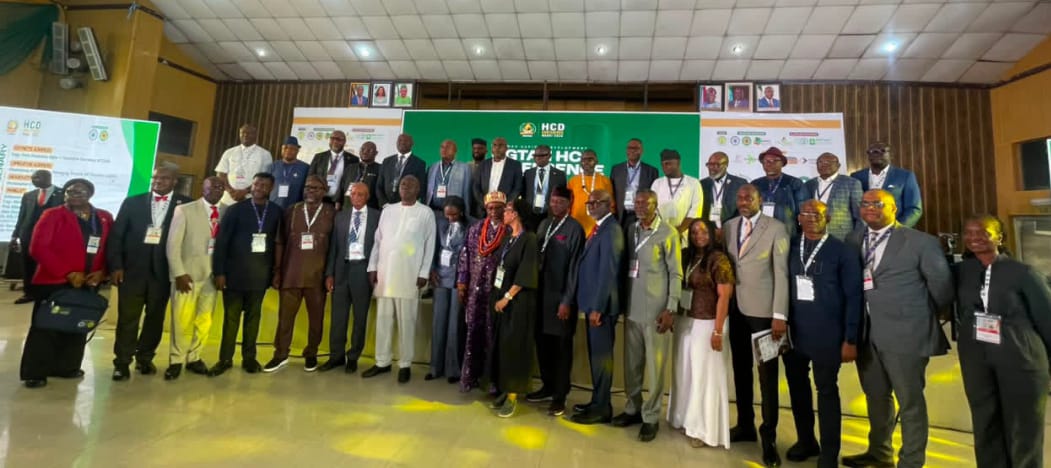
The Minister of State for Petroleum Resources (Oil), Federal Ministry of Petroleum Resources, Senator Heineken Lokpobiri, made the commitment at the first day of the OGTAN Human Capacity Development Conference held at the Petroleum Training Institute (PTI) Conference Hall, Effurun, Delta State, on Thursday.
Lokpobiri said the return of investor confidence under the present administration had resulted in billions of dollars in investment and an unprecedented number of projects, creating a need for competent Nigerian professionals to execute them successfully.
He said OGTAN members had an important role to play in ensuring that the projects delivered benefits to Nigerians and the global community.
He said Nigeria’s strategic position and capacity gave it an advantage in supplying skilled personnel to the wider African market, stressing that the country’s human capital potential was not available in other African countries to the same extent.
“Under the president’s government, the confidence of the investing community is back to Nigeria. We are getting investment coming in billions of dollars. We have unprecedented number of projects that are coming into the country and it is expected that people work on these project and they are the OGTAN members.”
The minister also stressed the need for trainers themselves to be retrained as the energy landscape changes, noting that OGTAN’s collaboration with PTI was important in equipping trainers with current knowledge and enabling them to transfer the skills to prospective industry workers.
He said the government would support the association to perform its role in human capacity development.
“The energy landscape is changing and you the trainers, need to be retrained so that they can be equipped with the requisite knowledge and transfer that knowledge to those who are ready to work in the oil and gas industry. The government is committed to that.”
Lokpobiri added that the volume of projects expected in Nigeria made the availability of skilled personnel critical, assuring OGTAN that the government was prepared to provide the necessary support.
“It is important to know that the Africa and whole world is looking to Nigeria for human capital. The capacity we have is nonexistent in other African countries. With the volume of projects we will be experiencing in Nigeria, we need you on ground. We will give you all the support to do what you know how to do.”
In his welcome address, OGTAN President, Chris Osarumwense, said the decision to hold the conference at PTI was intended to place discussions on oil and gas human capital development within the environment where the industry had historically developed.
Osarumwense said the conference was designed to move the conversation beyond traditional venues in Abuja and Lagos and expose participants to Nigeria’s human capital potential, technical expertise, institutions and enterprise in the Niger Delta.
He said developing the industry’s workforce could not be achieved by government, regulators, companies, training providers or educational institutions working independently, but required collaboration across the value chain.
“Government alone cannot solve it. Regulators cannot solve it alone. Oil and gas companies cannot solve it alone. Training providers cannot solve it alone. Universities and technical institutions cannot do so alone either. The industry needs collaboration across the value chain.”
Also speaking, the PTI Principal and Executive, Dr Samuel Onoji, said the institute had remained central to Nigeria’s human capacity development over its 54-year history, producing technicians, technologists, engineers and other professionals who had supported the country’s petroleum industry.
Onoji said human capacity development remained critical to the local-content agenda because technology adoption and foreign investment required competent personnel capable of managing and developing Nigeria’s assets.
He disclosed that PTI was pursuing public-private partnerships to accelerate the development and modernisation of key infrastructure, with the aim of mobilising private-sector capital, technical expertise, technology and innovation to complement government resources.
During a plenary session, the Executive Secretary of the Nigerian Content Development and Monitoring Board (NCDMB), represented by the Director, Capacity Building, Mr Abayomi Bamidele, raised concerns about an overemphasis on certificates among trainees.
Bamidele said the experience of the board showed that many people were more interested in accumulating certificates than acquiring the skills required by the industry.
Also, the Managing Director of ND Western Limited, Olarewaju Kalejaiye, said human capacity development remained an important determinant of the industry’s growth and noted that the Nigerian Content Act had contributed significantly to improving capacity development.
Kalejaiye said the changing nature of the industry had created opportunities that required more deliberate approaches to developing workers, particularly at the middle-management level.
He called for greater collaboration among operators, regulators and other stakeholders, stressing that talent development should not be treated merely as an issue for human resources departments.
He said the next phase of human capacity development required stakeholders to identify gaps and develop practical strategies to close them.
The Commission Chief Executive of the Nigerian Upstream Petroleum Regulatory Commission (NUPRC), Oritsemeyinwa Eyesan, said the industry’s transition into the digital age required Nigeria to develop the skills needed for emerging technologies, including digital drilling.
Eyesan said the industry needed commercially sound workers, proactive workforce planning and better identification of future skills requirements.
She also stressed the need for financing, critical intervention programmes and continuous competency development.
She noted that data was also critical to the industry’s development, particularly the ability to maintain confidentiality while using data effectively.
Representing the Managing Director of Shell Nigeria Exploration and Production Company (SNEPCo), Charles said the company had invested in workforce development ahead of its deep-water operations, resulting in a high proportion of Nigerians occupying offshore positions.
He said SNEPCo had also supported capacity development through the University of Lagos Geoscience Institute and other programmes, adding that retaining trained personnel was important because skills could decline when workers were not given opportunities to apply them.
Chief Executive Officer of Richardson Oil and Gas, Akin Osuntoki, said Nigeria’s workforce stood at 1.28 million and argued that competence should be measured by the ability to perform a job rather than possession of certificates.
Osuntoki said the changing nature of work and the emergence of digital oil fields and cybersecurity had created demand for professionals capable of handling complex projects.
He advocated a shift from certificate-based training to competence-based development and called for the revival of apprenticeship as a policy.
“Competence is defined by the ability to do the job not by the certificate.”
He further urged stakeholders to train Nigerians for opportunities across Africa and the wider global market, arguing that building skills could help create industries rather than merely workers.
Representing the Chairman of the Petroleum Technology Association of Nigeria, Joan Faluyi said Nigeria’s challenge was not a shortage of talent but a gap between possessing certificates and demonstrating competence.
Faluyi said the country needed to identify and bridge the training gaps preventing people from developing the capabilities required by industry.
The Managing Director of Laser Engineering said Nigerian graduates had the intelligence and potential to compete globally but needed additional training in areas such as leadership, digital skills and financial management.
He said his company currently employed more than 120 graduates and argued that graduates should be made substantially more prepared for the workplace before leaving school.
He also stressed the importance of industrial training, noting that practical exposure was essential to the survival and growth of his business.
“If you remove industrial training from my life, I will not have a business.”
The discussions at the conference consequently centred on the need to move Nigeria’s oil and gas human capital development from certificate acquisition towards demonstrable competence, practical exposure, digital skills and sustained collaboration among government, regulators, industry operators, training institutions and other stakeholders.
The conference also underscored the growing importance of preparing Nigerian professionals not only for domestic projects but for opportunities across Africa and the global oil and gas industry.
For a better society
Follow us across our platforms:
Instagram – https://www.instagram.com/championnewsonline/
Facebook – https://web.facebook.com/championnewsonline
LinkedIn – https://www.linkedin.com/company/champion-newspapers-limited/
https://x.com/championnewsng/
You can also like and comment on our YouTube videos.
https://youtu.be/QIBfD1tT80w?si=R4Qf3so2LxYu3GC2