By Favour Ishember
For more than five decades, Nigeria’s Federal Unity Colleges stood as symbols of national integration, academic excellence and leadership development. They produced presidents, governors, judges, diplomats, military officers, scholars and captains of industry while bringing together children from every corner of the country to learn, live and grow as one.
Today, however, many of these once-prestigious institutions bear little resemblance to the lofty ideals upon which they were founded. Years of underfunding, decaying infrastructure, shortage of teachers, weakened maintenance culture and administrative challenges have left several Unity Schools struggling to maintain their historic standards.
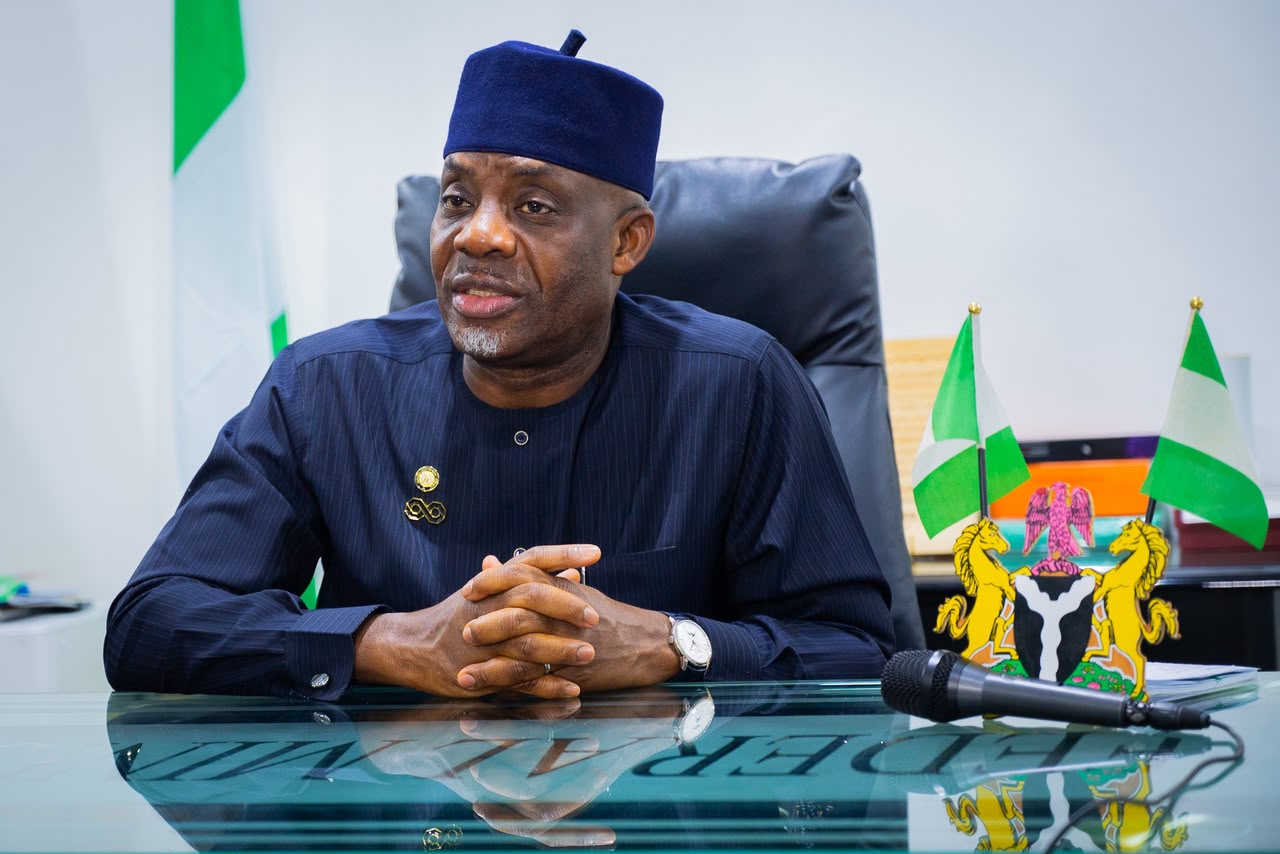
Faced with this reality, the Minister of Education, Dr. Maruf Tunji Alausa, has embarked on what may become one of the most ambitious reform efforts in the history of Nigeria’s Federal Unity Colleges—not by disposing of public assets as alleged in some quarters, but by seeking innovative ways to restore the schools to their former glory while preserving government ownership.
One of the strongest messages from the minister has been his categorical rejection of claims that the Federal Government plans to sell any Unity College.
According to Alausa, the Federal Government remains the sole owner of every Unity College, including the iconic King’s College, Lagos.
He described reports suggesting otherwise as deliberate misinformation, insisting that neither he nor the Minister of State for Education possesses any intention of privatizing the schools.
Instead, he explained that government is exploring carefully structured management partnerships aimed at mobilising private investments, particularly from alumni associations, while retaining complete ownership and oversight.
The arrangement, he stressed, is built around strict Key Performance Indicators (KPIs), government supervision and accountability.
Nothing illustrates the urgency of reform better than Alausa’s personal inspection of King’s College.
Established over a century ago to nurture future national leaders, King’s College once occupied a position comparable to Britain’s prestigious Eton College.
Its alumni include some of Nigeria’s finest public servants and professionals.
But what the minister encountered during his visits painted a deeply troubling picture.
He described student hostels that resembled dungeons, bathrooms in deplorable condition, dining halls unfit for learning communities and classrooms littered with refuse.
Some laboratories were either non-functional or too dark to support meaningful science education.
The school had reportedly gone nine months without electricity before his intervention secured immediate reconnection to the national grid.
At the junior secondary campus, he discovered another major security concern.
Parts of the school premises had reportedly been converted into a commercial public car park through a Public-Private Partnership arrangement, exposing young students to avoidable security risks.
For Alausa, the situation represented not merely infrastructure failure but a systemic breakdown that endangered both education and child safety.
The minister argues that decades of neglect have created an infrastructure deficit too enormous for annual government allocations alone to resolve.
Even substantial budgetary releases, he noted, would barely scratch the surface of the rehabilitation required in institutions such as King’s College.
Nigeria’s fiscal realities, he explained, demand that government simultaneously fund education, healthcare, security, roads, agriculture and social development.
Consequently, relying solely on public funds would only prolong the deterioration of the schools.
His solution is to attract credible partners; especially accomplished alumni, who possess both emotional attachment and financial capacity to rebuild their alma maters.
Perhaps the centrepiece of Alausa’s reform agenda is greater alumni participation.He revealed that King’s College Old Boys have already invested nearly ₦2 billion in supporting infrastructure over the years.
Yet, despite those interventions, much of the school remains in poor condition because the alumni lack adequate management authority to implement long-term reforms.
Many of these former students are globally successful professionals and business leaders who, according to the minister, are motivated not by profit but by the desire to give back.
Their proposal is straightforward: allow them to manage the school under government supervision, invest billions of naira in rehabilitation, maintain merit-based admissions across all states and restore the institution’s reputation without increasing school fees.Government ownership, Alausa insists, remains unchanged.
Beyond infrastructure, the minister believes the original purpose of Unity Colleges has been gradually eroded.
These schools were established to promote national cohesion by bringing together children from every state and every background.
At King’s College, however, he lamented that admissions have become heavily skewed, with students from some parts of the country significantly underrepresented.
His vision is to restore the original character of Unity Colleges where merit, diversity and national integration once flourished.
For him, rebuilding the schools means rebuilding one of Nigeria’s strongest instruments of nation-building.
Infrastructure is only one side of the challenge.The ministry’s investigations also uncovered alarming staffing gaps.
At King’s College, only 57 of the school’s 121 teachers were government employees, while the remainder were hired by the Parent-Teacher Association (PTA).
Some PTA teachers had reportedly served for nearly three decades while earning as little as ₦60,000 monthly.
To address this anomaly, President Bola Tinubu has approved the recruitment of 3,000 teachers, with the immediate priority of absorbing existing PTA teachers into the federal workforce.Government also plans to recruit an additional 5,000 teachers next year to strengthen staffing across Unity Colleges nationwide.
Alongside recruitment, the ministry is pursuing nationwide teacher capacity development programmes aimed at improving the quality of classroom instruction.
The reform effort also targets alleged corruption within parts of the education system.
The minister raised concerns over what he described as irregular admission practices involving some PTA structures and other vested interests.
He alleged that admissions into certain schools had become commercialised, with huge sums reportedly changing hands.
Such practices, he warned, undermine merit, deny deserving students opportunities and damage the integrity of institutions originally established to unite the country.
Government, he said, is determined to dismantle such practices while strengthening transparency and accountability.
Recognising concerns raised by labour unions, Alausa maintained that no teacher or non-teaching staff member would lose employment because of the reforms.Staff affected by management changes, he explained, will retain their grades, salaries and employment status in accordance with Public Service Rules.
They will also be allowed to choose their preferred redeployment locations within their respective states.
The ministry has equally expressed readiness to continue dialogue with unions and incorporate constructive suggestions into the reform framework where necessary.
The proposed reforms extend beyond King’s College.According to the Minister of State for Education, Professor Suwaiba Sa’id Ahmad, the Federal Government’s objective is to ensure holistic development across the education sector.
This includes modern infrastructure, improved teacher quality, stronger learning outcomes and enhanced governance.
She emphasised that agreements with prospective managers prohibit any increase in school fees while establishing measurable performance benchmarks to guarantee value for public investment.
For the ministry, every decision is ultimately centred on one objective—the welfare and success of Nigerian learners.
The debate surrounding Unity Colleges reflects broader questions about the future of public education in Nigeria.
Should government continue managing deteriorating institutions with limited resources, or should it embrace carefully regulated partnerships capable of attracting private investment while retaining public ownership?
Dr. Maruf Tunji Alausa has made his position unmistakably clear.For him, the issue is not privatisation but preservation; not surrendering national assets but rescuing them before further decline.
If successfully implemented, his reform agenda could mark the beginning of a new era in which Unity Colleges once again become centres of excellence, merit, discipline and national integration.
The challenge ahead will not simply be rebuilding classrooms and hostels.It will be restoring confidence in institutions that once shaped Nigeria’s finest minds and ensuring that future generations inherit schools worthy of their historic legacy.