
KELVIN INOBEMHE
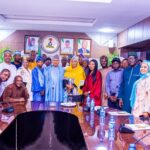
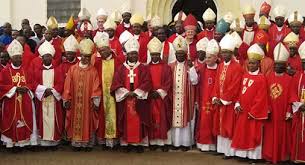
The images captured on July 28 at Aso Villa showed a typical goodwill visit by a group of religious leaders wearing cassocks, which included the Catholic Bishops’ Conference of Nigeria (CBCN) President, Archbishop Matthew Man-Oso Ndagoso, and the elder statesman of the Nigerian episcopacy, Cardinal John Onaiyekan, who entered Aso Villa to meet President Bola Tinubu.
None of the events connected with the visit was controversial. The following days indicated otherwise.
Cardinal Onaiyekan in a TV interview revealed that Tinubu had ignored the Bishops’ dire diagnosis of the economy and security situation, and claimed that the president is becoming intolerant of dissent.
The comments generated a controversy that has since attracted presidential advisors and opposition leaders, Northern Christian organisations and newspaper columnists from both sides of the fence.
The Cardinal’s presidential aides, Temitope Ajayi and Daniel Bwala, charged the Cardinal with being more of a politician than a pastor and also violated the confidentiality of a closed-door meeting.
The episode was dubbed an assault on the moral conscience of the nation by Atiku Abubakar and Senator Shehu Sani, who hurried to the defence of the bishops.
Others however criticized Onaiyekan’s views. One national newspaper even went as far as calling the bishops’ move a “partisan mirage in ecclesiastical robes”.
All this can be distilled down to a question: were the bishops telling the truth to power, or did they go too far down a line that religious leaders in a plural and multi-faith federation should honour?
While this is good news for both sides of the political fence, it does not address the more important question now on the lips of the Catholic establishment, including the Church in Nigeria.
It is not whether there is a right for bishops to speak on the condition of the nation. That right is widely accepted in Catholic social thoughts and in the history of the Catholic Church in Nigeria which has been active in the struggle against military dictatorship.
The more important question to ask is, how should this right be applied in such a way that it enhances and not slowly erodes the moral authority which it rests upon?
A Catholic’s social teaching has never called upon the Church to stay in the sacristy when the country is in trouble.
This is the tradition that the Church is not to be unmoved by the material and civic circumstances of the people it serves, from its earliest document, Rerum Novarum, of Pope Leo XIII, through the Second Vatican Council’s document, Gaudium et Spes.
The tradition has been used by the bishops of various times since independence to oppose military rule, call for free and fair elections, and criticise the misuse of state power.
Cardinal Onaiyekan has done that throughout his public ministry. In light of all of this, the CBCN’s concern for the erosion of political freedom, the fear of one party dominating the political scene and the appeal for truly equal electoral conditions prior to 2027 are not aberrations from the obligations of the church. They are a part of it.
What was said inside the Villa, in short, is not the problem. It is how things played out after the incident in public that is really important.
The reason for a closed-door meeting between a head of state and a religious delegation is that sometimes they have to say things that would otherwise not be said in front of cameras or to score points with a domestic audience.
The bishops were then caught up into a public dispute about the content of that meeting, which was litigated in the media, with presidential spokesmen on one side and opposition politicians on the other.
Pastoral counsel converted in the retelling into ammunition in an unfolding contest between the ruling party and its critics ahead of 2027.
It is not an indication of bad faith for the Cardinal’s words to be picked up by the politicians most invested in Tinubu’s bane, it is absurdly absurd.
It, however, is proof that in a hyper-partisan media, clerical interventions, both intended and not, will be read politically, and that every time the Church’s words are taken up into the partisan script that is not of its own making, the Church’s moral capital is consumed.
A rethinking of this engagement is not a withdrawal from it. It means being more deliberate about form.
The Conference might consider formalising its relationships with the government, using its own pastoral letters and public statements, published and ready for public consumption, to describe closed-door interaction between individual clerics and government that has subsequently been characterised by them in television interviews, however influential.
It involves demanding that the Church, as the Northern Christian Association pointed out in the defence of the bishops, is a voice for everyone among the Nigerian people and not for one denomination, one region, let alone one political camp.
It means, not only that the Church speaks of injustice with a boldness that is the only thing that can counterbalance the bleak situation of the country at present, but that it does not permit the criticism of the bishops to become rigid in a stance that is just as much opposition to the state as it is to the Church.
It means that the Church does not let the criticism of the bishops become robotic, a stance that becomes opposition politics as much as opposition to the state, especially in this particular instance where the scale of the economic hardship and insecurity make it easy to fall into that temptation.
At the very least, the Presidency would do well not to confuse clerical criticism with an attack and then respond in a political manner.
Bishops who claim that people face hardship in their homes and markets that millions of Nigerians feel do not warrant the fear of a government secure in its record.
Though true, it is a shortcut and suggests that the substantive issues raised by the Conference were not worthy of attention, and that it was not important to consider what it said, just who said it.
Nigeria’s democracy is still infant and vulnerable enough, and so are its institutions, that the moral voice of religious institutions is vital to the checks on power.
However, this witness is limited resource. It is lost in the arena of political warfare and is debased as each news cycle passes.
Spent, meaning spent deliberately, in a disciplined and consistent way – not in the hope of government largesse nor opposition cheers – it is what it has always been, one of the few voices in public life in Nigeria that speaks to power without qualms.
Inobemhe, is a communication and media researcher. He writes on media, democracy, and governance in Nigeria
For a better society
_______________________________
Follow us across our platforms:
Instagram – https://www.instagram.com/championnewsonline/
Facebook – https://web.facebook.com/championnewsonline
LinkedIn – https://www.linkedin.com/company/champion-newspapers-limited/
https://x.com/championnewsng/
You can also like and comment on our YouTube videos.
https://youtu.be/QIBfD1tT80w?si=R4Qf3so2LxYu3GC2