By Hon Emma Nnadi
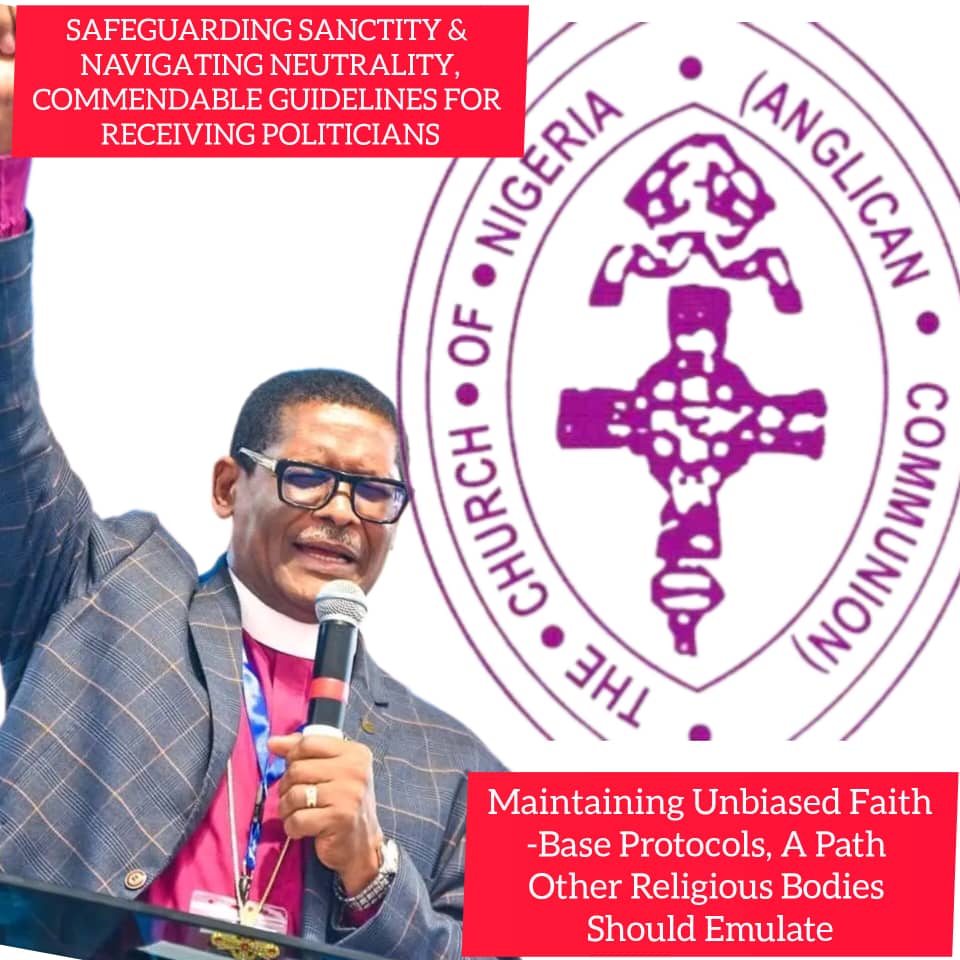
The Church of Nigeria, Anglican Communion, has taken a significant step in establishing clear guidelines for the reception of politicians and government officials during church services and programs across all its parishes. This development, underscored by a memo signed by the Primate of the Church, The Most Revd Dr Henry Ndukuba, during the Episcopal Consultation held in the Diocese of Nike, Enugu, acknowledges the growing concern about the increasing politicization of church services, which risks compromising the integrity of Christian worship.
In an official release by Korede Akintunde, the Director of Communication, Church of Nigeria, Anglican Communion, on 11th July 2025, the Church demonstrates its commitment to maintaining a delicate balance between being welcoming and respectful to all persons, including politicians and government officials, while safeguarding its neutrality, core values, and divine mandate. This approach is rooted in the Church’s calling to be inclusive and non-partisan, recognizing that its role is to serve as a beacon of hope and unity, rather than a platform for political propaganda.
Ostensibly, one key aspect of these guidelines is the emphasis on avoiding speeches, conduct, or events that may incite division or foster political bias within the body of Christ. To achieve this, the Church has outlined specific protocols for welcoming guests, including prior discussions with expected speakers, clear communication of the Church’s non-partisan stance, and restraint from making politically aligned statements or behaviors.
The guidelines also underscore the importance of maintaining the sanctity and purpose of the Church’s lectern, which has been consecrated for the reading of God’s Word. By not permitting guests to use the lectern for their own purposes, the Church reinforces its commitment to upholding the centrality of Scripture in its worship and teachings.
Furthermore, the Church’s stance on not eulogizing or exalting guests in a manner that might bring the Church into disrepute reflects its dedication to maintaining a level of decorum and respect that is befitting of its sacred calling. This approach ensures that the Church’s witness and reputation are preserved, even as it engages with individuals from various walks of life.
The Church of Nigeria’s guidelines also highlight its role within the body politic, affirming its responsibility to engage government authorities on matters affecting the faithful and society at large. This engagement is not driven by partisan interests but rather by a commitment to being the light of the world and the salt of the earth, as enjoined by Scripture (Matthew 5:13–14).
In upholding the nation in prayer and offering godly counsel to those in positions of authority, the Church of Nigeria demonstrates its understanding of its prophetic role in society. By issuing these guidelines, the Church reaffirms its commitment to being a beacon of hope, unity, and spiritual guidance, even as it navigates the complexities of its relationship with the Nigerian state.
I wholeheartedly commend the Church of Nigeria, Anglican Communion, for its perspicacious initiative in establishing unequivocal guidelines for the reception of politicians and government officials during church services and programs, thereby upholding the sanctity and integrity of Christian worship while navigating the complexities of its relationship with the state with prudence and sagacity. By steadfastly adhering to these principles, the Church reaffirms its commitment to being a beacon of hope, unity, and spiritual guidance, and I have every confidence that this bold endeavor will yield a profound impact, inspiring a new era of spiritual rejuvenation and moral leadership, characterized by an ethos of probity, as the Church continues to fulfill its divine mandate with unwavering dedication, fortitude, and an unshakeable commitment to its theological purpose.
Hon Emma Nnadi writer, editor and political affairs analyst, hails from Inyishi in Ikeduru Imo State.