

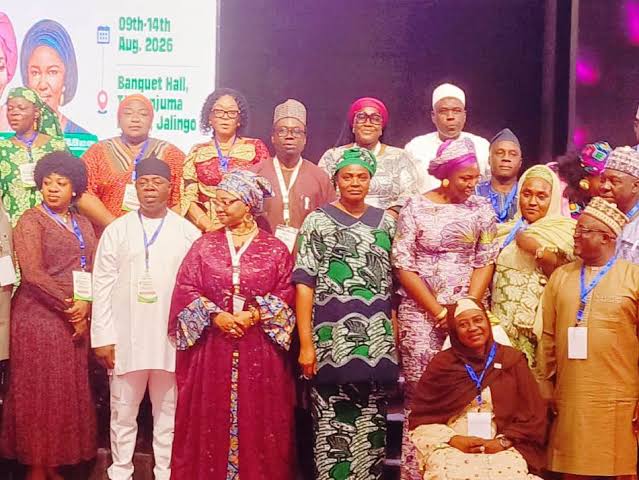
Emmanuel Awari, Jalingo
The National Council for Women Affairs, Child Advancement and Social Development has commenced its 2026 National Summit in Jalingo, Taraba State, under the theme: “Strengthening Families and Advancing the Care Economy for Inclusive Development.”
The summit focuses on strengthening families, expanding social protection, and promoting greater investment in the care economy.
Declaring the Pre-Summit Technical Session open, the Minister of Women Affairs and Social Development, Imaan Ibrahim, represented by the Permanent Secretary, Mrs. Esuabana Asanye, called for deliberate investment in policies, infrastructure and services that recognise, reduce, redistribute and reward care work while creating decent employment opportunities.
“We must move beyond recognising the value of care work to building systems that support, reduce and fairly redistribute the burden of care, while creating decent employment opportunities and strengthening the social and economic wellbeing of families,”
The Minister emphasised that strong families remain the foundation of stable societies and sustainable national development, noting that women and girls continue to bear a disproportionate share of unpaid care responsibilities.
The Minister said that the national priorities into measurable outcomes through Plans, Policies, Project and Programmes that will empower women, strengthen families, protect children and promote social inclusion.
“It is therefore expedient that the theme of this year’s Council is centred on: “Strengthening Families and Advancing the Care Economy for Inclusive Development: Operationalizing Nigeria’s Renewed Social Protection Architecture.”
She described the theme as both timely and strategic.
“It recognizes that strong families are the bedrock of stable societies, productive economies and sustainable national development.
” It also draws attention to the critical role of the care economy, both paid and unpaid, in supporting households, improving human development outcomes and driving inclusive economic growth.
Hajiya Imaan Suleiman Ibrahim, disclose that the Ministry is committed to translating the Renewed Hope Agenda and Nigeria Agenda 2050 under the visionary leadership of His Excellency, President Bola Ahmed Tinubu, GCFR, by implementing the Renewed Hope Agenda with a strong emphasis on inclusive growth, human capital development, poverty reduction and social protection.
According to her, the Pre-summit represents the intellectual foundation of the Council, adding that during the few days, memoranda submitted by the Ministries, Departments, and Agencies at the national, sub-national and third tier of government and relevant stakeholders would be carefully analysed and agreed or stepped down for collective development within the Space.
“The recommendations that would emerge from these deliberations would shape future plans, policies, projects, and programmes in our future aspirations.
She urge delegates to participate actively, contribute extensively and engage with professional openness and mutual consideration within the Space.
“Let us liberally discuss issues before us with evidence, innovation and a shared commitment to national development. Our discussions should focus not only on identifying challenges but, more importantly, on developing practical, implementable and sustainable solutions. As we embrace emerging issues such as the Artificial Intelligence, Robotics, Internet of Things, Digital Inclusion with eagerness and confront climate change and global warming with immediate urgency it requires.
“As we deliberate, we must pay particular attention to strengthening coordination across all tiers of government, improving financing for social welfare programmes, institutionalising family-centred interventions, expanding community-based care services, promoting data-driven decision-making and enhancing accountability in programme implementation. These are essential building blocks for operationalising Nigeria’s Renewed Social Protection Architecture- she said.
She acknowledge the unwavering support of our Development Partners and Sponsors, Donor Agencies, Civil Society Organisations, Non-Governmental Organisations and other Stakeholders whose cooperation and collaboration continues to strengthen the implementation of plans, policies, projects and programmes that improve the lives of children, families and vulnerable groups and women across our country.
“Your partnership remain invaluable and highly appreciated – she added.
In his welcoming address, Taraba, Governor Dr. Agbu Kefas, represented by the Commissioner for Women Affairs and Child Development, Mrs. Mary Sinjen, expressed the state’s honour in hosting the national gathering.
“Taraba State is honoured to host this important national conversation. We believe that strengthening families and investing in the care economy are essential to building a more inclusive, resilient and prosperous society,” the Governor said.
The Governor urged participants to use the summit to exchange experiences, strengthen partnerships and develop practical solutions that will translate into meaningful impact across communities. He reaffirmed the Taraba State Government’s commitment to policies and programmes that strengthen families, empower women and children, expand social protection, and promote inclusive development, assuring delegates of the state’s continued support for initiatives that improve the wellbeing of vulnerable groups and communities.
“Your presence here is a testament to our shared commitment to advancing the welfare, empowerment, protection, and development of women, children, and vulnerable persons across Nigeria.
She encourage delegates to use this Council as an opportunity to exchange ideas, share experiences, strengthen partnerships, and develop practical solutions that will translate into meaningful impact in our communities.
The summit also provides a platform for stakeholders across the federal, state and local government levels to exchange ideas, examine policy proposals and develop recommendations that will shape future programmes and interventions for women, children and vulnerable groups.