. As Kano shuts down 35 private health facilities over violations
The Federal Government has approved four health facilities for the treatment of snakebites in Benue State.
The facilities will also be stocked with government-procured anti-snake venom.
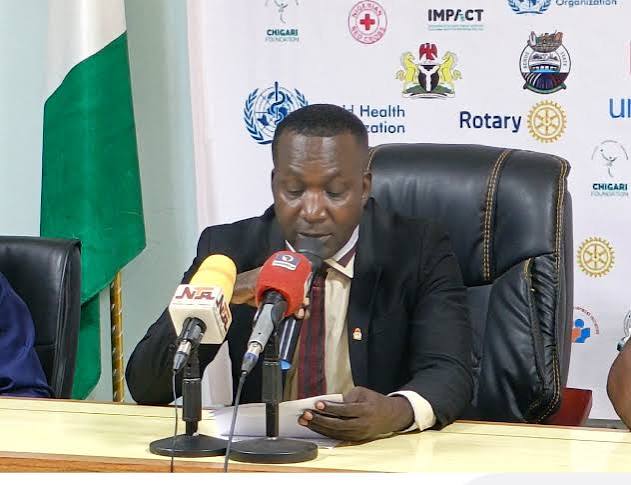
The state Commissioner for Health and Human Services, Dr Paul Ogwuche, disclosed this while briefing officials of the ministry at the state secretariat in Makurdi on Tuesday.
He said the facilities cut across the state’s three senatorial districts.
He said, “I am glad to announce to you that the Federal Government has approved four health facilities across the three senatorial districts of the state as snakebite treatment centres.
“The approval marks a significant step towards expanding access to life-saving treatment and advancing the state’s free snakebite treatment agenda under the administration of His Excellency, Governor Hyacinth Alia.”
Ogwuche listed the designated facilities as the General Hospital, Katsina-Ala, in Zone A; the University Teaching Hospital, Makurdi, and General Hospital, Gboko, both in Zone B; and the General Hospital, Otukpo, in Zone C.
He added that healthcare professionals at the designated facilities would benefit from specialised training in snakebite envenoming management to strengthen their capacity to provide timely and effective care.
Appreciating the Coordinating Minister of Health and Social Welfare, Professor Ali Pate, the commissioner said, “The federal approval demonstrates the value of collaboration between the state and federal governments in addressing critical public health challenges.
“Under the Federal Neglected Tropical Diseases Envenoming Programme, the designated centres are expected to receive government-procured anti-snake venom supplies, helping to reduce the financial burden of treatment on victims and supporting the implementation of the state’s free snakebite treatment initiative.”
Reaffirming the ministry’s commitment to working with relevant federal agencies and health institutions for the benefit of residents, Ogwuche said access to free, life-saving treatment would particularly benefit farmers and rural communities, where snakebites could threaten lives, livelihoods and household incomes.
He said the Alia administration’s vision was to ensure that no citizen lost their life or suffered financial hardship because they could not afford essential snakebite treatment.
Benue State is largely agrarian, with a significant proportion of its population engaged in farming, exposing residents, particularly those in rural communities, to snakebites.
Among the most vulnerable groups are displaced people living in overcrowded camps.
The Executive Secretary of the State Emergency Management Agency, James Iorpuu, disclosed last weekend that the agency had spent over N160m on treating internally displaced persons for snakebites in the past six months.
Meanwhile, the Kano State Private Health Institutions Management Agency has shut down more than 35 private health facilities for regulatory violations in the last 12 months.
The Acting Director-General of PHIMA, Hajiya Khadijah Sa’id, said this in an interview with the News Agency of Nigeria in Kano on Tuesday.
Sa’id, who is also the agency’s Director of Administration and General Services, said the sanctions were part of efforts to enforce standards and protect residents from unsafe healthcare practices.
She identified operating without a licence, failure to renew annual registration and employing unqualified personnel as major violations uncovered during routine inspections.
“We sanctioned over 100 facilities for one mistake or the other. But those that committed gross violations that we cannot overlook, we shut down over 35,” she said.
The acting director-general explained that some facilities were temporarily closed to allow their proprietors to correct identified violations before reopening.
She, however, said facilities found guilty of serious breaches could be permanently delisted, with the responsible proprietors barred from registering another facility using their professional licences.
“Once a facility is delisted, it will not be registered again. The person holding the professional licence will also not be allowed to register another facility,” she said.
Sa’id said PHIMA’s regulatory mandate covered private hospitals, clinics, nursing and maternity homes, diagnostic laboratories, dental centres, beauty salons, spas, fitness centres and practitioners of traditional, complementary and alternative medicine.
She added that the agency collaborated with other government agencies and security operatives to identify and shut down illegal health facilities across the state.
According to her, an inter-agency task force established by Gov. Abba Yusuf recently identified a clinic that PHIMA had sealed and delisted but which was subsequently reopened at another location.
She said the agency was strengthening routine inspections to ensure compliance with licensing requirements and professional standards across Kano State’s 44 local government areas.
Sa’id said additional funding and operational vehicles would enable PHIMA to expand inspection coverage and strengthen enforcement across the state.
She urged private health facility operators to obtain the required licences, renew their registrations promptly and ensure that only qualified personnel provide healthcare services.
For a better society
_______________________________
Follow us across our platforms:
Instagram – https://www.instagram.com/championnewsonline/
Facebook – https://web.facebook.com/championnewsonline
LinkedIn – https://www.linkedin.com/company/champion-newspapers-limited/
https://x.com/championnewsng/
You can also like and comment on our YouTube videos.
https://youtu.be/QIBfD1tT80w?si=R4Qf3so2LxYu3GC2