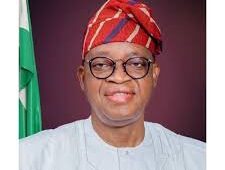


By Ben Ahanonu
The political trajectory of Senator Dave Umahi, the former Governor of Ebonyi State and current Minister of Works, remains one of the most polarising and fiercely debated narratives in contemporary Nigerian politics. In analysing this complex journey, one must explore the deep-seated and growing friction between Umahi and the socio-political interests of the South-east region. It is increasingly indisputable that Umahi’s recent political choices, public utterances, and administrative actions closely resemble a coordinated, adversarial confrontation against the very geopolitical zone that nurtured his political rise and provided him with his initial mandate.
A defining moment in this perceived alienation was Umahi’s tumultuous relationship with the late Professor George Obiozor, the revered former President-General of Ohanaeze Ndigbo Worldwide. Observers of apex Igbo socio-cultural politics noted that Umahi barely concealed his disdain for the leadership of the organisation. This deep-seated animosity reportedly stemmed from the fallout of the 2022 presidential primary election of the All Progressives Congress (APC). Umahi felt deeply betrayed by South-east political leaders, traditional rulers, and delegates, whom he believed failed to provide him with the block solidarity and unyielding support necessary to secure the party’s coveted presidential ticket. Rather than viewing the outcome through the pragmatic lens of national political dynamics and compromise, he appeared to internalise the defeat, directly targeting his grievances toward the institutional leadership of his own people and fostering a sense of lingering resentment.
Beyond internal party politics and primary grievances, Umahi has faced severe and sustained criticism regarding his stance on regional security, justice, and self-determination. He has been repeatedly accused by various civil society organisations and grassroots organisations within the zone of tacitly supporting, or at the very least failing to oppose, the prolonged incarceration of Nnamdi Kanu, the leader of the Indigenous People of Biafra (IPOB). For many residents and stakeholders in the South-east, the resolution of Kanu’s legal battles is not merely a legal matter but is inextricably linked to the restoration of peace, social stability, and economic vitality in the region. By aligning himself seamlessly with the federal government’s rigid and uncompromising posture on this matter, Umahi is viewed by his critics as prioritising his personal standing within the ruling centre over the collective, desperate yearning of Ndi’Igbo for meaningful dialogue, de-escalation, and judicial release.
Furthermore, Umahi’s revisionist narrative regarding his former political platform, the Peoples Democratic Party (PDP), has raised serious eyebrows among political analysts. He recently attributed his public disagreement with the PDP partly to what he described as the South-east’s perceived betrayal of itself. He argued that despite the region consistently supporting the PDP’s presidential candidates since the return to democracy in 1999, it had very little to show for its unwavering loyalty. While the structural neglect of the region by successive federal administrations is an undeniable historical fact, critics argue that Umahi is opportunistically using a valid, collective grievance to justify his personal political migration to the ruling party. The fundamental question that naturally arises from this defensive posture is simple yet profound: must Dave Umahi personally become the President of Nigeria before he actively protects and defends the basic interests of his people?
It is arguably a matter of political ignominy that Umahi frequently and publicly boasts about how he contributed to dismantling the PDP structure in the South-east. The PDP was, after all, the foundational vehicle through which he achieved national political relevance, serving first as the Ebonyi State party chairman, then as deputy governor, and ultimately as a powerful two-term governor. By publicly gloating over the systematic weakening of the party in the zone, he is effectively burning his own political history, invalidating his legacy, and undermining the very socio-political foundations that enabled his rapid ascent to prominence.
This disruptive behaviour draws a stark and troubling parallel with other contemporary leaders in the region who seem increasingly detached from popular regional sentiments. Umahi’s public utterances and administrative acts appear to mirror the highly controversial approach of Professor Charles Soludo, the Governor of Anambra State. Critics have frequently characterised Soludo’s tenure as being overtly preoccupied with undermining the political capital of Peter Obi, rather than fostering regional political synergy and unity. Like Soludo, Umahi is seen as engaging in a divisive brand of politics that prioritises elite validation from external centres of power over local solidarity, leaving the region fractured at a time when cohesion is most desperately needed.
This distinct lack of regional alignment is particularly evident in Umahi’s current high-profile role as the Minister of Works. Despite his well-earned reputation as an aggressive, hands-on infrastructure driver during his tenure as Governor of Ebonyi State, his federal appointment has yet to yield strategic, transformative, or completed projects for the South-east. The region continues to suffer from severe, debilitating infrastructural deficits that paralyze commerce. Key federal transport arteries, such as the vital Owerri–Aba road, the Enugu–Onitsha expressway, and the Onitsha–Owerri–Port Harcourt highway, remain in deplorable states of disrepair, causing immense economic hardship, worsening inflation, and complicating local security efforts.
Moreover, the long-standing clamour for a functional seaport or the proper development of inland water terminals and dry ports in the South-east remains completely unaddressed. As the minister overseeing the nation’s critical highway infrastructure, Umahi was widely expected to leverage his proximity to the presidency to fast-track strategic corridors that connect the landlocked South-east to major national economic hubs. Instead, the perception persists among his constituents that strategic projects are being intentionally diverted, delayed, or prioritised elsewhere, leaving his home region to contend with substandard project execution, slow funding, and abandoned construction sites.
The overarching sentiment across the five states of the region is one of profound exhaustion, disillusionment, and alienation. Ndi’Igbo are increasingly fatigued by self-serving political leaders whose actions, statements, and policy positions operate at direct cross-purposes with the broader Igbo interest. True leadership requires a delicate, sophisticated balance between national service and regional accountability. When a leader’s rhetoric serves only to alienate their primary constituency and demean local institutions, their long-term political relevance becomes highly precarious and fragile.
If Senator Dave Umahi harbours genuine future national ambitions, he must urgently and systematically recalibrate his political approach. He must desist from making unguarded, provocative remarks that dismiss or trivialise the genuine socio-economic and security grievances of the South-east. Political winds in Nigeria are notoriously fickle, unpredictable, and swift, and any leader who completely alienates his primary base will eventually find himself without any real leverage or bargaining chips at the national negotiating table. For Umahi, the historical lesson is clear: burning the bridges that connect him to his home region is a short-sighted strategy that will almost certainly come back to haunt his political future.
Prince Ben AHANONU is the Principal Partner, Ben AHANONU and Associates