. Expects 22 awardees to contribute 250,000 barrels per day
. Sets Oct 31 deadline to revoke idle oil licences
Ugo Amadi
The Nigerian Upstream Petroleum Regulatory Commission (NUPRC) has promised to support newly awarded holders of Petroleum Prospecting Licences (PPLs) from the 2022/2023 and 2024 Licensing Rounds to fast-track their transition from award to first oil.
The commission also urged holders of Petroleum Prospecting Licences (PPLs) to move swiftly from award to production, warning against the historical pattern of licences sitting idle.
With this renewed support, the NUPRC expects the 22 awardees to contribute at least 250,000 barrels of oil per day to national production.
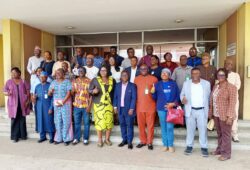
The Commission Chief Executive, NUPRC, Mrs. Oritsemeyiwa Eyesan, stated this while speaking in Lagos at the NUPRC Onboarding Workshop for PPL holders themed “From Award to Production: Delivering Nigeria’s Upstream Petroleum Potential under the Petroleum Industry Act, 2021.
”Eyesan said the two-day workshop was designed to prevent early mistakes that stalled previous bid rounds, stressing that it is also part of efforts to translate recent awards into reserves growth and production, in line with the PIA 2021 objective of unlocking Nigeria’s upstream potential.
“For this set of awardees, we are expecting nothing less than 250,000 barrels per day in the next five years at least from the 22 awards,” Eyesan said, adding that Nigeria remains on course to hit 3MMBOPD by 2030.
She welcomed participants from the 2020, 2022/2023 and 2024 licensing rounds, noting that with licence instruments now issued, operators must “hit the ground running” — but in a structured, compliant way.
Eyesan said the Commission convened the workshop after reviewing past licensing cycles where many awardees struggled to progress. “We had post-award challenges. Most sat on their acreages,” she said. “Even marginal fields didn’t quite take off.
”Drawing from industry experience, she noted that in the 2010/2012 divestment rounds, some operators who understood the business took zero-production assets to 60,000 bpd, and brownfields to 80,000 bpd, while others failed to set up proper upstream structures despite meeting financial obligations.
According to her, “Oil and gas is a specialized business. Some paid the signature bonus but failed in setting up the business,” she said, recalling an operator whose accounts were not even on an Excel sheet.
Eyesan said the Commission’s role under the PIA is not just regulatory but enabling, to ensure awardees understand obligations and how to engage the regulator.“Over the next two days we will walk you through the entire journey — what are your work programme, technical and host community obligations, when and how to approach the Commission, and what support we provide,” she said.
She urged participants to use the platform to network and build industry collaboration, referencing how trade groups like the IPPG have helped members benchmark and share best practices to drive competitiveness.
The first day of the onboarding programme was attended by subject matter experts from the Commission as well as several notable professionals from legal and financial institutions who provided first-hand knowledge to the new awardees.
The first day of the workshop covered five technical sessions from award of licence to production of first oil. Focus areas included regulatory framework, work programme, exploration, appraisal and commerciality, field development, well operations and production as well as exploration financing.
Eyesan advised the new awardees to learn from the successes and mistakes of past winners.
She restated the October 31, 2026 deadline for the revocation of idle oil and gas licences in line with the drill-or-drop provision enshrined in the Petroleum Industry Act.
Eyesan added, “We have issued a directive that by the end of this month, those who were awarded licences and have not done anything within the stipulated time — three years for those onshore and five years for those offshore — the Commission will call in those blocks. It’s going to be drill or drop.
This is standard practice all over the world. In the UK, in the Netherlands, all over the world.”The Chief Executive noted that such extensions would no longer be granted automatically.
“We want to see that in the next two years, more than half of you have reached first oil. In the next three, four years, you are drilling your second well.”
For a better society
_______________________________
Follow us across our platforms:
Instagram – https://www.instagram.com/championnewsonline/
Facebook – https://web.facebook.com/championnewsonline
LinkedIn – https://www.linkedin.com/company/champion-newspapers-limited/
https://x.com/championnewsng/
You can also like and comment on our YouTube videos.
https://youtu.be/QIBfD1tT80w?si=R4Qf3so2LxYu3GC2