
*As killers remain unknown 40 years after
Chinwe Odita, Political Editor
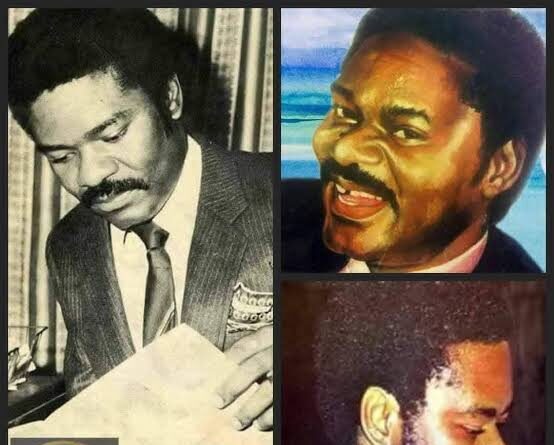
Forty years after one of Nigeria’s finest investigative journalists, Dele Giwa, was blown apart by a parcel bomb at his Ikeja home on October 19, 1986, his ghost continues to haunt the nation’s conscience.
Today in Lagos, a new book celebrating his brilliant and indomitable journalism prowess will be launched.
The book titled ‘Dele Giwa’s Granite Journalism’ is edited by his friend and co- founder of Newswatch, Ray Ekpu.
It serves as a stark reminder that while Giwa’s professional brilliance remains immortal, the system that was supposed to find his killers has fundamentally failed.
Four decades later, there is still no official clue, no conviction, and no closure.
Giwa did not just practice journalism; he revolutionized it.
As the founding Editor-in-Chief of Newswatch magazine, he introduced a bold, literary, and deeply investigative style that held the powerful accountable.
He gave Nigerian journalism its modern spine. Yet, the reward for his courage was a weaponized package bearing the federal coat of arms—a horrific first in Nigeria’s history that forever changed the landscape of press freedom.
The aftermath of his assassination sparked one of the most dogged legal battles in Nigerian history, spearheaded by the late legal luminary and human rights titan, Chief Gani Fawehinmi (SAN).
With fierce determination, Fawehinmi risked his own life and freedom to launch a private prosecution against the military regime.
He pointed accusing fingers directly at the then Military President, General Ibrahim Babangida, and his intelligence chiefs.
For years, Fawehinmi fought through a labyrinth of judicial roadblocks, state surveillance, and detentions.
Tragically, the legal crusade lost its driving force upon Gani’s demise in 2009. Without his relentless advocacy, the criminal case quietly slipped into a comatose state, dying a natural death in the halls of justice.
The closest Nigeria ever came to confronting the truth was during the Human Rights Violations Investigation Commission, popularly known as the Oputa Panel, in the early 2000s by former President Olusegun Obasanjo.
The panel’s proceedings revealed damning testimonies.
Its final report concluded that there was a prima facie case suggesting that General Babangida, alongside Directorate of Military Intelligence chief Colonel Halilu Akilu and Lt. Col. A.K. Togun, were complicit in the assassination.
The panel explicitly recommended the reopening of the case for full prosecution.
Yet, nobody was ever arrested. Babangida, Akilu, and Togun famously obtained injunctions and refused to appear before the panel, rendering the commission’s powers toothless against the military elite.
The political will to execute the panel’s recommendations evaporated, shielded by a deeply entrenched culture of official impunity.
As journalists and historians gather at the Nigerian Institute of Journalism, Ogba in Lagos Monday to celebrate Dele Giwa’s enduring craft, the nation must confront a bitter reality.
We have preserved his words, but we have failed his memory.
Forty years later, the ink of Dele Giwa’s legacy remains indelible, but the blood on the hands of his killers remains unwashed.
Bamidele Atanda Giwa was born on March 16, 1947, in Ile-Ife, Osun State.
He attended Local Authority Modern School in Ife before proceeding to the United States for higher education.
He earned a Bachelor’s degree in English from Brooklyn College in 1977 and later obtained a Master’s degree in Public Communications from Fordham University.
Giwa began his professional journalism career in New York, working for four years as a news assistant at The New York Times.
This period sharpened his rigorous approach to investigative reporting and narrative style.
He returned to Nigeria in 1979, joining the Daily Times as a features editor.
He later moved to the National Concord as the Sunday Editor, where his hard-hitting columns quickly made him a household name.
In 1984, alongside top journalists Ray Ekpu, Dan Agbese, and Yakubu Mohammed, Giwa co-founded Newswatch magazine.
The publication revolutionized Nigerian journalism with its depth, fearless exposes, and high literary quality. As Editor-in-Chief, Giwa pushed the boundaries of press freedom under successive military regimes.
Dele Giwa was assassinated via a letter bomb delivered to his home on Sunday October 19, 1986.
He was 39 years old. His death remains the most bizarre and tragic unresolved murder of a media practitioner in Nigerian history.
For a better society
_______________________________
Follow us across our platforms:
Instagram – https://www.instagram.com/championnewsonline/
Facebook – https://web.facebook.com/championnewsonline
LinkedIn – https://www.linkedin.com/company/champion-newspapers-limited/
https://x.com/championnewsng/
You can also like and comment on our YouTube videos.
https://youtu.be/QIBfD1tT80w?si=R4Qf3so2LxYu3GC2