.Be vigilant, enemies aren’t sleeping, CDS charges troops
.As Abass blames situation on porous borders, insecurity issues in other W/African nations
AHMED MARI, Maiduguri, Jonas Ezieke, Abuja
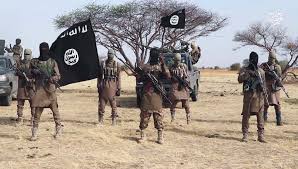
Members of Boko Haram terrorists have were reportedly attacked the 3 Battalion, a military formation in Rann, headquarters of Kalabalge Local Government Area of Borno State
According to realiable sources, this occurred at 12:00 a.m. Tuesday, killing five and injuring six soldiers, inciting fears in nearby residents.
A resident who spoke anonymously said the the Boko Haram terrorists overran the military outpost with heavy-duty machinery, causing the troops to retreat.
He said ” five soldiers were confirmed dead while six soldiers were injured; they also snatched three guntrucks before leaving the base,’ .
The incident occurred less than 14 hours after suspected ISWAP/Boko Haram fighters targeted a military base in Marte and Dikwa Local Government Areas of Borno on Monday.
Iin the recent attack, terrorists raided a Forward Operation Base of the 153 Battalion, killing soldiers and seizing gun trucks, motorbikes, and weapons from the armoury..
At the time of filling in this report, the number of casualties have not been officially confirmed, but sources said seven soldiers lost their lives.
.Be vigilant, enemies aren’t sleeping, CDS charges troops
In the meantime, the Chief of Defence Staff, General Christopher Musa, has charged troops of Operation Fasan Yanma not to allow the enemy to strike them.
The CDS, in his remarks through Rear Admiral Olusanya Bankole, delivered the message to troops of the Nigerian Army’s 8 Division.
He applauded their proactive efforts in combating insecurity across the North West, especially under Operation Fasan Yama.
Speaking on Tuesday during a strategic civil-military cooperation visit at the Giginya Barracks in Sokoto, Bankole, representing the CDS, issued a passionate call for heightened vigilance and unity among security services, emphasizing that “the battle you are fighting is a just one, don’t sleep, because your enemies are not sleeping.”
The CDS lauded the Division for its commitment to defending Nigeria’s territorial integrity, preserving civilian lives, and strengthening ties with host communities.
“We receive weekly briefings at Defence Headquarters, and the 8 Division keeps coming up for praise. The CDS has asked me to personally commend your GOC and every officer under Operation Fasan Yama for a job well done,” Bankole said.
He reinforced the need for inter-agency collaboration, gender sensitivity, and respect for human rights, noting that the ongoing war on banditry and insurgency requires both military strength and civilian trust.
“Let people run to you, not away from you. The best intelligence comes from the civilians you protect,” he added.
In response, the General Officer Commanding of the 8 Division, Major General Ibikunle Ajose, underscored the importance of people-centric operations.
“The Chief of Defence Staff’s leadership philosophy reminds us that real success in asymmetric warfare lies not only in tactical gains, but in winning the hearts and minds of our people,” he stated.
The event also featured a sensitisation lecture on human rights, gender-based violence, and military ethics, aimed at reinforcing the professionalism and accountability of troops in conflict zones.
Ajose emphasised that their mission is not just military, but moral.
“As protectors of the vulnerable, we must embody empathy, discipline, and justice. Today’s engagement strengthens our collective resolve,” he said.
He said the event also included plans for medical outreach, sporting events, and media engagement, “all part of a broader strategy to reinforce unity between the Armed Forces and local communities”
Bankole extended heartfelt wishes to the families of troops.
He stated, “You were not dropped from the sky. You have children, siblings, families and we pray that all of you return home safely, not in coffins.
“Nigeria remains one. The bandits will not win. And our Armed Forces will not sleep”
.As Abass blames situation on porous borders, insecurity issues in other W/African nations
However, The Speaker of the House of Representatives Rt. Hon. Abbas Tajudeen, has stressed the need for better border controls, noting that the present porous nature of Nigerian borders exposes the country to eventualities in other West-African countries.
While calling for better socio-economic and security relationships with other countries in the region, the Speaker called for stronger national cohesion within the country.
“For Nigeria, porous borders mean its security is inseparable from that of its neighbours.
Continued support for joint patrols, the standby force concept, and regional initiatives, such as grazing corridors, will strengthen resilience across West Africa and at home,” he said.
Speaker Abbas made the call in his keynote lecture delivered at the Royal College of Defence Studies (RCDS) Engagement with the Nigerian National Defence College, Course 33, held at the National Defence College in Abuja on Tuesday. The lecture was titled, ‘National Resilience and Security in the 21st Century.’
Speaking on Africa and the Economic Community of West African States, and the regional context of resilience and security, the Speaker noted that national resilience and security are profoundly influenced by regional dynamics in Africa and within the ECOWAS.
He said across the continent, states contend with insurgencies in the Sahel, constitutional crises in Mali, Guinea, Burkina Faso and Niger, economies that depend heavily on commodities, health emergencies such as Ebola and COVID-19, and severe climate impacts.
“Yet African societies consistently demonstrate adaptability, from post-conflict recovery in Rwanda and Sierra Leone to navigating economic hardship. The African Development Bank’s 2022-2026 Strategy emphasises that strengthening institutions, communities, and investments collectively builds shared resilience,” he added.
Speaker Abbas said at the continental level, the African Union’s Peace and Security Architecture — with its early warning systems, mediation efforts, and standby force — alongside initiatives such as the Great Green Wall and ECOWAS drought resilience plans, highlights the need to address security, environmental, and development challenges in a coordinated manner.
The Speaker stressed that ECOWAS has repeatedly acted to contain crises, deploying missions in Liberia, Sierra Leone and Ivory Coast, and leading the 2017 Gambian intervention to uphold election results under Nigerian leadership.
He said: “A wave of recent coups now tests the sub-region’s commitment to constitutional governance, prompting sanctions, negotiations, and proposals for a dedicated ECOWAS standby force to deter unlawful power seizures.”
The Speaker stated that economic integration measures, such as plans for a common currency, solidarity funds, and coordinated health procurements during the pandemic, further bolster regional stability by facilitating resource flows.
He said: “An effective resilience strategy follows three integrated phases: mitigation, adaptation, and recovery. Mitigation employs proactive measures, such as flood defences, robust building standards, preventive diplomacy, and deradicalization programs, to reduce risks before they occur.
“Adaptation acknowledges that some shocks are unavoidable and builds capacity to cope through drought-resistant crops, emergency communications drills, and diversified energy sources.
“Recovery restores and strengthens communities and systems through relief efforts, infrastructure rebuilding, the reintegration of affected populations, and economic stimulus, while embedding lessons learned to address future vulnerabilities. By treating these phases as a continuous cycle, each recovery informs better mitigation and adaptation, ensuring that past crises guide future security planning.”
Speaker Abbas also highlighted how Nigeria’s key policy frameworks now follow an integrated cycle of mitigation, adaptation, and recovery. He said the National Disaster Management Framework mandates preparedness at every level and a coordinated response and recovery under the National Emergency Management Agency (NEMA), working with local and international partners.
He explained that the National Adaptation Plan provides a long-term roadmap to reduce climate vulnerabilities, while the National Security Strategy unites prevention, protection, and crisis response across all ministries, agencies and civil society in a whole-of-society model.
“To strengthen this integration, Nigeria could further intensify joint scenario planning and an annual national risk assessment, in which finance, health, agriculture, environment, and defence present shared threat registers and align their mitigation, adaptation, and recovery measures. This is similar to the UK’s National Resilience Framework and its National Risk Register.
“Achieving true resilience also requires political will and resources for less visible prevention work, as well as a culture of preparedness among citizens, businesses, and communities. By preventing what it can, preparing for what it cannot prevent and recovering swiftly from unavoidable shocks, Nigeria can ensure each crisis becomes an opportunity to build a safer, stronger nation,” he said.
The Speaker stated that what emerges clearly is a powerful conclusion that “national resilience and national security are mutually reinforcing and together form the bedrock for addressing the challenges of the 21st Century and safeguarding the welfare of citizens.”
He added: “National strength depends on prevention, endurance, and quick recovery across all sectors to protect and empower citizens. Success is demonstrated by minimal loss and rapid restoration through early warning systems, economic resilience, or cyber defence, along with long-term improvements in health, education, and equity.
“A society-wide approach, supported by strong legislation and citizen engagement, will ensure that our resilience bolsters our security, and our security in turn fosters our resilience, thereby securing Nigeria’s future.”