


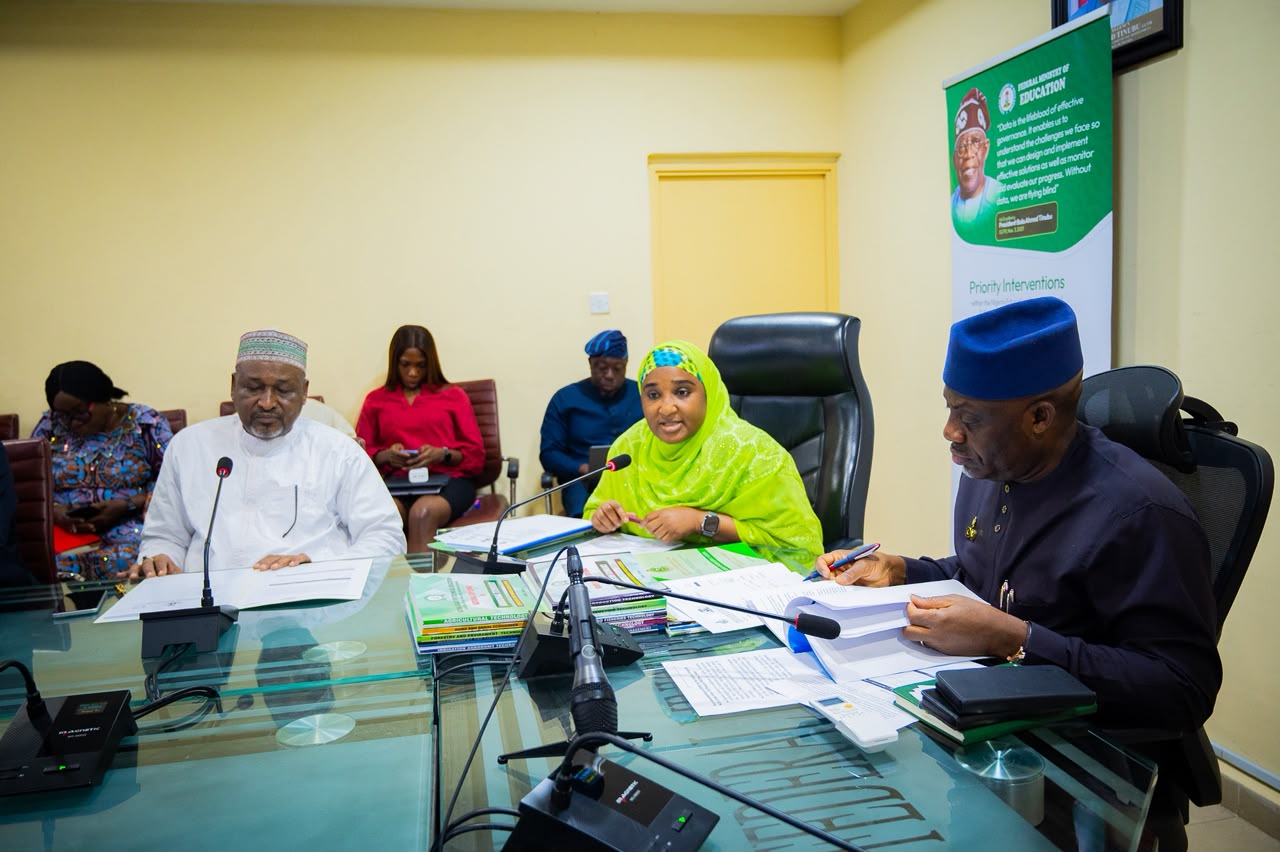
Favour Ishember, Abuja
Dr. Maruf Tunji Alausa says the goal is to build stronger internal capacity within the Monotechnics and Technical Education Board so it can properly carry out its mandate. That includes overseeing polytechnics, monotechnics and other institutions under its watch, while making sure technical training actually matches the skill demands of Nigeria’s economy.
Leading that push, the Honourable Minister of Education has kicked off a major overhaul of the MBTE. The plan is to turn the agency into a sharper, more results-driven body that can anchor Nigeria’s technical and vocational education and training system in line with President Bola Ahmed Tinubu’s Renewed Hope Agenda.
To get there, Alausa set up a working team in partnership with KPMG. Their brief: conduct a full diagnostic of MBTE and design a new organisational blueprint and operating model that will tighten internal systems and help the board deliver on its responsibilities.
The collaboration with KPMG, he noted, was driven by the need to get MBTE’s structure right both administratively and operationally so it can provide the direction, supervision and coordination required to move TVET forward nationwide.
According to the Minister, how well President Tinubu’s vision for technical skills plays out will hinge largely on how effective the institutions tasked with running and regulating the system are.
That is why MBTE must be refitted as a robust, purpose-built agency, he stressed. One that can give solid oversight to polytechnics, monotechnics and other technical schools, and ensure they graduate learners with hands-on competencies that feed national development.
KPMG’s assignment is to pinpoint institutional weaknesses and suggest how to revamp MBTE’s internal processes, structure and day-to-day operations.
The report and recommendations coming out of the exercise, Alausa said, will give the board a clearer roadmap, aligning its setup with its legal duties and with the Federal Government’s wider reforms in skills training.
He emphasized this goes beyond paperwork. “It’s not just an administrative reshuffle. It’s a decisive move to reposition MBTE to lead the growth of technical and vocational education and training in Nigeria.”
The Ministry’s approach, he added, treats polytechnic education as an integral part of the larger TVET ecosystem and believes it should be managed through a skills-first lens.
“Everything about the polytechnic is technical and vocational education and training. It is all about skills. We are simply discussing skills,” the Minister said.
That thinking is already shaping a review of polytechnic curricula and the creation of National Occupational Standards meant to tie training closer to practical ability, industry needs, jobs and enterprise opportunities.
Backed by ₦1 billion from the Tertiary Education Trust Fund, the curriculum review delivered 27 new National Occupational Standards and updated 4 existing ones — bringing the total to 31.
Alausa noted the standards don’t stop at the tertiary level. They lay out a clear progression from artisan training up through the National Certificate, Ordinary National Diploma and Higher National Diploma tracks.
The endgame, he said, is for Nigerians in technical programs to leave with real, usable competencies that convert into jobs, business creation and higher productivity.
Giving the industry view, Adewale Ajayi, Partner and Head of Tax, Regulatory and People Services at KPMG Africa and KPMG Nigeria, said the assessment flagged both the bottlenecks in Nigeria’s TVET system and the upside if it’s properly restructured.
Ajayi pointed out that roughly 93 percent of Nigeria’s workforce operates in the informal sector, while about 12 percent of young people are not in school, work, or skills training.
Still, he noted a bright spot: Nigeria ranks very high on TVET graduate employability. Among countries assessed, only Singapore performed better a sign, he said, of TVET’s potential to produce job-ready talent.
He also urged urgent action on curriculum updates. Over 55 percent of current programs reviewed are obsolete, cutting across engineering, sciences, arts and design.
Funding gaps and the rigid five-year review cycle are part of the problem, Ajayi added, though he highlighted the recent refresh of the agriculture curriculum as a step in the right direction.
The Minister said insights from KPMG, combined with the ongoing curriculum and skills reforms, will lay a stronger base for transforming MBTE into an agency that can truly drive TVET in Nigeria.
A restructured MBTE, he argued, will be better placed to supervise polytechnics, monotechnics and other mandated institutions, boost accountability, and keep technical education in step with industry and economic shifts.
Alausa reaffirmed the Ministry’s commitment to a TVET system built on practical competence, industry alignment, employability and productivity.
He said retooling MBTE sits at the heart of efforts to make technical and vocational education a key engine for Nigeria’s human capital growth and economic transformation.
The target, he concluded, is a leaner, more responsive and fit-for-purpose MBTE that can deliver on its mandate and help realize President Tinubu’s goal of a skilled, productive and globally competitive Nigerian workforce.
For a better society
Follow us across our platforms:
Instagram – https://www.instagram.com/championnewsonline/
Facebook – https://web.facebook.com/championnewsonline
LinkedIn – https://www.linkedin.com/company/champion-newspapers-limited/
https://x.com/championnewsng/
You can also like and comment on our YouTube videos.
https://youtu.be/QIBfD1tT80w?si=R4Qf3so2LxYu3GC2

