
Blessing Taiwo
As part of efforts to promote the well-being of girls and women, a non-governmental organisation, Women Advocate Research and Documentation Centre (WARDC) trained female adolescents and persons with disabilities (PWDs) on sexual and reproductive health rights (SRHR).
The training project titled— ‘Changing the law, changing lives’ was organised by WARDC in partnership with Global Affairs Canada (GAC) and support from Centre for Reproductive Rights.
The initiative aims to enhance the knowledge of adolescent girls and women on menstrual hygiene, legal and psychosocial support for victims of sexual abuse as well as receive appropriate SRHR care.
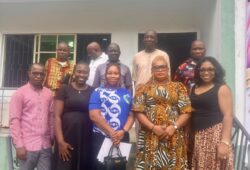
Addressing the young women from various Lagos communities during the workshop held at the WARDC office, Ikeja, Dr Abiola Akiyode-Afolabi, the Founder of WARDC said women are more useful than what the society thinks.
Akiyode-Afolabi charged them to firmly say ‘no’ to illicit sex and teenage pregnancy in order to have a better planned life and live to their full potentials.
“Learn about your body, health and menstrual cycle. The knowledge of these will help you make informed decisions when necessary,” she said.
One of the facilitators at the workshop, Anike-Ade Funke Treasure, Convener of Sanitary Pad Media Campaign (SPMC) stressed the need for girls and women to have menstrual dignity.
“We want them to be proud that they are females and not to see menstruation as something to be ashamed of or make them isolated.
“I host a menstrual health podcast— My Period Stories with good feedback from within and outside the country. We have drama series, essay competition and a year pad scholarship for secondary school girls. We distribute pads and other hygiene products like soap, sanitizer, underwear and beverage,” she said.
The female reproductive rights advocate called on the government to establish sanitary pad banks in schools.
“Some schools cannot afford sanitary pads supply. Menstruation is not a reason for absenteeism in school. The girls need to go to school. Our legislature should think more seriously about instituting pad banks.
“Ministry of health, ministry of education and ministry of women affairs should come together to ensure that there are pad banks in secondary schools, particularly in the rural areas,” Funke Treasure urged.
Participants at the training expressed gratitude for the intensive teachings and discussed ways to alert more young women in their communities on sexual and reproductive health rights.