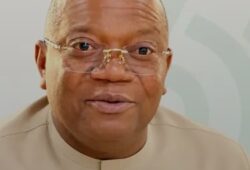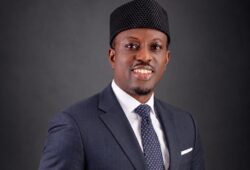

The Group Managing Director, GMD/CEO of UBA Plc, Mr. Oliver Alawuba, has revealed the bank’s strategy to address the non-productive use of the 85 percent of $4 trillion of Africa’s domestic financial assets.
He made the disclosure on Monday at the UAE-Chad Trade and Investment Forum in Abu Dhabi, United Arab Emirates, UAE, where stakeholders gathered to discuss financing African competitiveness.
This discourse was centred on the Theme: ‘Financing African Competitiveness – Building Bridges, Powering Progress.’
Delivering his keynote address, the chairman lamented that the large chunk of African $4 trillion financial assets are channeled into non-productive ventures.
Alawuba said, “For too long, the narrative around Africa has been one of potential. But I stand before you today to declare that the era of potential is over. We are now in the era of execution. And what we are witnessing in Chad is a masterclass in how to make that shift.
“The $30 billion Chad Connection 2030 plan is not just a document; it is a declaration of intent. It is a detailed roadmap to move a nation from the periphery to the very heart of global economic competitiveness. With its 268 projects targeting infrastructure, industrialization, and human development, it understands a fundamental truth: competitiveness is not born in boardrooms; it is built on the ground.”
He maintained that the plan poses a critical question on how to finance the future, saying “It means understanding that a reliable power grid is the foundation of industrial growth. “Chad’s target of 60% electrification by 2030 will enable factories to operate, cold chains for agriculture to function, and the digital economy to flourish.
“It means recognizing that water access for 11 million additional people drives economic transformation. Safe water reduces healthcare burdens, enables food processing industries, and unlocks agricultural productivity across the value chain.
“It means seeing the strategic value in infrastructure. When we finance a road, we finance market access. When we structure a PPP for renewable energy, we finance both climate resilience and energy independence. When we support digital payment systems, we create the foundation for inclusive economic growth.
“And it is built with governance that assures an investor that their capital is safe, and their project will be seen through,” he added.
He believes the answer lies not in a single source, but in a powerful collaborative model, noting “A model where African financial institutions like UBA step up not as mere intermediaries, but as architects of finance.”
He added that the bank believed that the capital to transform Africa exists, both within and outside the continent, saying:
“The challenge has never been a lack of capital, but a lack of bankable structures and credible partnerships, including huge domestic capital misalignment.”
Quoting the Africa Finance Corporation (AFC), the GMD noted “Africa’s domestic financial assets are estimated to total approximately $4 trillion ($2.5 trillion in Commercial Bank Assets, $725 billion in Foreign Reserves and others, $455 billion in Pension Assets and $320 billion in Insurance Assets), but less than 15% of these assets are currently channeled into productive infrastructure essential for growth. This is the gap we bridge.”
While commending the visionary leadership of the Government of Chad and the strategic partnership of the United Arab Emirates for convening the blueprint of transformative potential, Alawuba disclosed that, “our network in 20 African countries and global financial centres (New York, London, Paris) – including right here in the UAE (Dubai) – we have been structuring deals that de-risk investment and unlock capital at scale.
“In Tanzania, we committed over $400 million to the Julius Nyerere Hydropower Project, a testament to our capacity for large-scale energy infrastructure.
“In Nigeria, we have invested over $700 million in the power sector post-privatization and participated in the landmark $10 billion syndication for the Dangote Refinery.
“In Ghana, we financed $315 million in road infrastructure, understanding that connectivity is the lifeblood of trade.
“So, when we look at Chad’s targets – 60% electrification, water for 11 million people, the doubling of agricultural production – we do not see insurmountable challenges. We see a portfolio of bankable projects.
“At UBA, our commitment is two-fold: we are both architects of national infrastructure and champions of grassroots financial inclusion.
“Here in Chad, this is not a promise; it is a proven track record. We have already committed over $102 million in direct investments in the State of Chad’s securities and have been the lead financier on critical national projects – from a $49 million domestic gas project to bring clean energy to households, to a $6.7 million wind farm in Amdjarass and essential funding for road maintenance and telecom modernization. This demonstrates a deep, vested partnership with Chad’s development agenda.
“But true competitiveness requires an inclusive economy. This is why our presence extends far beyond capital cities into the very fabric of Africa”, he added.
For a better society
Follow us across our platforms:
Instagram – https://www.instagram.com/championnewsonline/
Facebook – https://web.facebook.com/championnewsonline
LinkedIn – https://www.linkedin.com/company/champion-newspapers-limited/
https://x.com/championnewsng/
You can also like and comment on our YouTube videos.
https://youtu.be/QIBfD1tT80w?si=R4Qf3so2LxYu3GC2