
Nigeria’s mounting debt burden is becoming a source of grave national concern, threatening to undermine the economic prospects of millions of citizens and generations yet unborn.
For millions of Nigerians, survival has become an exhausting daily struggle. Families are cutting back on meals, parents are struggling to pay school fees, patients are unable to afford essential medicines, and workers are watching their earnings disappear under the crushing weight of inflation and rising living costs.
Small businesses are battling prohibitive operating expenses, while unemployment and insecurity continue to deepen the anxieties of households already pushed to the edge.
Across the country, citizens are being forced to make painful choices between food, healthcare, transportation and other basic necessities.
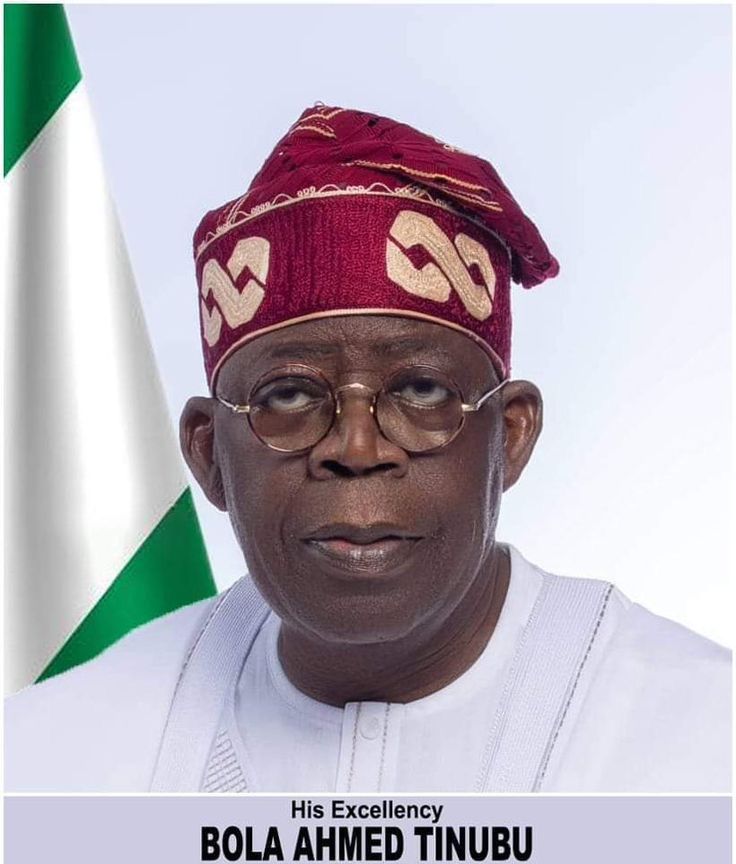
Yet, at a time when Nigerians desperately need relief from economic hardship, the administration of President Bola Tinubu is seeking approval for another colossal package of external loans: $20.52 billion and €1.045 billion.
Tinubu’s latest request for legislative approval to process external loans has renewed questions about the Federal Government’s borrowing appetite, fiscal discipline and accountability in the management of public resources.
The proposed facilities, covering the 2026–2027 period, are intended to finance projects across several sectors, including infrastructure, agriculture, healthcare, education, security and employment generation.
However, Nigerians deserve more than a familiar catalogue of promises whenever their government seeks fresh loans.
We demand that the Tinubu administration must explain why the country should continue accumulating enormous liabilities without a convincing demonstration that previous borrowings have delivered commensurate improvements in the lives of ordinary citizens.
Borrowing is not inherently irresponsible. Governments everywhere borrow to finance productive investments, bridge temporary revenue shortfalls and accelerate economic development.
But a problem arises when borrowing becomes a convenient substitute for fiscal prudence, efficient revenue mobilisation and transparent public expenditure.
The latest request, therefore, raises a fundamental question: how much more debt must Nigeria incur before its citizens begin to experience the tangible benefits of successive borrowing programmes?
According to the Debt Management Office, Nigeria’s total public debt stood at approximately ₦166.79tn as of June 30, 2026, covering obligations owed by the Federal Government, state governments and the Federal Capital Territory. This represents a substantial increase from the ₦87.38tn recorded in June 2023, when Tinubu assumed office. Although exchange-rate movements and other factors influenced the naira value of public debt, the scale of the increase demands serious scrutiny.
In our view, the incumbent administration cannot indefinitely justify its borrowing decisions by pointing to Nigeria’s enormous infrastructure deficit.
Indeed, the country desperately needs better roads, reliable electricity, functional hospitals, quality schools, modern railways and improved security. Yet, the existence of these needs does not automatically justify every loan request.
The critical issue is whether borrowed money is being deployed efficiently, transparently and in ways that generate sufficient economic and social returns to justify the repayment burden.
It is particularly troubling that the government’s repeated appeals for additional financing have not been accompanied by a sufficiently convincing public account of how previous loans have translated into measurable development outcomes.
Nigerians should not have to rely on official assurances while struggling with rising living costs, inadequate public services, unemployment and widespread economic hardship.
The controversy surrounding the latest borrowing request has also brought the question of accountability into sharper focus.
Senator Victor Umeh, reacting to the proposal, questioned why contractors executing capital projects were still awaiting payment despite previous borrowing approvals intended to support government budgets.
We strongly believe that his concern deserves a substantive response from the administration. If funds have been approved and borrowed for budget implementation, why are some financial obligations still outstanding?
The government must not treat such questions as political distractions. They concern the responsible management of public money and the welfare of Nigerians who will ultimately bear the cost of repayment.
Equally disturbing is the danger that excessive reliance on borrowing could gradually narrow the government’s fiscal space. Every loan creates an obligation to repay principal and interest.
As debt-service costs rise, less money may be available for education, healthcare, agriculture, social protection and other essential services.
External borrowing also exposes the country to exchange-rate risks, particularly when loans are denominated in foreign currencies while government revenues are predominantly collected in naira.
The consequences extend beyond the current administration. Future governments may inherit repayment obligations that constrain their capacity to respond to economic emergencies or invest in the needs of their populations.
In effect, citizens who have no voice in today’s borrowing decisions may be compelled to finance debts incurred before they become eligible to participate in the political process.
This is why fiscal responsibility must be understood as an obligation to future generations, not merely an accounting exercise.
The National Assembly must consequently resist the temptation to treat the latest proposal as another routine borrowing request. Before granting approval, lawmakers should demand a comprehensive, project-by-project breakdown showing the amount allocated to each project, its location, implementation timetable, contractors where applicable, financing terms and expected economic returns. They should also establish whether the proposed facilities overlap with previously approved borrowing plans and clarify the relationship between existing approvals and the fresh request.
More importantly, the government should publish regular reports detailing the amounts actually borrowed, the sums disbursed, the projects completed and the outstanding liabilities. Independent audits and legislative oversight must be strengthened to ensure that borrowed funds are not diverted, abandoned in uncompleted projects or consumed by inflated contracts and administrative inefficiencies.
Tinubu’s administration must also demonstrate greater frugality in public expenditure. It cannot credibly demand sacrifices from citizens while failing to show that government spending is being prioritised with comparable discipline. Wasteful expenditure, poorly evaluated projects, unnecessary duplication and weak revenue administration must be addressed decisively.
Besides, improving tax compliance, widening the productive economic base, plugging revenue leakages and strengthening public procurement systems should complement, rather than be displaced by, borrowing.
Ultimately, the test of responsible borrowing is not the volume of money secured from foreign creditors but the value delivered to the people. Every borrowed dollar should translate into productive infrastructure, better public services, employment opportunities or investments capable of expanding national prosperity.
Nigeria cannot borrow its way out of poor governance. Nor can the government indefinitely mortgage the future in the name of development without demonstrating the results.
Tinubu must recognise that public confidence depends on transparency, measurable performance and prudent management of national resources. The National Assembly must equally remember that its constitutional responsibility extends beyond approving loans to protecting the public interest.
Nigeria needs development financing, not an endless cycle of borrowing without convincing accountability. The future of this country must not become collateral for the failures of the present.
For a better society
_______________________________
Follow us across our platforms:
Instagram – https://www.instagram.com/championnewsonline/
Facebook – https://web.facebook.com/championnewsonline
LinkedIn – https://www.linkedin.com/company/champion-newspapers-limited/
https://x.com/championnewsng/
You can also like and comment on our YouTube videos.
https://youtu.be/QIBfD1tT80w?si=R4Qf3so2LxYu3GC2