
Chinwe Odita
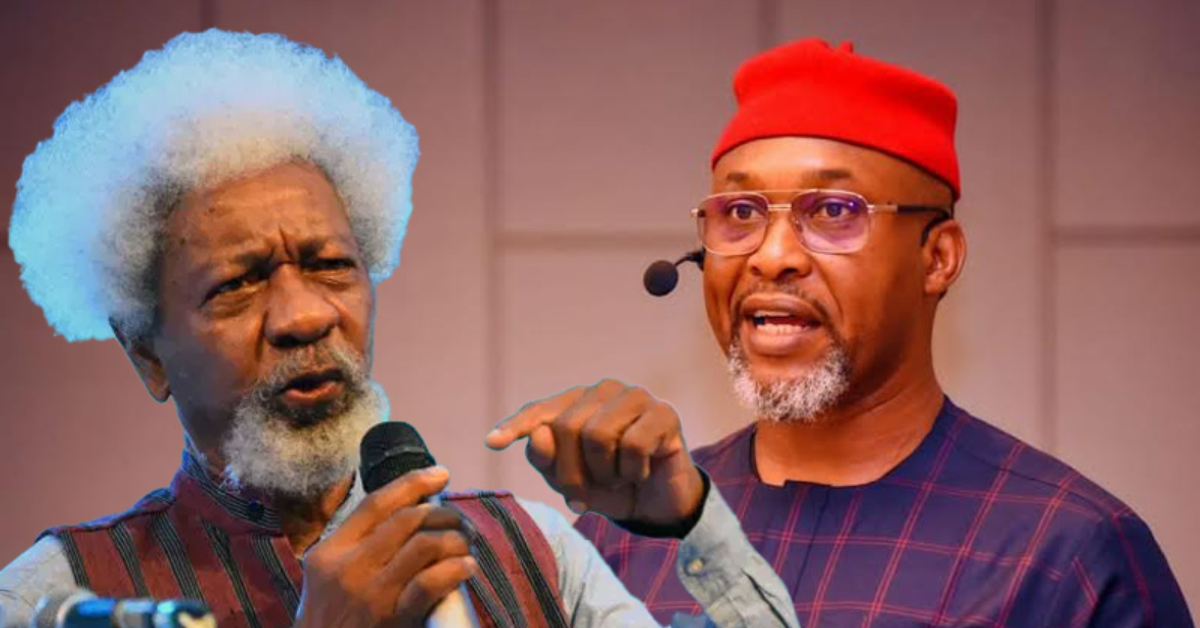
Nobel Laureate, Prof. Wole Soyinka, former Aviation Minister, Chief Osita Chidoka, and ex-NDDC Managing Director, Timi Alaibe, have called for a national rebirth built on accountability, justice and civic courage, saying Nigeria cannot progress until impunity is ended.
The leaders spoke on Friday at the 28th Wole Soyinka Lecture Series and National Association of Seadogs, NAS, Martyrs’ Day in Port Harcourt, Rivers State.
Chidoka delivered the keynote lecture themed _‘Reclaiming the Nigerian State through Accountability, Justice and Civic Courage’_.
Soyinka said the event was dedicated to victims of state brutality, extrajudicial killings and mob violence, stressing that respect for human life must be the foundation of democracy.
“The life of a human being constitutes the basic unit of any community and any system of governance,” he said.
The 92-year-old decried what he described as a growing culture of impunity, citing the killing of a young man by a police officer and the murder of Deborah Samuel as examples.
He urged Nigerians to demand justice for victims of abuse and challenged authorities to reopen unresolved cases of extrajudicial killings and political assassinations.
“What happened to all the files of unsolved killings? We want to know why they happened and ensure justice does not fail us again,” Soyinka asked.
In his keynote, Chidoka argued that Nigeria’s problem is not a lack of laws, but the failure to enforce them fairly.
“Nigeria’s crisis is not that the state is weak; it is selectively strong. It is strong when collecting from citizens but weak when delivering services. Strong when coercing but weak when explaining,” he said.
He described the country’s governance style as an “alibi culture,” where officials explain failures instead of taking responsibility.
Using the 1997 detention of 33 NAS members, known as the F-18, and the 2005 Apo Six killings as examples, Chidoka said successive governments have retained the oppressive instincts of the state despite the return to democracy.
“Explanation without correction is not accountability,” he declared, adding that accountability must include correction, restitution and sanctions. Public officials who abuse power, he said, must be identified and held personally liable.
Chidoka dismissed the notion that restructuring alone would fix Nigeria, saying the country urgently needs a moral consensus anchored on equal citizenship, answerable leadership and justice.
He also called for stronger whistleblower protection, respect for court orders, transparent governance, and reforms to end prolonged pre-trial detention. He noted that over 64% of inmates in Nigerian correctional facilities are awaiting trial.
Alaibe said sustainable development cannot thrive where accountability is absent and institutions are weak.
“Nations are not reclaimed by rhetoric alone. They are reclaimed when conscience triumphs over convenience, when institutions are stronger than individuals, and when citizens summon the courage to do what is right, even when it is difficult,” he said.
He paid tribute to Soyinka on his 92nd birthday, describing him as a symbol of principled patriotism whose commitment to justice continues to inspire Nigerians.
NAS Cap’n, Dr. Joseph Oteri, said the lecture was part of activities marking NAS Martyrs’ Day, which honors members detained for 72 days during the Abacha military era after being falsely labeled opponents of the regime.
Speakers at the event agreed that building a Nigerian state free from arbitrary abuse of power requires citizens to demand accountability and refuse to normalize impunity.