
Find Articles

Trending:

NUPRC offers 40 oil blocks to global investors, unveils 2026 licensing round in Dubai

.Flaunts fresh fiscal incentives

.NNPC may reduce fuel prices after Dangote’s latest cut

.As N70,000 transport allowance tears labour apart

.Ajaero, Osifo’s rift deepens


Favour Ishember, Abuja with Agency report


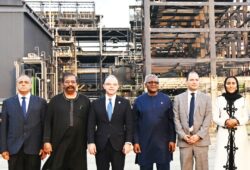
The Nigerian Upstream Petroleum Regulatory Commission (NUPRC) has urged global investors to take advantage of Nigeria’s improving energy landscape, assuring them that the country remains a stable and attractive destination despite growing uncertainties in the global energy market.

The Commission Chief Executive (CCE), Mrs. Oritsemeyiwa Eyesan, made the call while announcing that Nigeria’s 2026 Oil and Gas Licensing Round will offer 40 blocks to prospective investors, with the official bidding portal scheduled to open on November 20, 2026.

Eyesan spoke at a high-level roundtable session titled, “Energy Sovereignty in an Interconnected World: Aligning National Priorities, Markets and Global Security,” held during the 2026 ADIPEC Exhibition and Conference in Abu Dhabi on Monday, November 2, 2026.

She said Nigeria was expecting increased participation from international investors, stressing that the country had created a more competitive investment environment through reforms, incentives and improved security measures.

“We are expecting investors to turn to Nigeria. We are going into another licensing round and we will be launching our bid portal on November 20. We expect to see interested investors because the environment is a lot more competitive,” Eyesan said.

According to her, the government has introduced an attractive fiscal framework aimed at reducing investment barriers while providing incentives capable of encouraging more capital inflows into the upstream sector.

“We have set a very attractive fiscal framework for investors. The entire environment is a lot more secure. We have been able to manage costs with a lot of incentives for investors and we expect to see investors take up the offer when we open the portal,” she added.

The NUPRC boss noted that the passage of the Petroleum Industry Act (PIA) in 2021, alongside executive orders issued by President Bola Tinubu, had significantly transformed Nigeria’s investment climate.

She explained that between 2021 and 2026, the commission successfully conducted at least four licensing rounds, resulting in increased investor confidence and fresh commitments to the nation’s oil and gas industry.

Eyesan said the development represented a major shift from the period before the PIA, when licensing rounds were irregular and less attractive to investors.

She further highlighted Nigeria’s enormous gas potential, revealing that the country currently holds about 215 trillion cubic feet (TCF) of gas reserves, while daily production remains at about seven billion cubic feet (BCF).

According to her, the gap between available resources and current output presents a major opportunity for investors, especially with critical gas infrastructure projects being developed to unlock supply.

“The stars are already aligned. For gas infrastructure, we have just completed very major projects that will unlock gas supply in the country and the sub-region,” she said.

Eyesan pointed to major planned gas projects, including the Nigeria-Morocco Atlantic Gas Pipeline and the Trans-Sahara Gas Pipeline, noting that the initiatives would support domestic demand, regional markets and supply needs in Europe.

She maintained that Nigeria was strategically positioned not only to meet its internal energy requirements but also to become a major supplier in the global gas market.

The NUPRC chief executive acknowledged that competition for energy investment had intensified as more countries discover and develop petroleum resources.

However, she said Nigeria had taken proactive steps to remain competitive by implementing reforms designed to attract quality investments and reduce risks associated with project execution.

“We understand that investors will price execution risk, cost, delays and uncertainty. What we have done in Nigeria is to ensure that we guard against these risks and attract the investment required to unlock the huge resources we sit on,” Eyesan stated.

I have used the second paragraph as the lead angle and adapted it to a Daily Champion newspaper style with a stronger headline and rider. I can also make it more front-page style with a harder economic angle if preferred.


Meanwhile,the President of the Nigeria Labour Congress, Joe Ajaero, has insisted that the union has the authority to negotiate alone on labour matters, countering the position of his Trade Union Congress counterpart, Festus Osifo, that both labour centres must participate in such negotiations.

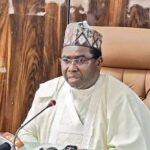
Ajaero said the TUC could negotiate alongside the NLC but could not independently negotiate with labour authorities, citing what he described as the principle of most workers’ representatives under the International Labour Organisation.
He spoke on Monday while appearing as a guest on Channels Television’s The Morning Brief, amid the disagreement between the two labour bodies over the N70,000 transport allowance approved by the Federal Government for workers across all levels for six months. v
“TUC can negotiate along with NLC but NLC can negotiate alone based on the principle of most workers representatives of the ILO,” the NLC president said.
Ajaero argued that the TUC was required to present its proposals to the NLC for onward submission when engaging with the ILO.
“TUC sent their negotiation alone ahead of the ILO conference but they returned it back and I had to minuted on it.
“They have to send their list here for me to forward it; that is the position of the ILO. NLC determines how TUC participates,” he said.
He added that the Ministry of Labour and other labour authorities would not engage with the TUC independently on workers’ welfare negotiations.
“TUC can’t negotiate alone; if they are saying and it is implied, it does not happen. I don’t think the Ministry of Labour or the Labour Authority will allow that to happen.”
Responding to Osifo’s claim that the TUC had a significant number of workers in the federal civil service, Ajaero cited the Trade Union Amendment Act 2005 and the 1999 Constitution, arguing that workers had the right to choose their unions.
“The 2005 Trade Union Amendment Act made membership of trade unions voluntary.
“It is the worker that determines the union he belongs to; the Act makes
“Section 40 of the Nigerian 1999 Constitution as amended was clear that every Nigerian worker has the right to belong to any trade union, political or religious institution of his choice, which gives every worker the latitude to belong to any union of their choice,” he said.
Ajaero also argued that Osifo’s claim about the number of workers represented by the TUC did not reflect the composition of the Joint National Public Service Negotiating Council.
According to him, only one of the eight union bodies in the joint council belongs to the TUC, while the remaining seven are affiliated with the NLC.
He further argued that the TUC-affiliated union in the joint body had subjected its powers to the council.
Explaining how the N70,000 transport allowance agreement was reached, Ajaero said the NLC had issued an ultimatum to the Federal Government before the intervention was agreed upon.
“We gave government an ultimatum; we were supposed to start an action. The government asked for four days and to meet with us, and we met, and they resumed sitting after four days.
“After the meeting, the 70k allowance came up,” he said.
The NLC president maintained that minimum wage demands could not be presented without the government first establishing a negotiation committee, adding that any wage increase required consultations involving labour leaders, government officials and employers.
TUC President, while appearing as a guest on Channels Television’s The Morning Brief on Monday, described the N70,000 agreement by the NLC President as an aberration, saying that the TUC was not carried along in the negotiations.
“Listening to Ajaero again today, I really pity the Labour movement and the quality of leaders that have been inflated on the NLC.
“As I listened to Ajaero today, I was wondering if it is the same NLC that produced the likes of Adams Oshiomole, Hassan Sumonu, Ayuba Wabba and so on.
“There is nowhere in ILO regulations that says a trade centre cannot negotiate for its members. It is not there! It is just that if you are going to the ILO, it is tripartite- the labour, government and the employers. And in describing that, it means that the list of the TUC members is joined together with that of the NLC and submitted to the Ministry of Labour, who forwards it to the ILO.
“In that case, the two bodies must come together. We are not contesting the fact that NLC has more affiliates.
“But what we are saying is that you have about 60 affiliates while we have about 40. You cannot! You cannot negotiate for a body that is represented, for a body that has a trade union. “You cannot negotiate for them on their behalf! It is not there anywhere!
“Yes, if we go to negotiations- I sit down, you sit down, and we agree”.
Osifo challenged Ajaero to produce the ILO regulation document that said either of the labour unions could negotiate on behalf of the other.
“He should show me in the ILO Regulations where it says one party is going to negotiate without the other one being there or consulted. He should show me! He should show Nigerians!
“ILO doctrine is that when you have more affiliates, and you are going for one of their events, it is not correct that the most represented will go and negotiate on behalf of the other one when the unions have their own umbrella.
“Let Ajaero send a document to you that proves that! It cannot be found anywhere!
He talked about the JNC (Joint Public Sector Negotiating Council ). I don’t truly think Ajaero has read the JNC constitution. I don’t truly think he knows what the JNC means.
“Yes, you have a Masters in 1990. You cannot use a solution of yesterday to attack today’s problem.
“And that is why in industrial relations, you need to keep updating, retooling and relearning.
“First, the JNC means that when there are issues in the public sector, the JNC looks at it”.
According to Osifo, the meeting where the N70,000 transport allowance was agreed upon was not the Council’s meeting and does not represent a general agreement by members.
“But that meeting that took place was not the Council meeting. The Minister is not a member of the Council. Ajaero is not a member of the Council.  The Council even has a quorum and the number of persons that must be seated to form a quorum. But at the end of the day, that meeting was not a JNC meeting. The members of JNC were not there!
“Again, if you see the release that was sent out by those three bodies, you will discover that after the last minimum wage, we got about 33 per cent increment, and how does that work? Because from N30,000, we got N70,000.
What you are supposed to do is that JNC will have to sit down and apply consequential adjustments.
“You know what Ajaero used JNC to do? Ajaero sent JNC a questionnaire and asked them to apply N40,000 each to Nigerian workers. So they took N40,000, which is the difference between N30,00 and N70,000, and applied it across board. That is why the federal workers today are earning abysmally poor.
“But I attacked him! I went to his office and told him that “Ajaero, this is wrong!” What you used JNC to do is fundamentally wrong!”

Peter Chibundu

Leave a Reply

Your email address will not be published. Required fields are marked *