
. FG partners stakeholders on safe excreta disposal
Akor Sylvester, Abuja with Agency report
The Federal Government has said it is collaborating with relevant stakeholders including ministries, state governments and development partners in implementing programmes aimed at promoting safe excreta disposal and improving sanitation nationwide.
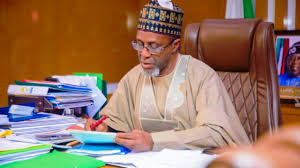
The Minister of Environment, Mallam Balarabe Abbas Lawal, who made the disclosure at a ministerial press briefing on the commemoration of the 2026 World Toilet Day, in Abuja Tuesday, said the theme of this year’s World Toilet Day, “Sanitation and Gender Equality,” with the campaign tagline “Safe Toilets. Equal Futures, ” highlighted the importance of safe and secure toilets, access to soap and water, and adequate menstrual hygiene facilities in protecting the health, safety and dignity of women and girls.
Meanwhile, cholera has killed more than 3,000 people worldwide since the start of the year, the World Health Organisation said on Tuesday, insisting that its goal of cutting global cases by 90 percent by 2030 remained in reach.
The disease killed nearly 7,900 people in 2025, making it “the deadliest year for cholera since 1999”, according to Lorenzo Pezzoli, WHO lead for epidemic-prone bacterial diseases.
While data for the first nine months of 2026 show a decline in deaths, more than 3,000 people have still died from the preventable and treatable diarrheal infection, he said, with “nearly nine out of 10 of them in Africa”.
The WHO also warned that the current El Nino weather pattern could worsen outbreaks, as cholera can be fuelled by both flooding and water shortages.
The UN health agency and the vaccine alliance, Gavi, aim to reduce global cholera cases by 90 percent by 2030 through mass vaccination campaigns and improved access to clean water and sanitation.
Although cholera was eliminated from high-income countries generations ago thanks to safe drinking water and modern sewage systems, it can still “kill within a matter of hours” if left untreated, Pezzoli said, despite being “easy and inexpensive to treat” with existing medicines.
“The 2030 goal is achievable because the work is already under way,” Pezzoli added, pointing to the International Coordinating Group (ICG) on Vaccine Provision, which last year approved the supply of 71 million doses, funded by Gavi.
Vaccines and rapid diagnostic tests are also reaching outbreak zones more quickly, helping health workers detect and respond to infections earlier.
WHO and its partners are helping countries identify districts where cholera repeatedly resurfaces and develop response plans.
Seven countries — Angola, Bangladesh, the DR Congo, Nigeria, South Sudan, Sudan and Yemen — accounted for about 90 percent of global cases and deaths last year.
“The collective response is undeniably bearing fruit, but… it remains insufficient,” Pezzoli said.
“We must redouble our efforts to help all these countries reach the elimination goal which means ensuring that, by 2030, cholera no longer poses a public health threat in any of them.”
In Nigeria, the minister said it also reinforced the need to create an enabling environment for their full participation in education, employment and public life.
According to the Minister, globally, approximately 4.5 billion people still lack safely managed sanitation, while 892 million continue to practise open defecation.
He said these figures underscore the urgency of accelerating action towards achieving the Sustainable Development Goals, particularly SDG 6 on Clean Water and Sanitation, SDG 5 on Gender Equality, SDG 3 on Good Health and Well-being, and SDG 11 on Sustainable Cities and Communities by 2030.
Lawal said, in Nigeria, access to safe sanitation remains a major public health and environmental challenge, quoting the National Demographic and Health Survey, which indicated that access to improved sanitation remains below 36% for the majority of the population.
He said, many public places, including markets, motor parks, schools and communities, still lack adequate and functional toilet facilities.
Represented at the occasion by Director pollution Control and Environmental Health, Mrs Omotunde Adeola, the minister said the situation contributes to open defecation, contamination of food and water sources, and the spread of poor sanitation- associated diseases such as cholera, typhoid and others.
According to him, the consequences of inadequate sanitation are particularly severe for women, girls, children, older persons and persons living with disabilities. He added that no child should have to miss school because of inadequate toilet facilities, and no woman or girl should have to compromise her safety and dignity because of the absence of appropriate sanitation facilities.
The minister informed that some of the key interventions of the programme include: Capacity building and training of Environmental Health Officers on faecal sludge management and toilet design, integration of sanitation into climate adaptation and circular economy initiatives to promote sustainable waste reuse and energy recovery.
Others, he said included: “The Clean and Green Programme, which promotes access to safe and adequate toilets in public places.
“The Community-Based Waste Management and Open Defecation Control Programme, which supports communities to build and maintain public toilets.
“Partnerships with private sector actors to provide environmentally friendly sanitation facilities through public-private arrangements.
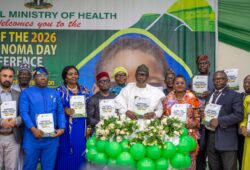
“As part of this year’s World Toilet Day commemoration, the Ministry, in collaboration with stakeholders, has undertaken a Community Engagement and Sensitisation Campaign at Kpadna Community, Utako, Abuja on the 19th November, 2026. The community sensitisation campaign is designed to engage residents, traders, food vendors and other community members on proper sanitation, hand hygiene and safe waste disposal through interactive discussions, health talks and practical demonstrations by Environmental Health Officers.
“Our primary objective is to promote behavioural change and demonstrate how improved sanitation contributes to better health, cleaner surroundings and stronger livelihoods; the ministry is convening a National Dialogue on Faecal Sludge Management workshop on the 23ra November, 2026 involving seven selected States from the six geopolitical zones and the Federal Capital Territory. The dialogue provides an opportunity for States to assess and share their experiences, challenges and interventions in managing faecal sludge”.
Noting that government alone cannot achieve universal access to safe sanitation, the minister called on State and Local Governments to strengthen faecal sludge and wastewater management through environmentally sound systems for collection, transportation, treatment, safe disposal and reuse.
He urged communities and households to embrace proper toilet use, personal hygiene, handwashing and environmental cleanliness; the private sector to invest in affordable and innovative sanitation technologies and climate-resilient infrastructure; and development partners, NGOs and Civil Society Organisations to sustain their support for advocacy, public education and infrastructure development, particularly in underserved and vulnerable communities.
“As we commemorate World Toilet Day 2026, let us renew our commitment to ending open defecation, eliminating unsafe sanitation practices, improving access to functional public toilets and ensuring that no Nigerian is left behind,” he said.
WHO said in a statement on Tuesday that the movement, tagged “Together for Science and Health”, was officially inaugurated on World Science Day for Peace and Development.
It said 12 events were organised across countries and regions to mark the inauguration and promote the initiative’s objectives.
For a better society
_______________________________
Follow us across our platforms:
Instagram – https://www.instagram.com/championnewsonline/
Facebook – https://web.facebook.com/championnewsonline
LinkedIn – https://www.linkedin.com/company/champion-newspapers-limited/
https://x.com/championnewsng/
You can also like and comment on our YouTube videos.
https://youtu.be/QIBfD1tT80w?si=R4Qf3so2LxYu3GC2