

. Applaud proposed 74 new legislative seats for women
. It’s wasteful, detrimental to merit-based democracy, opponents insist
Halimat Lateef and Daniella Okwundu Asomugha
The campaign for affirmative action to promote women’s participation in Nigeria’s political governance is gathering momentum ahead of the 2027 general elections, with growing support for ongoing legislative efforts to reserve more seats for female lawmakers.
However, entrenched traditional sentiments continue to fuel opposition to affirmative action, with critics describing reserved legislative positions as unnecessary, wasteful and potentially detrimental to merit-based political representation. They argue that every citizen with the requisite capacity and value proposition should earn a seat in the legislature through the electoral process, irrespective of gender.
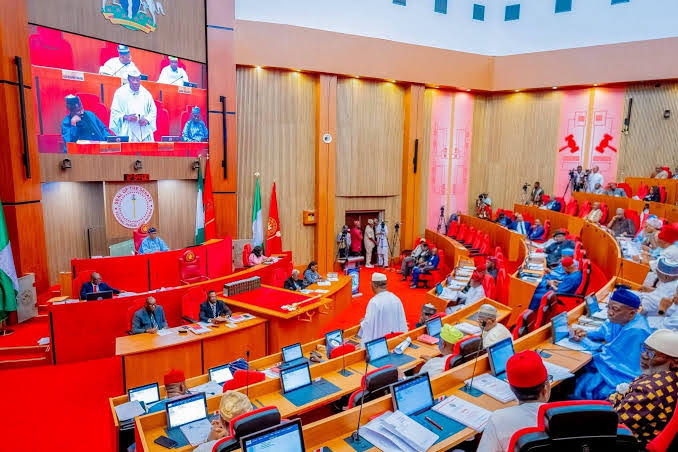
Daily Champion reports that the proposed creation of 74 additional legislative seats exclusively for women by the National Assembly is generating strong political debate and political parties are mounting serious campaigns to secure women’s votes.
Both male and female Nigerians covered in our field survey welcome the affirmative initiative as a necessary intervention to address women’s underrepresentation in governance, while others insist that competence and equal opportunities should remain the basis for political participation.
It would be recalled that the National Assembly has proposed the creation of 74 additional seats for women in the Senate and House of Representatives, alongside three reserved seats for women in each state House of Assembly, as part of efforts to improve female representation in Nigeria’s political system.
The Senate Leader, Senator Opeyemi Bamidele, disclosed the proposal recently at the 2026 Law Week organised by the International Federation of Women Lawyers, Ekiti State Chapter.
The initiative, which forms part of the ongoing constitutional amendment process, has triggered a debate over whether reserving legislative seats for women would significantly improve their representation in government and strengthen inclusive governance.
Speaking in an interview with Daily Champion, Kehinde Lawal described the proposal as a welcome development, arguing that women have ideas, experiences and contributions that could add considerable value to governance.
He said women sometimes had a better understanding of issues affecting families, children and communities because of their experiences, adding that creating more opportunities for them in government would help bring such concerns to the attention of lawmakers and influence policy decisions.
However, Monsura Adeshina said creating additional legislative seats was only one aspect of the challenge, maintaining that the performance and contributions of the women who eventually occupy the positions would ultimately determine whether the initiative achieved its objectives.
“We have had people in government who made promises but failed to deliver. I want to see whether this will genuinely make a difference,” she said.
Similarly, Paul Chiemere said he had no objection to women occupying political positions but maintained that leadership should be determined by competence rather than gender.
He argued that qualified women should be given equal opportunities to contest elections, win electoral mandates and demonstrate their capacity to contribute to national development.
Also, Surprise Sunday called on political parties to intensify efforts to encourage women’s participation in politics, arguing that the proposed creation of reserved seats should not become a substitute for addressing the structural barriers preventing women from participating in elections.
She noted that many capable women might be interested in politics but lacked the financial resources, institutional backing and support networks required to contest elections successfully.
Ekeke Somtochukwu, however, opposed the proposal, expressing concern that expanding the legislature through additional seats could create more opportunities for the misuse of public funds.
According to Ekeke, increasing the number of women in the legislature would not automatically translate into better leadership, improved accountability or more effective representation. He argued that political officeholders should be assessed based on their conduct, performance and commitment to public service rather than their gender.
“I believe the new seats would just present new avenues for the abuse of Nigerian funds,” Ekeke said.
In contrast, Michael Olabode supported the proposal, insisting that women deserved equal opportunities to participate in governance and contribute to decisions affecting the country.
Michael argued that the additional seats would create opportunities for more women to occupy leadership positions, bring their perspectives into legislative debates and ensure that their interests were adequately represented in government.
“I support the idea because women deserve equal opportunities to participate in government and make important decisions,” Michael said.
She, however, stressed the importance of accountability in the management of public funds, urging the government to ensure that only qualified women occupied the proposed positions.
Similarly, Mosaku Tolu backed the initiative, describing increased women’s representation in governance as a worthwhile investment despite the additional financial implications of expanding the legislature.
Tolu said women could bring different perspectives, sound decision-making and valuable ideas to legislative activities, adding that they deserved greater opportunities to participate in leadership and contribute to national development.
“Even though it may cost more money, I think better representation of women is worth the investment,” Tolu said.
Chiemela Nwankwo also expressed strong support for the proposal, maintaining that women deserved equal and even greater opportunities to participate in leadership and governance.
Nwankwo said women should be provided with more opportunities to contribute to national decision-making, stressing that promoting greater female representation should remain a priority in the country’s democratic development.
The differing positions reflect the broader debate surrounding the proposed constitutional amendment, particularly the need to strike a balance between correcting the longstanding underrepresentation of women in political leadership and ensuring accountability in public spending.
While proponents believe the additional seats could provide a practical pathway for more women to participate in governance and influence national policies, opponents question whether expanding the legislature would address the fundamental problems affecting political leadership, competence and accountability.
Recall that Bamidele, who is also the Vice Chairman of the Senate Committee on the Review of the 1999 Constitution, said the proposals were part of the ongoing constitutional amendment process and were designed to create special legislative seats for women without displacing any existing elected representatives.
The initiative, if approved, would add 37 seats to the Senate and another 37 to the House of Representatives, ensuring that each state of the federation and the Federal Capital Territory has one additional seat in each chamber.
The programme was attended by the Chairman of the House of Representatives Committee on Information and National Orientation, Steve Fatoba, and the Speaker of the Ekiti State House of Assembly, Adeoye Aribasoye, among other dignitaries.
Speaking at the event, Bamidele said the National Assembly was already considering the legislative framework required to establish special seats for women at both national and state levels.
“A Bill for an Act to alter the provisions of the Constitution of the Federal Republic of Nigeria, 1999 to provide for special seats for women in the National and State Houses of Assembly and for related matters is receiving our attention at the National Assembly,” he said.
The Senate Leader explained that the proposal followed extensive consultations and consensus-building, noting that the National Assembly had commenced the constitutional review process early to ensure a comprehensive, inclusive and properly coordinated exercise.
He added that the legislative initiative “is the fruit of extensive consultation and consensus-building. It is why we commenced the constitutional amendment process early, ensuring that this is not a rushed, haphazard endeavour but a deliberate, inclusive, and thorough reform.
“The proposal, as it stands, is meticulous in its design. It seeks to add 37 seats in the Senate and 37 seats in the House of Representatives. This suggests that if finally approved, each state of the federation, including FCT, will have one additional seat in each of the Houses of the National Assembly.”
Bamidele further disclosed that the Constitution Review Committee had proposed three additional seats for women in each state House of Assembly, with the arrangement expected to remain in place for 16 years, covering four electoral cycles, before a comprehensive review.
He said the proposal was intended to give women greater access to legislative representation while providing sufficient time to assess its impact on political participation and the development of a more inclusive democratic culture.
According to him, the constitution review committee “has already proposed three additional seats for each State House of Assembly, all specifically reserved for women, without displacing any existing electoral seats.
“This arrangement is proposed to run for a period of 16 years, four electoral cycles, before a comprehensive review. This is a sunset clause designed to ensure sustainability and to allow for the organic development of a more inclusive political culture.
“We are actively and strategically engaging with the State Houses of Assembly, as their concurrence is a constitutional sine qua non for bringing this reform to fruition. However, let me add a crucial point that speaks to the very essence of our democratic journey and the Renewed Hope Agenda.”
The Senate Leader maintained that the proposed special seats initiative was not a partisan political project but a constitutional intervention intended to address the longstanding exclusion of women from political decision-making and strengthen the country’s representative democracy.
Bamidele noted that the commitment of the 10th National Assembly to the initiative had been reinforced by advocacy from prominent government figures, including the First Lady, Senator Oluremi Tinubu.
He described the special seats initiative as a historic necessity, arguing that a democratic system that systematically excludes a significant proportion of its population from decision-making cannot fully deliver on the principles of representative governance.
He said the initiative “is not a partisan endeavour. It is a historic imperative. The rationale is anchored on a simple, yet profound, principle of constitutional law: the foundational precept of representative democracy. A democracy that systematically excludes over half of its population from the decision-making tables that determine their futures is, at best, a flawed democracy and, at worst, a veiled oligarchy.”
Beyond women’s political representation, Bamidele also highlighted the importance of legislative interventions to protect vulnerable groups, particularly women, children and persons with disabilities, through improved access to healthcare, education and social protection.
He said the state had a responsibility to provide effective social safety nets for vulnerable populations, especially where market forces and traditional practices failed to protect their interests.
“We were mindful of the reality that the state must intervene to provide a robust safety net where the market and tradition fail. This recognition is translated into legislative support for healthcare initiatives, educational access, and social protection programmes that are meticulously targeted at the most vulnerable demographics: our women, our children, and persons with disabilities,” he said.
On the protection of women and children, the Senate Leader said Nigeria’s legal and institutional frameworks must remain responsive to emerging threats that transcend geographical boundaries and exploit weaknesses in existing protection systems.
He stressed that access to justice must go beyond constitutional guarantees and statutory provisions to become practical, affordable and effective for victims of abuse and other forms of violence.
According to him, justice should be more than “a promise merely expressed in the Constitution or a provision enshrined in our statute books. Rather, it must be accessible, affordable, timely, and effective.
“A woman who suffers domestic violence must be able to seek protection without intimidation or social condemnation. A child who experiences abuse must be heard, protected from further harm, and provided with appropriate support.
“Victims must have access to legal assistance, medical care, and psychosocial services, while perpetrators must be held accountable in accordance with due process and the rule of law,” the Senate Leader said.
For a better society
_______________________________
Follow us across our platforms:
Instagram – https://www.instagram.com/championnewsonline/
Facebook – https://web.facebook.com/championnewsonline
LinkedIn – https://www.linkedin.com/company/champion-newspapers-limited/
https://x.com/championnewsng/
You can also like and comment on our YouTube videos.
https://youtu.be/QIBfD1tT80w?si=R4Qf3so2LxYu3GC2