
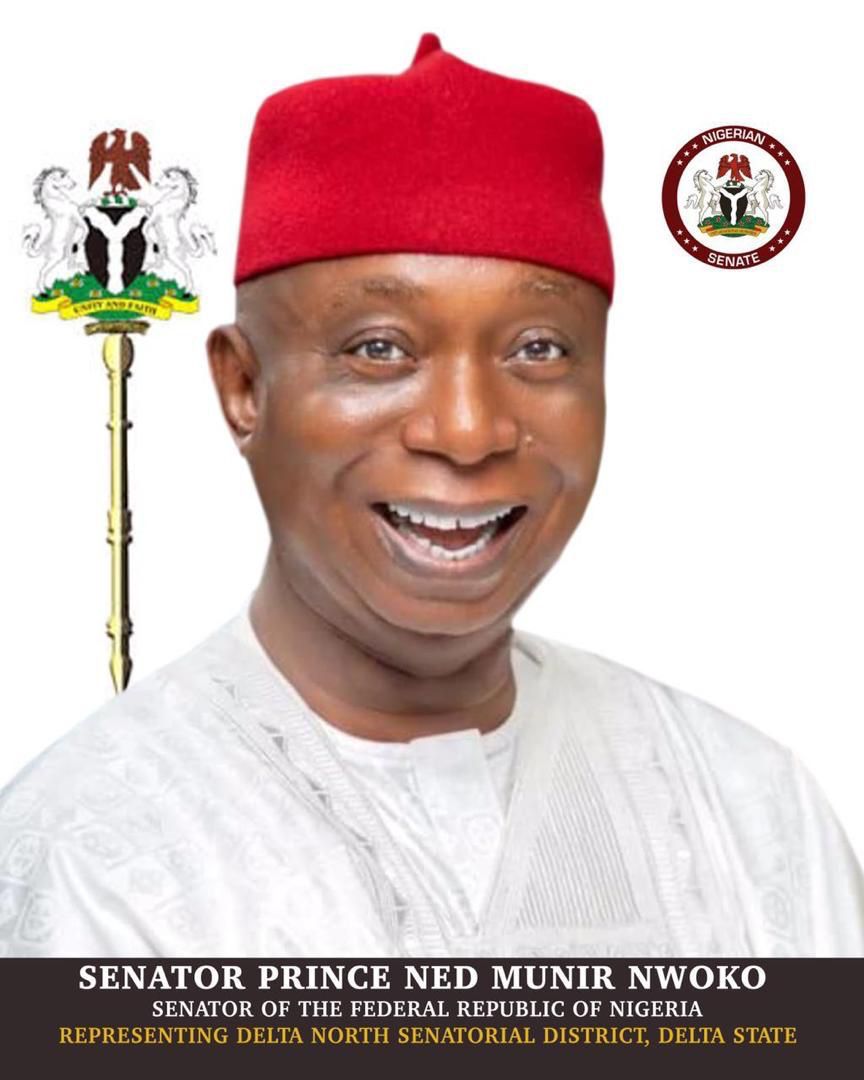
In a passionate appeal during plenary, Senator Prince Ned Nwoko (Delta North) urged the Federal Government to impose stricter border control measures to curb the movement of Nigerians to high-risk destinations, warning that many are embarking on dangerous journeys that often end in tragedy and bring disrepute to the nation.
The lawmaker expressed deep concern over the increasing number of Nigerians trapped or suffering in conflict-ridden countries like Libya, describing the situation as “a humanitarian disaster that can and should be prevented.”
“There are many countries where citizens are not permitted to travel abroad even with valid documents because of the problems they may encounter or the likelihood of tarnishing their nation’s image, just as some of our compatriots in Libya are currently doing,” Senator Nwoko said.
He lamented the grim realities faced by thousands of Nigerians in Libya, from human trafficking and forced labour to indefinite detention and even death, calling it a wake-up call for the government to tighten migration policies and enforce preventive measures at all points of departure.
According to the Delta North Senator, Nigeria’s immigration and security agencies must be empowered to exercise discretion and due diligence in assessing the purpose of travel to certain destinations, particularly where risk is high and motive unclear.
“Just because someone has a visa or passport does not mean they should be allowed to travel,” Nwoko insisted. “Authorities must evaluate the legitimacy of such trips. If there is no clear or lawful reason for visiting a volatile region, it is our responsibility as a nation to intervene for the safety of that individual and for the integrity of Nigeria.”
He further decried the rising trend of irregular migration, noting that many young Nigerians are being deceived by traffickers who lure them with false promises of greener pastures abroad, only for them to end up stranded in detention camps or perishing in the Mediterranean Sea.
While acknowledging that freedom of movement is a constitutional right, Senator Nwoko stressed that such freedom must be exercised responsibly, with consideration for national security and Nigeria’s international reputation.
He therefore called for a coordinated national response involving the Nigerian Immigration Service, the Ministry of Foreign Affairs, and the National Agency for the Prohibition of Trafficking in Persons (NAPTIP) to develop a robust framework for monitoring and regulating outbound travel, especially to unstable regions.
“Issuing travel documents is not enough,” he said. “We must ensure that those documents are used responsibly. Migration should be lawful, meaningful, and safe, not a one-way ticket to tragedy.”
Senator Nwoko also emphasized the need for sustained public enlightenment campaigns to educate young Nigerians about the realities of irregular migration and the manipulative tactics of traffickers.
“We must help our youths understand that not every foreign journey leads to success,” he stated. “There is dignity in staying home and building our country, rather than dying in deserts or detention camps.”
Reaffirming his commitment to legislative efforts that promote safe and structured migration, Senator Nwoko highlighted the importance of youth empowerment as a long-term solution to the desperation driving illegal migration.
He concluded by underscoring the symbolic value of Nigeria’s travel documents, noting that the passport must represent more than mere access—it should reflect responsibility, discipline, and national pride.
“A passport or visa is not an automatic licence to travel,” Nwoko declared. “Every nation reserves the right to protect its people and its image. Nigeria must begin to do the same for the safety of our citizens and the honour of our country.”