
BLESSING TAIWO
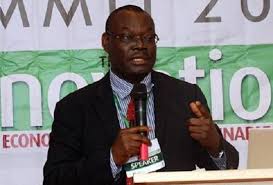
Professor Wellington Oyibo, Director of the Centre for Transdisciplinary Research in Malaria and Neglected Tropical Diseases (CTRMNTD), has expressed concern about the health system’s slow adoption of rapid diagnostic testing (RDTs), despite its accuracy and potential to prevent wastage of antimalarial medicines.
Prof. Oyibo challenged the assumption that malaria should be treated without diagnosis, emphasising that the disease is no longer uniformly prevalent across Nigeria and indiscriminate treatment could be harmful and ineffective.
He spoke during a virtual meeting with members of the Health Writers’ Association of Nigeria (HEWAN).
The health practitioner stressed the urgent need for unified national action to tackle malaria and other diseases of poverty through collaboration, innovation, and community-led strategies.
Prof. Oyibo described malaria and neglected tropical diseases (NTDs) as public health challenges rooted in poverty and inadequate access to essential resources such as clean water, good drainage, and quality healthcare.
He lamented Nigeria’s continued dependence on imported malaria commodities, despite the country’s large population and capacity to produce local alternatives such as insecticide-treated nets, diagnostics, and medicines, which could also generate employment opportunities.
The professor highlighted CTRMNTD’s unique multidisciplinary approach, combining science, humanities, environmental engineering, health economics, and even literature, to address the many facets of malaria and NTDs while tackling persistent myths and misinformation that fuel their spread.
He emphasised that one of the centre’s priorities is innovation – using new tools and knowledge to mobilise communities toward adopting proven health interventions, such as testing before treatment, and consistent use of preventive measures like mosquito nets.
According to him, true impact can only be achieved when 90% of the population adopts consistent preventive and diagnostic practices, as partial uptake (40–60%) cannot produce measurable results in disease reduction.
The professor also drew attention to the heavy burden of neglected tropical diseases on women, particularly conditions like female genital schistosomiasis, which are often underreported and contribute to infertility, stillbirths, and other reproductive health challenges.
He noted the grave injustice of women and girls suffering from infections acquired through routine activities like farming or swimming in infested water – not due to lifestyle choices, but simply due to environmental exposure.
Prof. Oyibo advocated for more inclusive research that reflects the lived realities of vulnerable populations and called on Nigerians to ask the fundamental question: “What can I do?” – rather than relying solely on government or international aid.
The Centre, he said, is conducting a comparative study between microscopy and rapid diagnostic tests (RDTs), with a focus on understanding healthcare providers’ behaviour and patient preferences in testing versus presumptive treatment.
He called for a national culture shift toward evidence-based treatment, similar to global best practices, where diagnosis precedes medication – a model that significantly improves outcomes and avoids unnecessary drug use.
Prof. Oyibo emphasised that lasting progress requires mass mobilisation, public education, partnerships across sectors (health, media, agriculture), and community ownership, especially in rural areas where agricultural activities and poor infrastructure fuel persistent malaria transmission.
Concluding his remarks, he urged all stakeholders – including journalists, health professionals, and citizens – to become change agents in their own communities, echoing the biblical call for personal responsibility: “What can I do?” He expressed optimism that with shared commitment, malaria can not only be rolled back, but ultimately rolled out of Africa.
For a better society
Follow us across our platforms:
Instagram – https://www.instagram.com/championnewsonline/
Facebook – https://web.facebook.com/championnewsonline
LinkedIn – https://www.linkedin.com/company/champion-newspapers-limited/
https://x.com/championnewsng/
You can also like and comment on our YouTube videos.
https://youtu.be/QIBfD1tT80w?si=R4Qf3so2LxYu3GC2