
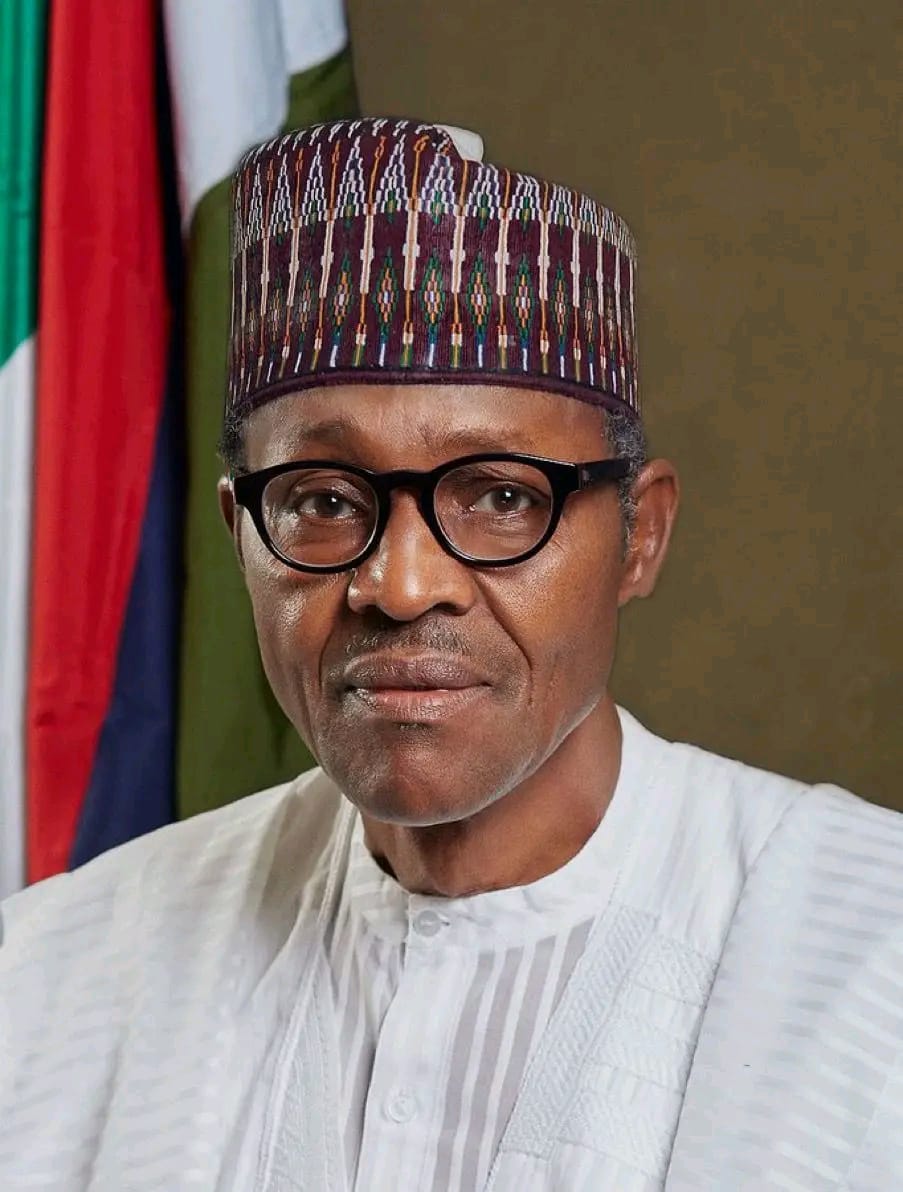
.Tinubu, others mourn
.Directs VP Shettima to accompany body back home
.To be buried today
. Life and times of Buhari
Ibrahim Quadri
Former President Muhammadu Buhari, GCFR, has died in a clinic in London.
This happened at about 4.30 pm ,Sunday July 13,2025 ,following a prolonged illness.
This was contained in a terse statement signed by Buhari’s former spokesman, Garba Shehu.
It read, “The family of the former president has announced the passing on of the former president, Muhammadu Buhari, GCFR, this afternoon in a clinic in London.
“May Allah accept him in Aljannatul Firdaus, Amin.”
Meanwhile, President Bola Ahmed Tinubu has officially announced the passing of his predecessor and has spoken with Mrs Aishat Buhari, the former President’s widow and offered his deep condolences.
President Tinubu has also ordered Vice President Kashim Shettima to proceed to the United Kingdom to accompany President Muhammadu Buhari’s body back to Nigeria.
Former President Buhari was twice elected Nigeria’s President in 2015 and 2023.
He also served as military head of state between January 1984 and August 1985.
President Tinubu has ordered flags at half-staff as a mark of respect for the departed leader.
It is with profound sorrow and a heavy heart that I received the news of the passing of His Excellency, Major General Muhammadu Buhari (Rtd), GCFR, my predecessor, who departed this life today, Sunday, July 13, 2025, at a hospital in the United Kingdom.
President Buhari was to the very core, a patriot, a soldier, a statesman. His legacy of service and sacrifice endures. He served Nigeria with unwavering dedication, first as a military leader from January 1984 to August 1985, and later as a democratically elected President from 2015 to 2023. Duty, honour, and a deep commitment to the unity and progress of our nation defined his life.
He stood firm through the most turbulent times, leading with quiet strength, profound integrity, and an unshakable belief in Nigeria’s potential. He championed discipline in public service, confronted corruption head-on, and placed the country above personal interest at every turn.
In this moment of national mourning, I extend my deepest condolences to his beloved wife, Aisha, with whom I have been in constant touch, his children, the entire Buhari family, and all who knew and loved him.
I also extend my condolences to the government and people of Katsina State, most especially the people and traditional leaders of Daura Emirate.
We honour his service. We reflect on his legacy. And we pray for the peaceful repose of his soul.
As a mark of respect to our former leader, I have directed that all national flags fly at half-staff across the country for seven days from today.
I have also summoned an emergency Federal Executive Council session on Tuesday, dedicated to his honour.
The Federal Government will accord President Buhari full state honours befitting his towering contributions to our country.
May Allah forgive his shortcomings and grant him Al-Jannah Firdaus.
And may his life continue to inspire generations of Nigerians to serve with courage, conviction, and selflessness.
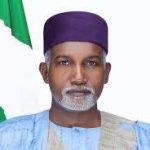
However, Gov. Dikko Radda of Katsina State has expressed deep grief over the passing of former President Muhammadu Buhari who died in London on Sunday at the age of about 83, after a prolonged illness.
Radda, who spoke through his Chief Press Secretary (CPS), Mr Ibrahim Kaula-Mohammed, described the death of Buhari as a great loss, not only to his immediate family or Katsina, but to the entire Nigeria.
“Today, Nigeria has lost a patriot, Katsina has lost its most illustrious son, and I have lost a father figure whose footsteps I have endeavoured to follow,” Radda said.
He said that the former President, served Nigeria with distinction as military head of state between January 1984 and August 1985, and later as democratically elected President in 2015 and 2023.
“That represented the very best of Katsina’s values of integrity, service, and unwavering commitment to the masses.
“President Buhari was not just a leader; he was the embodiment of the common man’s aspirations.
“His people-oriented programs and genuine love for the masses defined his leadership philosophy,” Radda observed.
The Governor stated that the former President Buhari’s legacy transcends political affiliations, describing him as a leader who consistently championed the cause of ordinary Nigerians throughout his distinguished career.
“From his early days as a military leader to his transformative presidency, President Buhari never forgot his roots,” he said
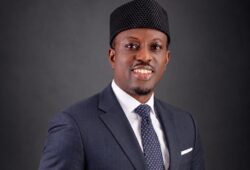
Also, the Deputy President of the Senate, Sen. Jibrin Barau, has expressed his sadness over the death of former President Muhammadu Buhari, in London on Sunday at 82.
Barau, in a statement by his Special Adviser on Media and Publicity, Ismail Mudashir, said the late former president was an untiring promoter of peace and unity in the country.
He said the late Buhari, who served twice as Nigerian leader, first as a military ruler (1983 -1985) and then as President between 2015 and 2023, had a clear vision for Nigeria’s unity and progress.
” Inna lillahi wa inna ilaihi raji’un. I mourn the passing of the former President and Commander-in-Chief of the Armed Forces of the Federal Republic of Nigeria, Muhammadu Buhari, who died today (Sunday) in London.
” President Buhari was not just a towering figure in our nation’s history but a man whose life embodied discipline, resilience, and patriotism.
“Throughout his lifetime, he was committed to Nigeria’s unity, security and development.
Also, Lagos State Governor, Mr. Babajide Sanwo-Olu, has mourned the passing of former President Muhammadu Buhari, describing his death as a colossal loss to Nigeria.
Governor Sanwo-Olu, in a condolence message issued on Sunday by his Special Adviser on Media and Publicity, Mr. Gboyega Akosile, said Buhari was a transparent, courageous and honest leader.
Governor Sanwo-Olu described the late former President as a man that truly loved Nigeria and contributed his quota towards her development.
The Governor commiserated with the immediate family of the late President Buhari and President Bola Tinubu over the death of his predecessor. He also sympathised with leaders and members of the ruling party, All Progressives Congress (APC), over the demise of one of the respected founders and leaders of the party.
“On behalf of my wife, Ibijoke, the people and government of Lagos State, I mourn the passing of former President Muhammadu Buhari, one of Nigeria’s most prominent military and political leaders.
“He was a courageous, disciplined, respected and passionate leader. His commitment to the growth and development of Nigeria is worthy of emulation because he provided honest and transparent leadership in the country.
“Former President Buhari demonstrated unparalleled leadership skills, patriotism, and courage in steering the ship of Nigeria. He was a respected leader who served Nigeria passionately in different capacities and leaving with unblemished records.
Muhammadu Buhari: 1942—2025, the end of an era
“To everything there is a season, and a time for every purpose under heaven”, says Ecclesiastes in the Holy Bible; there is time to be born and time to die.
And so it was for Nigeria’s immediate past President Muhammadu Buhari, a retired Major General of the Nigerian Army and one of the few privileged Nigerians to have presided over the affairs of the country as military head of state and civilian president. The other person in that category is Chief Olusegun Obasanjo.
The death of Buhari which occurred on Sunday July 13, 2025 was confirmed in a terse statement by his former Senior Special Assistant, Mallam Garba Shehu. He was aged 82 years.
It read: “The family of the former president has announced the passing on of the former president, Muhammadu Buhari, GCFR, this afternoon in a clinic in London.
“May Allah accept him in Aljannatul Firdaus, Amin”.
Muhammadu Buhari, born December 17, 1942. He was a politician and served as Nigeria’s president on the platform of the All Progressives Congress, APC, from 2015 to 2023, previously holding the position of military head of state from December 1983 to August 1985 when he was toppled by Gen Ibrahim Baba. His political career included multiple presidential runs before his eventual victory in 2015.
Buhari was born in Daura, Katsina State.
. Life and times of Buhari
Muhammadu Buhari (17 December 1942 – 13 July 2025) was a Nigerian retired politician who served as the President of Nigeria from 2015 to 2023.
A retired Nigerian Army Major General, he was the Military Head of State of Nigeria from 31 December 1983 to 27 August 1985.
Buhari ran for president of Nigeria on the platform and support of the All Nigeria Peoples Party (ANPP) in 2003 and 2007, and on the Congress for Progressive Change (CPC) platform in 2011.
In December 2014, he emerged as the presidential candidate of the All Progressives Congress, APC for the 2015 general election.
Buhari won the election, defeating incumbent President Goodluck Ebele Jonathan.
It was the first time in the history of Nigeria that an incumbent president lost a re-election bid.
He was sworn in on 29 May 2015. In February 2019, Buhari was re-elected, defeating his closest rival, former Vice President Atiku Abubakar, by over 3 million votes. He died on 13 July 2025 in London.
Early life
Buhari was born to a Muslim family on 17 December 1942, in Daura, Katsina State, Nigeria. He was the twenty third child of Mallam Hardo Adamu, a Fula chieftain originally from Dumurkul in Mai’Adua and Zulaihat.
He was named after ninth-century Islamic scholar Muhammad al-Bukhari.
Buhari’s great-grandfather, Yusuf, was a businessman.
Buhari was four years old when his father died, and Waziri Alhassan, the son of the Emir, Musa dan Nuhu (reigned: 1904–1911), became the guardian of Zulaihat and her six children, including Buhari.
Buhari attended Qur’anic school, where he helped in rearing cattle. He had his primary education in Daura and Mai’Adua, and graduated in 1953.
He was admitted into Katsina Middle School (later renamed to Katsina Provincial Secondary School), where he had his secondary education from 1956 to 1961.
During his sixth form, he served as the house captain and headboy of the school. In 1960, he was awarded scholarship by the Elder Dempster Lines for a summer visit to the United Kingdom.
Buhari wanted to pursue a medical degree to become a doctor, however, the only option at the time was to study Pharmacology at the Nigerian College of Arts, Science, and Technology in Zaria, which would take him many years.
He was advised by Mamman Daura to join the Nigerian military and pursue higher education there. Inspired by the then junior officer Hassan Katsina, who took young boys in Katsina State, including Buhari, on night hikes, where they camped under the stars.
Military career
In 1962, at the age of 19, Buhari was one of 70 boys selected for recruitment into the Nigerian Military Training College (NMTC). In February 1964, NMTC was upgraded to an officer commissioning unit of the Nigerian Army and was renamed Nigerian Defence Academy. From 1962 to 1963, Buhari underwent officer cadet training at Mons Officer Cadet School in Aldershot, England.
In January 1963, at the age of 20, he was commissioned a second lieutenant and appointed Platoon Commander of the Second Infantry Battalion in Abeokuta, Nigeria, and attended the Platoon Commanders’ Course at the Nigerian Military Training College, Kaduna, Kaduna State, from November 1963 to January 1964. In 1964, he further moved to the Mechanical Transport Officer’s Course at the Army Mechanical Transport School in Borden, United Kingdom.
From 1965 to 1967, Buhari served as commander of the Second Infantry Battalion and was appointed brigade major of the Second Sector, First Infantry Division (April 1967 to July 1967).
Following the 1966 Nigerian coup d’état that killed the Premier of Northern Nigeria Sir Ahmadu Bello, Buhari, alongside other officers from Northern Nigeria, took part in the July counter-coup which ousted General Aguiyi Ironsi, replacing him with General Yakubu Gowon.
Nigerian Civil War
Buhari was assigned to the 1st Division under the command of Lieutenant Colonel Mohammed Shuwa. The division had temporarily moved from Kaduna to Makurdi at the onset of the Nigerian Civil War. The 1st division was divided into sectors and battalions, with Shuwa assisted by sector commanders Martin Adamu and Sule Apollo, who was later replaced by Theophilus Danjuma.
He first served as the Adjutant and Company Commander 2 battalion unit, Second Sector Infantry of the 1st Division. The 2 battalion was one of the units that participated in the first actions of the war: they started from Gakem near Afikpo and moved towards Ogoja, with support from Gado Nasko’s artillery squad.
They reached and captured Ogoja, with the intention of advancing through the flanks to Enugu, the capital city.
He was briefly the 2 battalion’s Commander and led the battalion to Afikpo to merge with the 3rd Marine Commando and advance towards Enugu through Nkalagu and Abakaliki.
However, before the move to Enugu, he was posted to Nsukka as Brigade Major of the 3rd Infantry Brigade under Joshua Gin, who was later replaced by Isa Bukar. Buhari stayed with the infantry for a few months as the Nigerian army began to adjust tactics learnt from early battle experiences. Instead of swift advances, the new tactics involved securing and holding on to the lines of communications and using captured towns as training ground to train new recruits brought in from the army depots in Abeokuta and Zaria.
In 1968, he was posted to the 4 Sector, also called the Awka sector, which was charged with taking over the capture of Onitsha from Division 2.
The sector’s operations were within the Awka-Abagana-Onitsha region, which was important to Biafran forces because it was a major source of food supply. It was in the sector that Buhari’s group suffered a lot of casualties trying to protect the food supplies route of the rebels along Oji River and Abagana.
After the war
From 1970 to 1971, Buhari was Brigade Major/Commandant, Thirty-first Infantry Brigade. He then served as the Assistant Adjutant-General, First Infantry Division Headquarters, from 1971 to 1972. He also attended the Defence Services Staff College, Wellington, India, in 1973.
From 1974 to 1975 Buhari was acting director of Transport and Supply at the Nigerian Army Corps of Supply and Transport Headquarters.
In the 1975 military coup d’état, Lieutenant Colonel Buhari was among a group of officers that brought General Murtala Mohammed to power.
He was later appointed Governor of the North-Eastern State from 1 August 1975 to 3 February 1976, to oversee social, economic and political improvements in the state.
On 3 February 1976, the North Eastern State was divided into three states Bauchi, Borno and Gongola. Buhari then became the first Governor of Borno State from 3 February 1976 to 15 March 1976.
In March 1976, following the botched 1976 military coup d’état attempt which led to the assassination of General Murtala Mohammed, his deputy General Olusegun Obasanjo became the military head of state and appointed Colonel Buhari as the Federal Commissioner for Petroleum and Natural Resources (now minister).
In 1977, when the Nigerian National Petroleum Corporation was created, Buhari was appointed as its chairman, a position he held until 1978.
During his tenure as the Federal Commissioner for Petroleum and Natural Resources, the government invested in pipelines and petroleum storage infrastructures.
The government built about 21 petroleum storage depots all over the country from Lagos to Maiduguri and from Calabar to Gusau; the administration constructed a pipeline network that connected Bonny terminal and the Port Harcourt refinery to the depots.
Also, the administration signed the contract for the construction of a refinery in Kaduna and an oil pipeline that will connect the Escravos oil terminal to Warri Refinery and the proposed Kaduna refinery.
From 1978 to 1979, he was Military Secretary at the Army Headquarters and was a member of the Supreme Military Council from 1978 to 1979. From 1979 to 1980, at the rank of colonel, Buhari (class of 1980) attended the US Army War College in Carlisle, Pennsylvania, in the United States, and gained a master’s degree in Strategic Studies.
Upon completion of the on-campus full-time resident program lasting ten months and the two-year-long, distance learning program, the United States Army War College (USAWC) awards its graduate officers a master’s degree in Strategic Studies.
Divisional commands held in the Nigerian Army:
General Officer Commanding, 4th Infantry Division: August 1980 – January 1981;
General Officer Commanding, 2nd Mechanised Infantry Division: January 1981 – October 1981;
General Officer Commanding, 3rd Armed Division: October 1981 – December 1983.
Coup d’état of 1983
Major-General Buhari was one of the leaders of the military coup of December 1983 that overthrew the Second Nigerian Republic. At the time of the coup plot, Buhari was the General Officer Commanding (GOC), Third Armoured Division of Jos.
With the successful execution of the coup by General Buhari, Tunde Idiagbon was appointed Chief of General Staff (the de facto No. 2 in the administration). The coup ended Nigeria’s short-lived Second Republic, a period of multi-party democracy revived in 1979, after 13 years of military rule.
Head of state (1983–1985)
The structure of the new military leadership—the fifth in Nigeria since independence—resembled the last military regime, the Obasanjo/Yaradua administration.
The new regime established a Supreme Military Council, a Federal Executive Council and a Council of States.
The number of ministries was trimmed to 18, while the administration carried out a retrenchment exercise among the senior ranks of the civil service and police. It retired 17 permanent secretaries and some senior police and naval officers.
In addition, the new military administration promulgated new laws to achieve its aim.
These laws included the Robbery and Firearms (Special Provisions) Decree for the prosecution of armed robbery cases, and the State Security (Detention of Person) Decree, which gave powers to the military to detain individuals suspected of jeopardizing state security or causing economic adversity.
Other decrees included the Civil Service Commission and Public Offenders Decree, which constituted the legal and administrative basis to conduct a purge in the civil service.
In 1984, Buhari passed Decree Number 4, the Protection Against False Accusations Decree, a wide-ranging repressive press law. Section 1 of the law provided that “Any person who publishes in any form, whether written or otherwise, any message, rumour, report or statement which is false in any material particular or which brings or is calculated to bring the Federal Military Government or the Government of a state or public officer to ridicule or disrepute, shall be guilty of an offense under this Decree”.
In order to reform the economy, as Head of State, Buhari started to rebuild the nation’s social-political and economic systems, along the realities of Nigeria’s austere economic conditions.
The rebuilding included removing or cutting back the excesses in national expenditure, obliterating or removing completely, corruption from the nation’s social ethics, shifting from mainly public sector employment to self-employment.
Buhari also encouraged import substitution industrialisation based to a great extent on the use of local materials. However, tightening of imports led to reduction in raw materials for industries causing many industries to operate below capacity, reduction of workers and in some cases business closure.
Buhari broke ties with the International Monetary Fund, when the fund asked the government to devalue the naira by 60per cent. However, the reforms that Buhari instigated on his own were as or more rigorous as those required by the IMF.
On 7 May 1984, Buhari announced the country’s 1984 National Budget. The budget came with a series of complementary measures: A temporary ban on recruiting federal public sector workers, raising of interest rates, halting capital projects, prohibition of borrowing by state governments, 15 per cent cut from Shagari’s 1983 Budget, realignment of import duties, reducing the balance of payment deficit by cutting imports.
War Against Indiscipline
One of the most enduring legacies of the Buhari government has been the War Against Indiscipline (WAI).
Launched on 20 March 1984, the policy tried to address the perceived lack of public morality and civic responsibility of Nigerian society. Unruly Nigerians were ordered to form neat queues at bus stops, under the eyes of whip-wielding soldiers.
Civil servants who failed to show up on time at work were humiliated and forced to do “frog jumps”.
Minor offences carried long sentences. Any student over the age of 17 caught cheating on an exam would get 21 years in prison. Counterfeiting and arson could lead to the death penalty.
Buhari’s administration enacted three decrees to investigate corruption and control foreign exchange.
The Banking (Freezing of Accounts) Decree of 1984, allotted to the Federal Military Government the power to freeze bank accounts of persons suspected to have committed fraud.
1985 Nigerian coup d’état
In August 1985, Major General Buhari was overthrown in a coup led by Major General Ibrahim Babangida and other members of the ruling Supreme Military Council (SMC).
Babangida brought many of Buhari’s most vocal critics into his administration, including Fela Kuti’s brother Olikoye Ransome-Kuti, a doctor who had led a strike against Buhari to protest declining health care services. Buhari was then detained in Benin City until 1988.
Pre-presidency (1985–2015)
Buhari spent three years of detention in a small guarded bungalow in Benin. He had access to television that showed two channels and members of his family were allowed to visit him on the authorization of Babangida.
Civilian life
In December 1988, after his mother’s death he was released and retired to his residence in Daura. While in detention, his farm was managed by his relatives. He divorced his first wife in 1988 and married Aisha Halilu.
In Katsina, he became the pioneer chairman of Katsina Foundation that was founded to encourage social and economic development in Katsina State.
Buhari served as the Chairman of the Petroleum Trust Fund (PTF), a body created by the government of General Sani Abacha, and funded from the revenue generated by the increase in price of petroleum products, to pursue developmental projects around the country.
A 1998 report in New African praised the PTF under Buhari for its transparency, calling it a rare “success story”.
2003 presidential election
In 2003, Buhari ran for the office of the president as the candidate of the All Nigeria People’s Party (ANPP).
He was defeated by the People’s Democratic Party incumbent, President Olusẹgun Ọbasanjọ, by more than 11 million votes.
2007 presidential election
On 18 December 2006, Buhari was nominated as the consensus candidate of the All Nigeria People’s Party. His main challenger in the April 2007 polls was the ruling PDP candidate, Umaru Yar’Adua, who hailed from the same home state of Katsina.
Buhari officially took 18per cent of the vote to Yar’Adua’s 70per cent, but Buhari rejected these results. After Yar’Adua took office, he called for a government of national unity to bring on board aggrieved opposition members.
The ANPP joined the government with appointment of its national chairman as a member of Yar’Adua’s cabinet, but Buhari denounced this agreement.
2011 presidential election
In March 2010, Buhari left the ANPP for the Congress for Progressive Change (CPC), a party he had helped to found. He said that he had supported foundation of the CPC “as a solution to the debilitating, ethical and ideological conflicts in my former party the ANPP”.
Buhari was the CPC presidential candidate in the 2011 election, running against incumbent President Goodluck Jonathan of the People’s Democratic Party (PDP), Mallam Nuhu Ribadu of Action Congress of Nigeria (ACN), and Ibrahim Shekarau of ANPP.
They were the major contenders among 20 candidates. Buhari campaigned on an anti-corruption platform and pledged to remove immunity protections from government officials.
2015 presidential election
Buhari ran in the 2015 presidential election as a candidate of the All Progressives Congress party. His platform was built around his image as a staunch anti-corruption fighter and his incorruptible and honest reputation, but he said he would not probe past corrupt leaders and would give officials who stole in the past amnesty if they repented.
In the run-up to the 2015 election, Jonathan’s campaign asked that Buhari be disqualified from the election, claiming that he was in breach of the Constitution.
According to the fundamental document, in order to qualify for election to the office of the president, a person must be “educated up to at least School certificate level or its equivalent”.
Buhari failed to submit any such evidence, claiming that he lost the original copies of his diplomas when his house was raided following his overthrow from power in 1985.
In May 2014, in the wake of the Chibok schoolgirls kidnapping, Buhari strongly denounced the Boko Haram insurgency.
He “urged Nigerians to put aside religion, politics and all other divisions to crush the insurgency he said is fanned by mindless bigots masquerading as Muslims”.
In July 2014, Buhari escaped a bomb attack on his life by Boko Haram in Kaduna, 82 people were killed. In December 2014, Buhari pledged to enhance security in Nigeria if elected president.
After this announcement, Buhari’s approval ratings skyrocketed, largely due to Jonathan’s apparent inability to fight Boko Haram.
Second inauguration
The second inauguration of Buhari as the 15th president of Nigeria, and 4th president in the fourth Nigerian Republic took place on Wednesday, 29 May 2019, following the 2019 Nigerian presidential election and marking the start of the second and final four-year term of Muhammadu Buhari as president and Yemi Osinbajo as vice president. It was the 8th presidential inauguration in Nigeria, and 6th in the fourth republic.
The official swearing-in ceremony took place at Eagle Square in Abuja, the Federal Capital Territory. Acting Chief Justice Tanko Muhammad administered the oath of office taken by President Buhari and Vice President Yemi Osinbajo. The traditional inaugural speech was not delivered.
Former Nigerian heads of state General Yakubu Gowon, General Ibrahim Babangida, Interim President Ernest Shonekan, General Abdulsalami Abubakar, General Olusegun Obasanjo and President Goodluck Jonathan were in attendance.
Presidency (2015–2023)
Buhari and other African leaders at the Russia–Africa Summit 2019 in Sochi on 24 October 2019
The economy has averaged a growth rate of 0.9per cent since the administration’s first term, unemployment is at an all-time high of 23per cent, and millions entered poverty.
Since 2015, Buhari has lost supporters due to his perceived un-energetic personality and contemplative decision making.
Cabinet
Buhari’s key advisers include: his nephew Mamman Daura, businessman Ismaila Isa Funtua, political operator Baba Gana Kingibe, Abba Kyari the Chief of Staff to the President; and from the late stages of his first term, Boss Mustapha the Secretary to the Government of the Federation.
Empowering his kitchen cabinet after his second inauguration
Buhari has stated his preference for cabinet members seeking meetings or consultation to direct such requests through the chief of staff or through the government secretary.
Health
In May 2016, Buhari cancelled a two-day visit to Lagos to inaugurate projects in the state but he was represented by the Vice-president Yemi Osinbajo after citing an “ear infection” suspected to be Ménière’s disease.
On 6 June, Buhari travelled to the United Kingdom to seek medical attention.This happened days after the Presidential Spokesman Femi Adesina was quoted as saying Buhari was “as fit as fiddle” and “hale and hearty”, to much discontent and criticism from political analysts and followers.
In February 2017, following what were described as “routine medical check-ups” in the UK, Buhari asked parliament to extend his medical leave to await test results.
Economy
Buhari was an attractive choice to many Nigerians because of a perceived incorruptible character. Once in power, Buhari who had earlier mobilized supporters in three previous elections was slow to manifest his intention to solve problems he mentioned during his campaign.
Determination to initiate his domestic policy agenda like naming of cabinet officials took six months, while the passage of the 2016 and 2017 budgets were delayed by infighting.
In Buhari’s first year in office, Nigeria suffered a decline in commodity prices which triggered an economic recession. To source funds to close shortfall in revenue and fund an expansionary capital budget, Buhari traveled to 20 countries seeking loans. Thereby, expansionary budget allocation to finance infrastructure was pushed back to a further date.
In the first year of the administration, Naira, the currency of Nigeria depreciated in the black market leading to a gulf between the official exchange rate and the black-market rate. A resulting shortage in foreign exchange hit various businesses including petroleum marketers.
Social welfare
In 2016, Buhari launched the National Social Investment Program, a national social welfare program. The Program was created to ensure a more equitable distribution of resources to vulnerable populations, including children, youth, and women. There are four programs which address poverty, unemployment and help increase economic development.
The N-Power program provides young Nigerians with job training and education, as well as a monthly stipend of 30,000 Nigerian naira (US$83.33).
Npower is a social investment scheme initiated by President Muhammadu Buhari on 8 June 2016 in an attempt to boost the youths employment rate. The scheme was established as a core component of the National Social Investment program to cushion the skill acquisition training and capacity building in the beneficiaries.
Buhari’s anti-corruption war
The $2 billion arms deal was exposed following the interim report of Buhari’s investigations committee on arms procurement under the Goodluck Jonathan administration. The committee report showed extra-budgetary spending to the tune of N643.8 billion and additional spending of about $2.2 billion in the foreign currency component under Goodluck Jonathan’s watch.
Preliminary investigation suggested that about $2 billion may have been disbursed for the procurement of arms to fight against the Boko Haram insurgency in Nigeria. The investigative report indicated that a total sum of $2.2 billion was inexplicably disbursed into the office of the National Security Adviser in the procurement of arms to fight against insurgency, but was not spent for the purpose for which the money was disbursed.
Investigations on this illegal deal led to the arrest of Sambo Dasuki, the former National Security Adviser who later mentioned prominent Nigerians involved in the deal. Those who were mentioned and arrested includes Raymond Dokpesi, the Chair Emeritus of DAAR Communications Plc, Attahiru Bafarawa, the former Governor of Sokoto State, and Bashir Yuguda, the former Minister of State for Finance, Azubuike Ihejirika, the Chief of Army Staff, Adesola Nunayon Amosu, the former Chief of the Air Staff, Alex Badeh and several other politicians were mentioned.
On 21 December 2016, the government’s Federal Ministry of Finance announced a whistle-blowing policy with a 2.5per cent-5per cent reward. The aim is to obtain relevant data or information regarding: the violation of financial regulations, the mismanagement of public funds and assets, financial malpractice, fraud, and theft.
Alleged militarization
Buhari has faced a lot of criticism in office. In 2019 his government came under widespread criticism over the unfair treatment of US-based Social Activist Sowore during his trial, despite the court granting him bail. This move was largely condemned, with Sowore himself stating that Buhari had violated his civic space. In December 2019, Nigeria’s Newspaper Giants: PUNCH stated that henceforth they would addressed Buhari’s administration as a “regime” and subsequently address him as “General Buhari” as his military-like administration was a far cry from democracy. They insisted that he was a ‘military dictator’, a move that was greeted with mixed receptions on social media.
COVID-19 pandemic
Following the outbreak of the COVID-19 pandemic in Nigeria, Buhari established a Presidential Task Force for the control of the virus in the country. On 23 March, Buhari’s chief of staff Abba Kyari tested positive for COVID-19 sparking fears that Buhari may have been infected, it was later revealed that Buhari tested negative. On 30 March, Buhari announced a two-week lockdown on major cities Abuja, Lagos and Ogun.
On 14 October, the presidential task force on COVID-19 warned about a potential second wave “if the guidelines and protocols are not adhered to strictly”.
Post-presidency (2023–2025)
Buhari handed over power peacefully to his successor Bola Tinubu on 29 May 2023 at an inauguration ceremony in Eagle Square, Federal Capital Territory.
He left the seat of power in Abuja immediately after the handover ceremony and in keeping with the tradition of past heads of state and presidents returned to his home state of Katsina where he was received by state and traditional dignitaries before evidently retiring to his farm and family seat in Daura.
Buhari’s second wife, Aisha Buhari
In 1971, Buhari married his first wife, Safinatu (née Yusuf). They had five children together, four girls and one boy. Their first daughter, Zulaihat (Zulai) was named after Buhari’s mother. Their other children are Fatima, Musa (deceased son), Hadiza, and Safinatu.
In 1988, Buhari and his first wife Safinatu divorced. On 14 January 2006, Safinatu died from complications of diabetes. In November 2012, Buhari’s first daughter, Zulaihat (née Buhari) Junaid died from sickle cell anaemia, two days after having a baby at a hospital in Kaduna.
In December 1989, Buhari married his second and current wife Aisha Buhari (née Halilu). They also had five children together, a boy and four girls: Aisha, Halima, Yusuf, Zahra “Zarah” and Amina. Yusuf married Zahra Nasir Bayero, the daughter of Emir Nasiru Ado Bayero, in August 2021.
Wealth
In 2015, Buhari declared US$150,000 cash; in addition to five homes and two mud houses as well as farms, an orchard and a ranch of 270 head of cattle, 25 sheep, five horses and a variety of birds, shares in three firms, two undeveloped plots of land, and two cars bought from his savings.
Death
Buhari died on 13 July 2025, in London, United Kingdom, while receiving medical treatment, After being hospitalised according to his spokesperson Mallam Garba Shehu. He was 82 years old at the time of his death.