Elizabeth Vincent, Yenagoa
Journalists have been urged to strengthen accountability reporting by identifying credible sources of evidence, verifying information and presenting findings responsibly to promote transparency and improve governance.
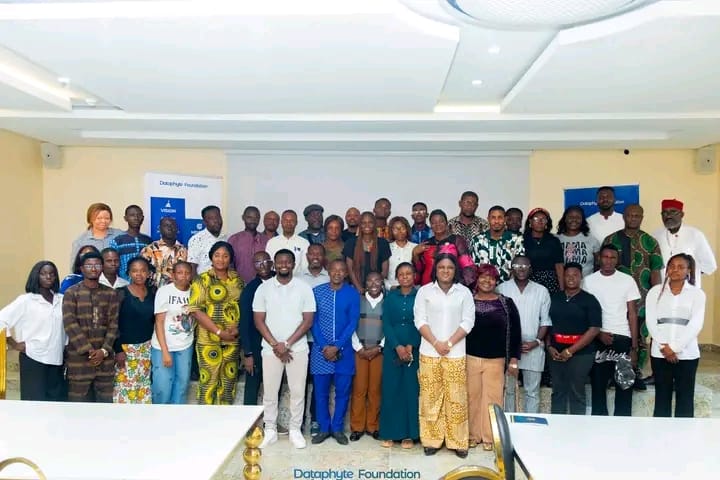
The call was made during a two-day people centred accountability reporting training organised by the dataphyte foundation at George court hotel, Yenagoa, Bayelsa state.
The training which brought together journalists from print, broadcast and online media, as well as civil society organisations, focused on equipping participants with the knowledge and practical skills to investigate public finance, track government projects and scrutinise service delivery through evidence-based reporting.
The programme manager of dataphyte foundation, Abdulahi Adebayo, facilitated sessions on understanding public financial management and sourcing and using fiscal data for accountability journalism.
Participants gained deeper insights into how government generates revenue, allocates public funds and executes expenditure, as well as where to obtain relevant fiscal information for investigative and accountability reporting.
The training also examined how journalists could compare citizens’ experiences with government expenditure and service delivery to identify gaps, assess public projects and develop compelling accountability stories.
“Emphasising the importance of accuracy and evidence in journalism, Adebayo urged participants to verify information, document their findings and compare available evidence before publishing.”
He stressed that effective accountability reporting requires more than merely identifying government expenditure, noting that journalists must establish the relationship between public spending, project implementation and the actual experiences of citizens.
The second day of the training focused on building social contract Infrastructure for Accountable and Inclusive governance, with participants introduced to Goloka, a data collection tool designed to document community priorities for the digital social contract registry.
The initiative seeks to strengthen the connection between citizens’ needs and government actions by ensuring that community priorities are documented and made available to support planning, public accountability and inclusive governance in Bayelsa state.
The training is part of the Building Social Contract Infrastructure for Accountable and Inclusive Governance in Nigeria project, implemented by Dataphyte Foundation with support from the ford foundation.
The project aims to improve how citizens’ priorities, public spending and government responses are documented, scrutinised and communicated, thereby strengthening accountability and promoting more inclusive governance.
Adeyemi Okediran, programme executive of Dataphyte Foundation, led a session on social accountability tracking, demonstrating how journalists could monitor public projects, track government spending and use digital platforms to support investigative reporting.
He introduced participants to platforms such as the Anfani portal and the Niger Delta Development Commission (NDDC) project database, explaining how they could serve as useful resources for tracking government-funded projects and monitoring their implementation.
Okediran noted that the platforms could help journalists identify projects that had been awarded but remained unconstructed or abandoned, providing a basis for further investigation and engagement with relevant authorities and contractors.
He emphasised that journalists could use available project information to establish whether public funds were translating into completed projects and tangible benefits for communities.
In another session, Khadija Kareem, managing editor of Dataphyte, focused on data-driven reporting and storytelling, highlighting the importance of transforming figures and statistics into meaningful narratives that reflect the experiences of citizens.
Kareem explained that effective data journalism goes beyond presenting numbers, stressing the need to identify the human impact of public policies and expenditure, provide context and communicate findings in ways that audiences can understand and act upon.
She stressed that data journalism should not merely present figures but should also explain what the numbers mean for citizens and how they relate to public service delivery.
The training provided participants with practical approaches to combining fiscal data, community experiences and project monitoring to produce stronger accountability stories that promote transparency, public participation and responsible governance.
For a better society
_______________________________
Follow us across our platforms:
Instagram – https://www.instagram.com/championnewsonline/
Facebook – https://web.facebook.com/championnewsonline
LinkedIn – https://www.linkedin.com/company/champion-newspapers-limited/
https://x.com/championnewsng/
You can also like and comment on our YouTube videos.
https://youtu.be/QIBfD1tT80w?si=R4Qf3so2LxYu3GC2