
Nkechi David Iwuchukwu
As the rainy season intensifies, the Nigerian Red Cross Society has raised concern over the growing threat of flooding, warning that 151 communities and about 6.5 million Nigerians could be exposed to the disaster.
The warning has added fresh urgency to Nigeria’s recurring flood crisis, coming at a time when the country is entering one of the most critical periods of the 2026 rainy season.
The Nigeria Hydrological Services Agency (NiHSA), in its 2026 Annual Flood Outlook, identified 30,707 communities across the country as being at varying levels of flood risk. For many vulnerable locations, the peak period is expected between July and September.
The agency also identified about 4,792 healthcare facilities, 10,684 schools and educational facilities and approximately 4.2 million hectares of farmland as being at risk.
For millions of Nigerians whose livelihoods depend on agriculture, fishing, petty trading and other activities closely linked to the environment, the warning goes far beyond an environmental concern.
It is a threat to homes, livelihoods, food security, transportation, education, healthcare and the fragile economic recovery of vulnerable households.
For decades, communities across the country have endured annual inundation caused by heavy rainfall, overflowing rivers, inadequate drainage systems, dam releases, coastal flooding and the expansion of settlements into flood plains.
But what was once regarded largely as a seasonal inconvenience has increasingly assumed the character of a national humanitarian emergency.
The devastating floods of 2022 provided one of the clearest demonstrations of the destructive power of water. More than 600 people were killed and about 1.4 million displaced, while houses, roads, bridges, schools, farms and businesses were destroyed.
According to the International Federation of Red Cross and Red Crescent Societies (IFRC), flooding affected 33 of Nigeria’s 36 states between July and September 2024. More than three million people were impacted, 311 deaths were recorded, over 3,000 people were injured and about 390,000 were displaced. More than 649 hectares of farmland were also affected.
Borno State was particularly hard hit when the collapse of the Alau Dam aggravated flooding in Maiduguri and surrounding communities, displacing large numbers of residents and compounding an already difficult humanitarian situation.
Then came the devastating Mokwa flood of May 2025.
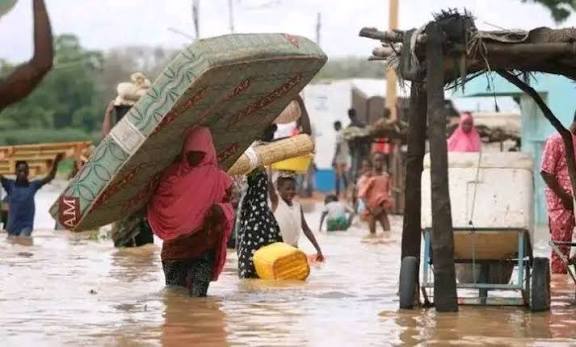
In the Niger State market town, torrential rainfall rapidly transformed streets and residential areas into raging waterways. More than 3,000 people were displaced and at least 500 households across three communities were affected, while roads and bridges were destroyed.
The death toll eventually rose to at least 151, according to authorities cited by the Associated Press.
The Mokwa tragedy was another grim reminder that flooding can turn an ordinary rainy day into a catastrophe within hours.
Against this background, the 2026 flood outlook has become a major concern for governments, emergency agencies and communities.
NiHSA’s Annual Flood Outlook covers all 36 states and the Federal Capital Territory and is designed to guide disaster preparedness by identifying areas and critical assets exposed to flood risks.
Several states have been identified among areas of significant concern, including Benue, Kogi, Niger, Adamawa, Anambra, Delta, Kebbi, Rivers, Cross River and Bayelsa.
The Federal Government has consequently renewed its call for proactive flood management, stressing the importance of early warning, preparedness and coordinated response.
At the presentation of the 2026 Annual Flood Outlook in Abuja, the government reaffirmed its commitment to flood control, food security and climate resilience, with particular attention to vulnerable states.
The National Emergency Management Agency (NEMA) has also urged residents of flood-prone communities to take early warnings seriously and relocate to safer locations whenever there is an imminent threat.
NEMA Director-General, Mrs Zubaida Umar, warned residents against driving or walking through floodwaters and urged communities to activate local flood mitigation measures.
She also called for proper disposal of refuse, noting that blocked drainage channels can aggravate flooding.
NEMA has directed its zonal offices to intensify community-based awareness campaigns and strengthen collaboration with State Emergency Management Agencies, traditional institutions and local emergency committees.
For families living in flood-prone areas, the arrival of the rainy season often produces mixed emotions.
Rain is essential for agriculture and replenishing water sources, but excessive rainfall can destroy everything a family has spent years building.
A single flood can wipe out a farmer’s crops, kill livestock, damage homes, contaminate drinking water and cut off access to schools, markets and hospitals.
When roads are flooded, the movement of agricultural produce is disrupted. Traders struggle to reach markets. Transport fares rise, while food becomes more difficult to move from farming communities to urban centres.
For small businesses operating in vulnerable communities, floodwaters can destroy stocks accumulated over months or even years within a matter of hours.
The experiences of flood victims assisted by the Nigerian Red Cross illustrate the long road to recovery.
In communities in Delta State, for instance, residents whose homes and farms were destroyed by previous floods received assistance ranging from cash and shelter support to water, sanitation and hygiene interventions.
The IFRC reported the case of Blessing Emeldi, whose farm and crops were washed away by the 2022 floods.
Assistance from the Red Cross helped her meet immediate household needs and restart a small business.
Her experience illustrates why flood response cannot end with evacuation or the distribution of relief materials.
Victims need support to rebuild their homes, restore their businesses, return their children to school and recover their livelihoods.
Experts have increasingly linked changing rainfall patterns and extreme weather events to climate change.
Nigeria is experiencing a combination of prolonged dry periods and episodes of intense rainfall. This creates a dangerous situation in which the ground, drainage systems and waterways may be unable to absorb or carry away sudden volumes of water.
A 2026 study on flood susceptibility in Nigeria found that flood exposure has increased significantly over the past five decades, pointing to changing hydrological conditions, inadequate mitigation and limited adaptation efforts.
The study estimated that approximately nine million people were living in flood-susceptible areas under one of the models used, with states including Anambra, Bayelsa, Borno, Delta, Kogi, Lagos and Rivers among those with particularly high exposure.
But climate change alone does not explain Nigeria’s flood crisis.
Poor urban planning, construction on waterways and flood plains, inadequate drainage, erosion, deforestation and indiscriminate waste disposal have combined to make communities more vulnerable.
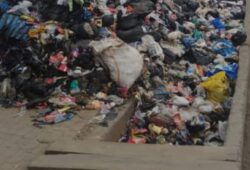
In many cities, drainage channels designed to carry storm water are clogged with plastic waste, refuse and silt.
The drainage question remains one of the most visible components of Nigeria’s flood crisis.
In urban centres, expanding populations and rapid development have placed enormous pressure on existing drainage infrastructure.
Roads and buildings have sometimes been constructed without adequate consideration for natural waterways, while wetlands and flood-absorption areas have increasingly come under development pressure.
The result is that rainwater that once followed natural pathways now accumulates rapidly on streets and in residential areas.
This is particularly dangerous in densely populated cities, where a flood can affect thousands of households within a short period.
Experts and emergency managers have therefore continued to advocate a combination of measures, including improved drainage, regular desilting of waterways, enforcement of environmental regulations, protection of wetlands, better urban planning and strict control of development in flood-prone areas.
Perhaps the most worrying consequence of flooding is its impact on food security.
Nigeria’s agricultural sector remains heavily dependent on rainfall. When flooding destroys farms at the peak of the growing season, the consequences are felt far beyond the affected communities.
The 2026 flood outlook’s identification of approximately 4.2 million hectares of farmland at risk therefore deserves serious attention.
At a time when Nigerians are already battling high living costs, another major disruption to agricultural production could deepen food insecurity and place additional pressure on household incomes.
Flood preparedness, therefore, cannot be treated solely as an emergency-management issue. It is also an economic, agricultural and national security concern.
NiHSA’s identification of thousands of schools and healthcare facilities as being at risk underlines the possibility of serious disruption to essential services during the peak of the rainy season.
When health centres become inaccessible, pregnant women, children, elderly people and those requiring urgent medical care face additional risks.
Flooded health facilities can also become breeding grounds for disease, particularly where sanitation systems fail and clean water becomes scarce.
The Red Cross and IFRC have repeatedly highlighted the importance of water, sanitation and hygiene interventions following floods because contaminated water and poor sanitation can increase the risk of waterborne diseases.
From reaction to prevention
The recurring pattern of flood disasters raises a fundamental question: should Nigeria continue to wait for floods to occur before responding?
Communities need functional early-warning systems that do more than issue technical forecasts. Warnings must reach residents in languages and formats they understand, and communities must know exactly what action to take when an alert is issued.
Government agencies must also pre-position relief materials in vulnerable areas before roads become impassable.
Local emergency committees should know evacuation routes and identify safe shelters.
Hospitals should have contingency plans.
Schools in vulnerable areas should have emergency arrangements.
Farmers need timely information to protect livestock, equipment and crops where possible.
Households, too, should be encouraged to prepare simple evacuation plans rather than waiting until floodwaters have entered their homes.
The responsibility for reducing flood disasters cannot rest entirely on government.
Residents have a role to play by keeping drainage channels free of refuse, avoiding construction on waterways and paying attention to official warnings.
Traditional rulers, religious organisations, community associations and civil society groups can help disseminate early warnings and mobilise residents.
State and local governments must, however, provide the infrastructure and enforcement necessary to support these efforts.
The Federal Government, through agencies such as NEMA, NiHSA and the Nigerian Meteorological Agency, must continue strengthening forecasting, early-warning and disaster-response systems.
The Nigerian Red Cross, with its extensive volunteer network, also remains a critical component of the country’s humanitarian preparedness and response architecture.
The IFRC notes that the Nigerian Red Cross has more than 800,000 volunteers across the 36 states and the Federal Capital Territory.
The significance of the latest Red Cross warning lies not merely in the number of communities or people potentially exposed. It is a reminder that Nigeria has an opportunity to act before disaster strikes. The lessons from the floods of 2022, the devastation of 2024 and the Mokwa tragedy of 2025 remain fresh.
Nigeria cannot afford another cycle in which communities are warned, floodwaters arrive, lives are lost, properties are destroyed, relief materials are distributed and attention eventually moves elsewhere until the next rainy season. The challenge now is to convert warnings into action.
For the millions of Nigerians living in vulnerable communities, the difference between disaster and survival may be measured not only by the amount of rainfall that comes, but by how early authorities and residents respond to the warning. The water may be inevitable, the scale of the disaster is not which reinforces urgent need for interventions.