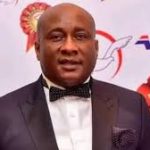



PASTOR OKEY UDO, the 2023 Vice Presidential Candidate of Action Democratic Party (ADP), talks to ISAAC NGUMAH on national contemporary issues in the country. Excerpt:
Nigeria at 64, what is your assessment so far?
At 64 years of independence, Nigeria should indeed embody the characteristics of an elder statesman, not only setting an example but also leading the charge among African nations. While the country has made strides in various sectors, significant work remains to elevate our position, both economically and politically. Nigeria should be a powerhouse in Africa, guiding the continent forward, but we face challenges that hinder this potential.
To realize this vision, we must address persistent issues like economic diversification, infrastructure, and political reforms that prioritize national unity and transparency. If our policies are aimed at stability, economic growth, and international diplomacy, Nigeria can position itself at the forefront of African leadership, inspiring progress across the continent.
What can you say on the political structure of Nigeria since 1960 Nigeria got independence?
Reflecting on Nigeria’s political structure since gaining independence in 1960, a core issue has not only been the structure itself but also the individuals occupying it. Initially, Nigeria was thriving on the global stage; our currency was stronger than the dollar and the pound, and our economy was driven by production across sectors like agriculture and industry, making us economically and politically influential.
However, the military interventions that followed disrupted this trajectory. Many development projects like schools, roads, hospitals were abandoned, leading to a decline in critical infrastructure and services. As a result, our political landscape became marred by instability and inefficiency, and the focus shifted from nation-building to navigating political turmoil. For Nigeria to regain its potential, a reformed political structure with accountable, visionary leadership is essential to foster development, transparency and national pride.
Some analysts are saying that 50 years after Independence, Nigeria has gone from bad to worse and that Nigeria is a failed state. What is your take?
In Nigeria’s case, the ongoing security challenges and economic instability are concerning. The economy has been strained by inflation, high unemployment, and reliance on imports. Politically, governance has faced criticism for lacking accountability and transparency, which has weakened public trust and hindered development efforts.
However, while Nigeria faces these serious issues, labeling it a “failed state” overlooks the resilience of its people and the ongoing efforts at reform. There is significant potential if reforms in security, economic diversification, and political integrity are made priorities. Nigeria’s path forward will depend on bold, stable leadership that addresses these foundational problems and repositions the nation for growth and unity.
The President has promised to reform the political economy of Nigeria?
While reforms take time to bear fruit, citizens are eager to see concrete improvements in areas such as security, inflation, and job creation. The current administration’s ability to fulfill its promises will depend on implementing practical policies and ensuring accountability within government structures. If the president’s vision for reform is supported by genuine, transparent action, it can still drive positive change. But it requires not just promises, but also measurable results that improve everyday life for Nigerians.
Looking at the security architecture of Nigeria today do you see any improvement?
Looking at Nigeria’s current security architecture, it’s difficult to identify substantial improvements. Kidnappings, attacks, and insecurity have unfortunately become near-daily occurrences, with travelers, communities, and even urban areas increasingly affected. Despite government efforts and promises to address these issues, the situation remains dire for many Nigerians who continue to live in fear and uncertainty.
The Federal Government has said that it has been able to conquer Boko Haram, banditry, Fulani herdsmen conflicts. What do you say on this?
Hmmmmm! It is laughable. Despite the Federal Government’s claims of conquering Boko Haram, banditry, and Fulani herdsmen conflicts, the reality on the ground suggests otherwise. Security challenges remain intense with communities across the country still facing frequent attacks, kidnappings and threats from various armed groups.
While certain strongholds of these groups may have been weakened, their presence and impact are still profoundly felt. The security architecture needs comprehensive reform, with a focus on intelligence-led operations, community engagement, and increased resource allocation to effectively dismantle these threats. Until these steps are consistently implemented, it’s difficult to say that Nigeria’s security challenges have been fully addressed.
The President has pledged his commitment to finding sustainable solutions in alleviating the sufferings o Do you believe this?
Although the President has pledged to alleviate Nigerians’ sufferings, many citizens continue to face steep inflation, making daily necessities unaffordable. The government’s approach of distributing palliatives provides only temporary relief and risks creating dependency rather than addressing core issues like inflation, job scarcity and economic instability. Sustainable solutions require focused policies to stabilize prices, boost local production and create jobs, enabling Nigerians to regain stability and independence rather than relying on short-term aid.
Talking about agriculture, the Federal Government is talking about improving agriculture through mechanized farming and boost agricultural productions. How do you see this?
The Federal Government’s emphasis on improving agriculture through mechanized farming and increased production is a positive step, but Nigeria has struggled with effective implementation of its numerous agricultural policies. For instance, the Agricultural Transformation Agenda (ATA) launched in 2011 aimed to achieve food security and self-sufficiency, yet as of 2021, Nigeria still imports about 60 per cent of its food, reflecting persistent challenges in domestic production. Similarly, the National Agricultural Policy of 2016 sought to address these issues but has faced hurdles such as inadequate infrastructure and limited access to financing. According to the Food and Agriculture Organization (FAO), Nigeria ranks 6th among the world’s countries with the highest levels of food insecurity, indicating that despite well-intentioned policies, the country remains far from achieving self-sufficiency. To make meaningful progress, Nigeria must prioritize practical implementation and address the systemic barriers that hinder agricultural development.
Nigeria has solely depended on oil as its only source of revenue. Should this be so?
Nigeria’s over-reliance on oil as its sole source of revenue is a critical issue that has hindered economic diversification and sustainability. This dependence is a result of insufficient focus on other sectors such as agriculture, manufacturing and technology, which hold significant potential for generating revenue and creating jobs. Despite having vast resources and a vibrant population, the country has not fully leveraged these sectors to reduce vulnerability to global oil price fluctuations. To ensure long-term economic stability, Nigeria must implement policies that promote investment in alternative industries, enhance infrastructure, and support entrepreneurship. Diversifying the economy will not only mitigate risks but also foster resilience and growth in the face of changing global economic conditions.
The present administration said it inherited a struggling economy and that it has put back a lot of things into place. Do you agree?
It’s essential to recognize that many of the key figures in the present APC government were also part of the previous administration, raising questions about the continuity of policies and accountability. Notably, Bola Tinubu, who now leads the government, previously endorsed Muhammadu Buhari as the ideal candidate for Nigeria’s leadership. The economic challenges we face today can be traced back to decisions made during that time, leading to widespread discontent and collapse in various sectors. Thus, their assertions of improvement may appear disingenuous as the same leadership dynamics persist, and the root causes of the problems remain unaddressed. Rather than merely reporting progress, a genuine assessment of the past and present is necessary to hold leaders accountable for the state of the economy.
The Federal Government has restated its efforts in providing CNG buses throughout the 36 states of Nigeria for cheaper transportation. What is your take?
While the Federal Government’s initiative to provide CNG buses across all 36 states for cheaper transportation is a positive step, it overlooks a more fundamental issue: the state of Nigeria’s roads. Poor road conditions remain a significant barrier to efficient transportation, impacting not just on bus services but all forms of vehicular travel. Instead of focusing solely on introducing new buses, the government should prioritize repairing and upgrading existing infrastructure to ensure safe and reliable travel for citizens. Additionally, investing in a comprehensive railway system could greatly enhance transportation options as train travel is one of the most efficient and environmentally-friendly modes of transport globally. By addressing these infrastructure needs, the government can create a more integrated and effective transportation network that meets the needs of Nigerians.
What is your view on electricity output in Nigeria?
Nigeria’s electricity output has deteriorated over the years with the country consistently facing significant power supply challenges. As of 2022, Nigeria’s installed capacity was approximately 13,000 megawatts, but actual generation often falls below 4,000 megawatts, leaving a substantial gap in meeting demand. Despite tariff increase by 30 per cent in 2020, the quality of service remains poor due to inadequate maintenance and infrastructure issues within the power sector. According to the World Bank, about 60 per cent of Nigerians still lack access to reliable electricity, highlighting the ongoing crisis. The government’s failure to address these systemic problems only exacerbates the situation, making it increasingly difficult for citizens and businesses to thrive.
What can you say on education, social services and developments?
Chai! That’s the foundation problem. Education in Nigeria is facing a significant crisis, with poor educational outcomes reflecting the systemic challenges within the sector. According to UNESCO, as of 2021, Nigeria had the highest number of out-of-school children globally, with over 10.5 million children not receiving formal education. Moreover, the quality of education is undermined by inadequate resources with a 2020 report indicating that Nigeria spends only about six per cent of its GDP on education, far below the UNESCO-recommended minimum of 15 per cent. Teachers and lecturers often face poor remuneration and inadequate support, which further demotivate them and negatively impacts student performance. Without substantial investment and reform, the education system will continue to hinder social development and progress.
On Social Amenities:
Social amenities in Nigeria, including education, infrastructure, and electricity have not seen significant improvements. As of 2021, the World Bank reported that only 57 per cent of Nigeria’s rural population had access to electricity, while UNESCO indicated that over 10.5 million children remain out of school, highlighting the dire state of education. Furthermore, the National Bureau of Statistics (NBS) revealed that only about 30 per cent of Nigerian roads are paved, contributing to transportation challenges and limiting access to essential services.
What can you say on the Renewed Hope Agenda of the President?
The “Renewed Hope Agenda” appears to be more of a dashed expectation as the economic challenges facing Nigeria today, such as inflation rates exceeding 30 per cent and widespread unemployment, underscore the lack of tangible evidence supporting this initiative.
Should Nigeria revisit 2014 National Confab?
Revisiting the 2014 National Conference could provide a valuable opportunity for Nigeria to address longstanding issues and implement the recommendations that were largely ignored. The conference produced insightful proposals that, if acted upon, could have significantly improved governance, national unity, and resource management. Though there are some changes to consider in light of current socio-economic dynamics, the ongoing challenges in the country, such as security, economic instability, and social discordmake it crucial to reassess these discussions to chart a more constructive path forward for national development.
What can you say on the state of corruption in Nigeria?
The state of corruption in Nigeria remains alarming, with Transparency International’s Corruption Perceptions Index (CPI) ranking the country 154th out of 180 countries in 2022, reflecting widespread public distrust in governance. Corruption is often viewed as a selective fight, where individuals are scapegoated while influential figures evade accountability. According to the Independent Corrupt Practices and Other Related Offences Commission (ICPC), in 2021 alone, over 1,000 cases of corruption were reported, but many prominent officials faced little to no consequences for their actions. To effectively combat corruption, Nigeria must adopt an equitable approach to prosecution, including holding powerful figures accountable and implementing robust whistleblower protections to encourage reporting of corrupt practices without fear of retaliation.
What can you say on the economic policies of the President and what is your advice to him on how to reform his policies?
The President initially introduced several promising policies; however, many of these initiatives have failed to foster meaningful development. The education sector remains underfunded, agricultural programs are largely neglected, and unemployment continues to rise, leading to a concerning exodus of multinational companies from Nigeria. Trade activities are significantly hampered, further exacerbating economic challenges. To reform his policies, the president should prioritize investments in education and vocational training to enhance human capital, revitalize the agricultural sector through support and incentives for local farmers, and create conducive business environment that attracts and retains foreign investments. Fostering collaboration between the government and the private sector will be essential in driving sustainable economic growth.
What can you say on the recent Edo State election?
The recent Edo State elections were marked by significant shortcomings, reflecting a concerning failure in the electoral process. Many observers described the situation as resembling a banditry exercise, with reports of violence, intimidation, and irregularities that undermined the integrity of the elections. To improve future electoral outcomes, there must be a concerted effort to enhance security measures, ensure transparent voting processes, and hold accountable those responsible for electoral malpractices. Strengthening the electoral framework and promoting civic engagement will be crucial in restoring public confidence in the democratic process.
Tell us the crises in your party?
Our party, the Action Democratic Party, is united and does not face any crises. We are focused on strengthening our strategies and policies to better serve the interests of our constituents and ensure a collaborative approach to achieving our goals. This unity is essential for advancing our agenda and addressing the challenges facing our economy effectively.
2027 is around the corner are you contesting the presidency in 2027?
As we approach the 2027 elections, our party is actively preparing to contest for the presidency. I am currently reaching out to friends and supporters to gauge the level of interest and support for the relevant candidate. Together, we aim to present a strong front and take over Aso Rock, driven by our commitment to bringing meaningful change to the nation.
What can you say on true federalism should Nigeria return back to regional government?
The concept of true federalism in Nigeria warrants serious consideration, particularly the idea of returning to a regional government structure. The current system has concentrated too much power at the federal level, which has stifled local governance and development. By decentralizing authority and empowering states and the LGAs, we can encourage grassroots development, foster accountability, and allow for more tailored solutions to regional challenges. A shift toward a more balanced federal structure would enable states to harness their unique resources and capacities, ultimately leading to greater national progress.
What can you say on the upcomimg election in Ondo State?
In the upcoming election in Ondo State, ADP is well-positioned to make a positive impact by engaging with the grassroots through our campaigns. It is essential for the Independent National Electoral Commission (INEC) to uphold its integrity and build a strong reputation by ensuring a transparent and fair electoral process, thereby maintaining public trust in the democratic system.
What can you say on electoral law in Nigeria?
The electoral law in Nigeria provides a foundational framework for conducting elections, but it requires significant improvements to ensure its effectiveness. Stakeholders must work collaboratively to address existing gaps, enhance transparency, and enforce accountability within the electoral process. Strengthening these aspects will be crucial in building public confidence and ensuring that elections are free, fair, and reflective of the will of the people.
Is your party in alliance with other parties to snatch power from the ruling party in 2027?
While we are open to collaborations and alliances with other parties to strengthen our position, we remain committed to maintaining our credibility and integrity as we work towards winning the 2027 election.
What can you say on Obi and Kwakwaso merger in 2027?
Regardless of whether Obi and Kwankwaso merge for the 2027 elections, I believe they pose no significant threat to us; I view them more as dreamers than as contenders capable of challenging our position.
For a better society