

By Emmanuel O. Nlewedum
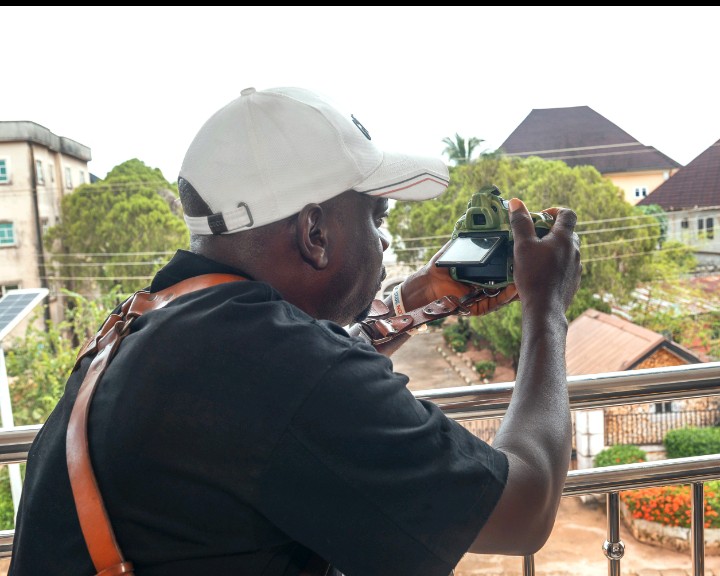
In an era where photography has become an important tool for preserving memories, communicating ideas and telling stories, Uzoma Ekene Victor is steadily building his professional identity through creativity, technical skill and a passion for visual storytelling.
A Nigerian photographer and the Chief Executive Officer of Uzoma Photo Ventures, Ekene began his professional photography career in 2016. Since then, he has developed experience in event photography, portraiture and visual documentation, working with professional camera systems from leading manufacturers including Canon, Nikon and Panasonic.
His professional journey has also included photography training at ATLAZ PHOTOZ, Igbodo, Delta State, which he completed in 2018. Among his notable assignments was the coverage of the Church of God Mission International Convention in Benin City, Edo State, in 2019, an event attended by more than 2,000 participants.
Beyond his professional work, Ekene has demonstrated an interest in cultural expression, particularly the fusion of traditional Igbo aesthetics with contemporary portrait photography. In recognition of his contributions to youth development, human capacity development and community service, he received an Award of Excellence/Appreciation from the Media Department of Church of God Mission International, lgbodo District Headquarters, on May 10, 2025.
In this interview, he discusses his journey into photography, professional experiences, creative influences, achievements and ambitions for the future. Excepts
Can you tell us about yourself and how you started your journey in photography?
My name is Uzoma Ekene Victor, and l am a professional photographer and the Chief Executive Officer of Uzoma Photo Ventures. I began my professional photography career in 2016 because I developed a strong interest in capturing moments and communicating stories through images.
For me, photography is more than taking pictures. It is a way of preserving memories, expressing creativity and documenting important moments in people’s lives. Over the years, I have continued to develop my skills and gain practical experience in the profession.
I also received professional photography training at ATLAZ PHOTOZ in Igbodo, Delta State, which I completed in 2018. That experience contributed to my technical development and helped strengthen my understanding of photography as a profession.
What inspired you to pursue photography as a career?
What inspired me was the ability of a photograph to tell a story without necessarily using words. A single image can preserve an important moment, communicate an emotion or represent an experience that people may want to remember for many years.
I became interested in the creative possibilities of photography and the responsibility that comes with documenting people’s lives and important events. As I gained more experience, my interest grew into a professional commitment.
What areas of photography do you specialise in?
My work includes event photography, portraiture and visual documentation. I enjoy assignments that allow me to capture genuine expressions, important moments and the atmosphere of an occasion.
l also have a particular interest in creative portraiture, especially projects that explore cultural identity and visual storytelling. I believe photography should not only produce attractive images but should also communicate something meaningful about the subject.
What would you describe as one of your most significant professional assignments?
One of the notable assignments in my career was covering the Church of God Mission International Convention in Benin City, Edo State, in 2019. The event brought together more than 2,000 participants. It was an important professional experience because documenting an event of that size requires concentration, preparation and the ability to recognise important moments as they happen. It also strengthened my practical experience in event photography and taught me the importance of being attentive and professional throughout an assignment.
You have worked with different professional camera systems. How important is technical knowledge to a photographer?
Technical knowledge is very important because creativity must be supported by the ability to use equipment effectively. A photographer needs to understand how to work with camera settings, lighting, composition and other technical elements to achieve the intended result.
I have developed experience working with professional camera systems from Canon, Nikon and Panasonic, among others. I believe that a good photographer should not depend entirely on equipment. Understanding how to use the available tools and knowing how to respond to different shooting conditions are equally important.
Your creative interests include combining traditional Igbo aesthetics with contemporary portraiture. Can you explain this approach?
I am interested in how photography can preserve and communicate cultural identity.
Traditional Igbo culture has rich visual elements, including clothing, symbols, colours and other forms of cultural expression.
My interest is in exploring how these elements can be presented through contemporary portrait photography. I believe that culture should not be seen only as something from the past. It can remain relevant and meaningful when expressed through modern creative approaches.
Through photography, I hope to contribute to the documentation and appreciation of our cultural heritage while exploring new ways of presenting it visually.
You have also collaborated with Adrah Studio on several projects. What has that experience meant to your professional development?
I have collaborated with Adrah Studio on four major projects over the years. Working with other creative professionals provides opportunities to exchange ideas, learn from different approaches and improve the quality of one’s work. Collaboration is important in the creative industry because no professional grows in isolation.
Every project presents an opportunity to develop new skills, understand different expectations and strengthen professional relationships. My experience working with Adrah Studio has been part of my journey of learning and professional growth.
In May 2025, you received an Award of Excellence/Appreciation from the Media Department of Church of God Mission International, Igbodo District Headquarters. What did that recognition mean to you?
It meant a great deal to me because I did not necessarily expect that my efforts would receive that kind of recognition. The award acknowledged my contributions to the Church, youth development, human capacity development and community service. When I received it, I expressed how surprised and grateful l was. I said that I had not realised that my efforts were being noticed. For me, the recognition was not simply about receiving an award; it was also an encouragement to continue contributing positively to society.
It challenged me to do more and to remain committed to using my skills and resources in ways that can make a meaningful difference.
How do you maintain quality and professionalism in your work?
I believe professionalism begins with taking every assignment seriously. A photographer must understand the client’s expectations, prepare properly and remain focused throughout the job. Attention to detail, patience, creativity and a willingness to keep learning are also important. Photography continues to evolve, so anyone who wants to remain relevant must be ready to improve and adapt.I also believe that every project should be approached with respect for the people involved and an understanding of the importance of the moments being documented.
What challenges have you encountered in your photography journey, and how have you handled them?
Like many people building a career in a creative industry, the journey requires patience, consistency and continuous learning. Every assignment comes with its own expectations, and a photographer must be prepared to adapt to different working Conditions.
I have learned that growth does not happen overnight. It takes commitment, practice and the willingness to learn from experience. Rather than allowing challenges to discourage me, I see them as opportunities to improve my skills and become better at what I do.
What are your future ambitions for Uzoma Photo Ventures?
My ambition is to continue developing Uzoma Photo Ventures into a professional photography brand with a wider reach and greater creative opportunities. I want to expand my work, take on more challenging projects and bring my photography and visual storytelling to the international stage. I am particularly interested in opportunities that will allow me to share my creative perspective, explore different cultures and contribute to the wider photography industry.
I also want to continue improving professionally and producing work that reflects creativity, quality and a strong sense of purpose.
What advice would you give to young people who want to build careers in photography?
My advice is to take the profession seriously and understand that photography requires more than owning a camera. It requires creativity, technical knowledge, patience, discipline and continuous practice.Young photographers should be willing to learn from experienced professionals, develop their individual creative styles and take every opportunity to improve. They should also understand the importance of professionalism, good relationships and delivering quality work.
Most importantly, they should be patient with their growth. Building a sustainable career takes time, but consistency and dedication can make a difference.
Finally, what would you like people to remember about your work?
I would like people to remember my work for its creativity, attention to detail and ability to preserve meaningful moments. I want my photographs to do more than document events; I want them to tell stories and create lasting memories.
I also hope that, through my work, I can contribute to the appreciation of our culture and demonstrate that photography is a powerful medium for creative expression and communication.