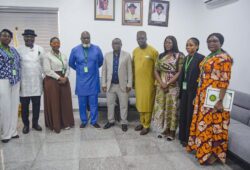

Akor Sylvester, Abuja
Nigeria has concluded arrangements to host delegates from more than 25 countries at the second edition of the African Raw Materials Summit (ARMS 2026), as the Raw Materials Research and Development Council (RMRDC) intensified efforts to promote value addition, industrialisation and intra-African raw materials integration.
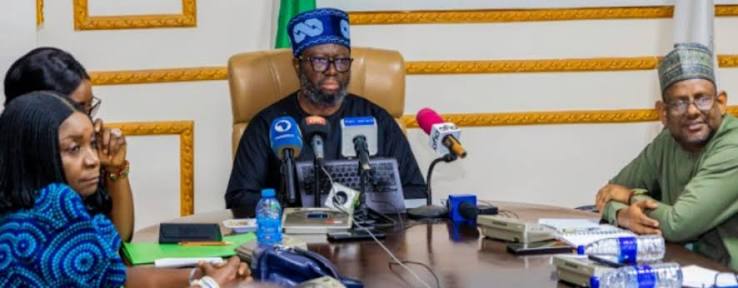
The Director-General and Chief Executive Officer of the RMRDC, Prof. Nnanyelugo Ike-Muonso, disclosed this on Tuesday in Abuja at a press conference ahead of the summit scheduled for October 19–20, 2026, in Abuja.
The summit, themed “From African Feedstock to African Factory,” is expected to attract approximately 1,000 delegates from across Africa and global industry partners, with more than 25 countries already expressing interest in participating.
Ike-Muonso noted that Nigeria alone has more than $582.4 billion worth of documented non-renewable natural resources beneath its soil, stressing that Africa must move beyond exporting raw commodities and importing finished products.
He said Africa had for decades operated an extractive economic model in which its soils, mines and forests generated enormous wealth, while the continent remained trapped in low-value addition, export of unprocessed commodities and dependence on imported finished goods.
The Director General said: “The era of seeing Africa as a pit for mineral extraction is over. The future belongs to resource-based manufacturing”.
The RMRDC boss said, the ARMS 2026 represents an opportunity to align policy, capital, technology and political will toward ensuring that raw materials extracted from African soil are increasingly processed on the continent.
He said the summit would focus on five major pillars: logistics infrastructure, policy and the 30 per cent value-addition mandate, circular economy and waste industrialisation, regional value-chain integration, and technology commercialisation and capital linkage.
Ike-Muonso described the proposed 30 per cent mandatory value-addition legislation as a critical instrument for Nigeria’s industrial transformation.
He explained that the bill, which was returned to the National Assembly by President Bola Ahmed Tinubu with proposed amendments, had undergone the required amendments and was expected to return to the President for assent.
The RMRDC boss expressed optimism that the bill would eventually become law, saying it would require raw materials extracted from Nigeria and Africa to undergo a minimum level of domestic processing before export.
According to him, the policy could generate more than 1.2 million skilled jobs within five years, conserve foreign exchange, strengthen national reserves and increase manufacturing’s contribution to the Gross Domestic Product.
He said: “By moving from convenience to law, it is no longer about political will or what you think, but about what the law says you must add value,” he said.
He added that mandatory value addition would ensure that every extraction contributes to domestic industrial growth.
“For as long as we dig deeper beneath the Nigerian soil or beneath the African soil, everything that comes out of it will at least have value transformation of up to 30 per cent,” he said.
The RMRDC Director General also highlighted reforms undertaken by the council since he assumed office, including the development of the Nigerian Integrated Information and Statistical System for Raw Materials and Products (NISRA).
He described NISRA as a digital repository designed to provide information on raw-material deposits, feedstock specifications, production outputs and industrial absorption rates to investors and policymakers.
He also disclosed that the RMRDC had undergone extensive digitalisation and received data-controller and processor certification from the Nigerian Data Protection Commission.
Other initiatives, according to him, include the council’s attainment of ISO 9001:2015 Quality Management System certification, establishment of RMRDC 360, the restructuring of the Journal of Raw Materials Research (JOMA) into an open-access digital publication, and the launch of the RMRDC Training School for MSMEs, miners and processors.
The council, he said, had also entered into an operational agreement with the Bank of Industry to support processing businesses and reduce supply-chain losses in strategic commodity lines.
He further disclosed that the RMRDC had finalised a South-South technology transfer partnership with the National Innovation Center for Excellence (NICE), Shanghai, China, facilitated by the World Association of Industrial and Technological Research Organizations (WAITRO), to strengthen the commercialisation of local research and development.
On logistics, Ike-Muonso said the summit would address infrastructure gaps between farms, mines and manufacturing facilities, including inadequate transportation networks, cold-chain systems, rural roads and regional testing and certification facilities.
He said the circular economy pillar would promote the conversion of agricultural by-products, mine tailings, scrap metals and biomass into inputs for secondary production.
On regional integration, he said the African Continental Free Trade Area (AfCFTA) provided an opportunity for African countries to establish cross-border supply chains and ensure that the concept of “Made in Africa” begins with “Source in Africa.”
He also stressed the importance of linking research institutions and innovators with equity investors, development finance institutions and industrial off-takers to accelerate technology commercialisation
Earlier, the Head of the African Raw Materials Summit Secretariat and Chairman of the Local Organising Committee, Mrs. Rachel Kofso, said ARMS was conceived to change the continent’s approach to raw-material development and industrialisation.
Kofso said African countries had historically exported raw materials in their primary forms only to import finished products at significantly higher prices.
She said the summit was therefore designed to encourage African countries to integrate their economies and process raw materials within the continent.
She disclosed that the maiden edition of the summit attracted participants from more than 30 countries, while preparations for the 2026 edition had already generated interest from more than 25 countries.
According to her, more than 3,500 invitation letters had been sent out and registration for the summit was still ongoing.
The RMRDC DG urged journalists and media organisations to play an active role in monitoring the implementation of policies and initiatives aimed at transforming Africa’s raw-material sector.
He urged the media to scrutinise the summit’s outcomes, monitor the implementation of the proposed 30 per cent value-addition policy and report on progress toward Africa’s industrial transformation.
The two-day event will feature high-level plenary sessions and policy dialogues involving African ministers, trade representatives and heads of multilateral development finance institutions.
It will also include interactive sessions on backward integration, industrial testing and traceability, intellectual-property commercialisation and resource-based industrialisation.
Other activities include the African Advanced Raw Material and Technology Exhibition, industrial site visits and the African Raw Materials Industry Awards, which will recognise industrialists, researchers and companies contributing to domestic raw-material transformation.
Also, in her opening remarks, the Director of Corporate Affairs and Communications, Directorate, RMRDC, Chinyere Nnamdi Anum, said the summit would bring together industrialists, researchers, academics, government officials and other stakeholders to develop strategies for adding value to raw materials before they leave the continent.
In her closing remarks, Mrs. Stella Azi expressed optimism about the momentum generated by ARMS 2026, saying the summit would contribute to making Nigeria and Africa a better place through industrial development and value addition.
For a better society
_______________________________
Follow us across our platforms:
Instagram – https://www.instagram.com/championnewsonline/
Facebook – https://web.facebook.com/championnewsonline
LinkedIn – https://www.linkedin.com/company/champion-newspapers-limited/
https://x.com/championnewsng/
You can also like and comment on our YouTube videos.
https://youtu.be/QIBfD1tT80w?si=R4Qf3so2LxYu3GC2