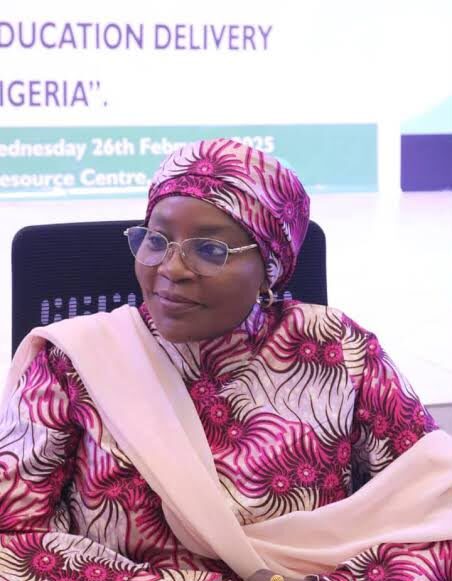
Favour Ishember, Abuja
The Universal Basic Education Commission (UBEC) has intensified efforts to reduce the number of out-of-school children in Nigeria through a new partnership with the Sultan Foundation for Peace and Development, aimed at identifying children outside the school system and ensuring their enrolment.
The collaboration, which was formalised through a Memorandum of Understanding (MoU), will deploy the influence of traditional and religious institutions to drive grassroots mobilisation, promote school attendance and improve pupils’ retention and completion rates nationwide.
The initiative is part of the Federal Government’s ongoing drive under President Bola Ahmed Tinubu’s Renewed Hope Agenda to strengthen basic education through improved infrastructure, teacher development and strategic partnerships.
Highlighting UBEC’s achievements, the Executive Secretary of the Commission, Aisha Garba, represented by the Deputy Executive Secretary (Technical), Rasaq Akinyemi, disclosed that the agency had facilitated the construction of more than 4,900 classrooms, renovated existing school facilities and provided water, sanitation and hygiene amenities across the country.
Garba said the projects, implemented in collaboration with the Federal Ministry of Education and State Universal Basic Education Boards (SUBEBs), had directly impacted over 2.3 million learners by the end of 2025.
She added that UBEC had also expanded community-driven school improvement programmes and teacher professional development initiatives aimed at strengthening school administration and improving teaching and learning outcomes.
“The progress we are recording in basic education shows that sustained investment, effective coordination and collective action can transform the education sector,” Garba said.
She, however, stressed that maintaining the gains achieved required stronger involvement from communities, families and stakeholders, noting that government interventions must be supported by grassroots ownership.
The UBEC boss explained that the partnership with the Sultan Foundation would provide a platform for connecting education policies with community action, particularly in underserved areas where poverty, cultural barriers and social challenges have continued to limit children’s access to schooling.
She said the agreement would support the establishment of national, state and local coordinating committees responsible for driving advocacy campaigns and mobilising communities to prioritise children’s education.
Under the partnership, traditional and religious leaders will play key roles in encouraging families to enrol children in schools, monitor attendance and support pupils’ retention until completion.
The agreement will also facilitate the production and distribution of advocacy materials in Hausa, Fulfulde and Yoruba languages, while supporting household-level identification of out-of-school children and their placement in nearby schools.
Garba said the initiative would introduce accountability measures to recognise communities, schools and traditional leaders who achieve measurable improvements in expanding access to basic education.
She described traditional and religious leaders as critical partners in the fight against educational exclusion because of their ability to influence community decisions, promote positive values and address social barriers affecting children, especially girls.
“The role of community leaders cannot be underestimated. Their influence remains vital in changing attitudes and ensuring that every child has the opportunity to benefit from education,” she said.
Garba maintained that the success of the partnership would be assessed through increased enrolment, improved attendance, stronger retention rates, better learning outcomes and a sustained decline in the number of children outside the classroom.
She reaffirmed UBEC’s commitment to supporting the education reforms of the Tinubu administration by deepening partnerships with state governments and other stakeholders.
According to her, the Commission would continue to align its programmes with the policy direction of the Minister of Education, Dr Maruf Tunji Alausa, CON, to consolidate existing achievements and deliver lasting improvements in access to quality basic education.
“The vision is to ensure that every Nigerian child, regardless of location or circumstance, has access to quality basic education and the opportunity to build a better future,” Garba added.
Meanwhile, the Deputy Governor of Kebbi State, Senator Umar Abubakar Tafida, who represented Governor Nasir Idris, commended the Sultan Foundation for Peace and Development for its contributions to health and social development.
Tafida praised the foundation’s interventions supported by development partners, including the Bill and Melinda Gates Foundation, describing its efforts towards improving the welfare and educational opportunities of vulnerable children as commendable.
He said Kebbi State valued the foundation’s commitment to supporting disadvantaged children, describing the gesture as a reflection of the principles of Islam and humanity.
The Deputy Governor also conveyed Governor Idris’ goodwill to UBEC, the Sultan Foundation and the Nasara Foundation for their efforts towards strengthening education and improving the lives of children across Nigeria.