. CISLAC, BudgIT, others task lawmakers, media on budget integrity
Ignatius Okorocha and Jonas Ezieke, Abuja
The National Assembly is set to deepen the digitisation of parliamentary records, translate Nigerian laws into Hausa, Yoruba, Igbo and other local languages and expand public access to legislative information as part of efforts to preserve the country’s democratic memory.
Executive Secretary of the National Assembly Library Trust Fund, Henry Nwawuba, disclosed this on Monday in Abuja while declaring open the 2026 National Assembly Library Week, themed, “Parliamentary Memory: Connecting Records, Legislation and the People.”
Nwawuba said the three-day programme was designed as an annual platform to promote legislative research, access to information and effective utilisation of the resources of the National Assembly Library.
He described the library as more than a collection of books, saying it serves as the knowledge infrastructure of the legislature and a repository of parliamentary records, legislative information, research materials and the institutional memory of Nigeria’s democratic journey.
He said the library was working to ensure that lawmakers, legislative aides, researchers and other stakeholders have access to authoritative parliamentary records, including Order Papers, Votes and Proceedings, committee reports, Acts passed by the National Assembly, gazetted laws and oversight manuals.
Nwawuba said the Trust Fund was investing in electronic repositories and upgrading its E-Library, while developing a National Assembly Library mobile application to make legislative information more accessible to lawmakers, staff, researchers and members of the public.
He also announced plans for a Bills Tracker, which would enable users to follow bills and monitor their progress through the legislative process.
According to him, the library is developing infographics, audiovisual materials and video explainers to simplify Bills, Acts and legislative procedures for Nigerians. He said the planned translation of laws into Hausa, Yoruba, Igbo and other local languages would broaden access to legislative information and enable more citizens to understand laws that affect their daily lives.
Nwawuba said the library would also organise public policy dialogues to deepen citizens’ participation in public hearings and create more opportunities for interaction among legislators, citizens, researchers and other stakeholders.
He added that the initiatives were aimed at addressing inconsistencies in official parliamentary documents and the circulation of fake or unauthorised copies of National Assembly records.
Representing the President of the Senate, Godswill Akpabio, Senator Osita Ngwu urged lawmakers to make greater use of the library, particularly in an era of increasing misinformation, disinformation and the rapid development of artificial intelligence.
Ngwu described the library as a critical link between evidence, knowledge and legislative decision-making, and called for continued support for its development.
In a goodwill message, the Speaker of the House of Representatives, Tajudeen Abbas, represented by the House Leader, Prof. Julius Ihonvbere, said legislative records were essential to understanding Nigeria’s legislative history and strengthening democratic governance.
Abbas said the strength of a legislature should be measured not only by the laws it enacted, but also by how effectively it documented its activities, preserved institutional knowledge and made such information available to future generations.
He said technology and artificial intelligence could improve legislative research, records preservation and access to information, but cautioned that their adoption must be guided by accuracy, security, professional judgment and protection of the integrity of parliamentary records.
The Clerk to the National Assembly, Kamoru Ogunlana, said the National Assembly could not be truly independent if it lacked the capacity to generate, preserve, retrieve and authenticate its institutional knowledge and records.
Ogunlana said the library had an important role as a bridge between parliamentary records, legislation and the people, stressing that Parliament could not be fully transparent if its records could not be found, understood and trusted.
He identified the Order Paper, Votes and Proceedings and Hansard as key components of Nigeria’s democratic memory, explaining that the Order Paper provides the agenda for legislative business, the Votes and Proceedings record decisions and proceedings, while the Hansard provides a comprehensive record of debates and lawmakers’ contributions.
The Clerk warned against the circulation of incomplete, outdated, altered or unauthorised Bills, Acts and other parliamentary documents, saying digital technology had made it possible for documents to be manipulated and circulated to thousands of people within minutes.
He stressed that the integrity of an Act depended not merely on the existence of a document, but on the ability to establish which version was authentic, which was authoritative and the legal process through which it emerged.
Ogunlana also called for stronger collaboration among the National Assembly, the Office of the Attorney-General of the Federation, the Nigerian Law Reform Commission and the Federal Government Press to ensure that Nigerians have easy access to current and authoritative versions of federal laws.
He noted that the continued widespread use of the Laws of the Federation of Nigeria, LFN 2004, highlighted the challenges of maintaining a current and authoritative consolidated body of federal legislation. He explained that the LFN 2004 reflected the laws covered by that revision exercise and was not automatically updated whenever a new Act was enacted.
Ogunlana said the National Assembly must also strengthen cybersecurity, digital preservation, secure authentication, access controls, backup systems and staff training as parliamentary records become increasingly digitised.
He warned that while digitisation would make parliamentary information easier to access, search and disseminate, it could also expose records to cyberattacks, manipulation and impersonation of official sources.
The Clerk said digital platforms must therefore be accessible and secure, while electronic records must be available, authentic and traceable.
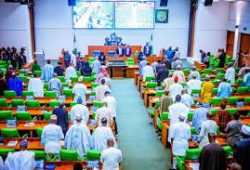
Meanwhile, the controversial allocation of N1.3 billion to a non-existent Presidential Foreign Intervention Promotion Council (PFIPC) in the 2026 budget dominated discussions on Monday at the Senate Press Corps (SPC) Capacity-Building Workshop in Abuja, as stakeholders called for stronger legislative oversight and media collaboration to safeguard the national budget.
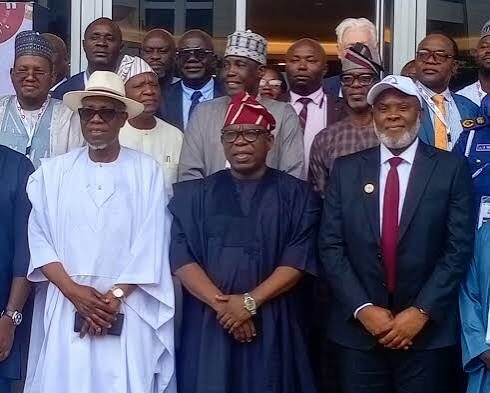
The workshop, held at Hearing Room 231, National Assembly Complex, with the theme, “Leveraging Legislative Oversight and Media Collaboration to Safeguard the National Budget from Unlawful Insertions,” brought together the Executive, civil society, budget experts and journalists.
In his welcome address, Chairman of the Senate Press Corps, Chief Taiye Odewale alias Baba T., said the alleged N1.3bn allocation to the non-existent PFIPC exposed the urgent need for stronger checks against unlawful insertions.
Odewale said SPC findings showed that the allocation was not part of the N9.853 trillion added by the National Assembly to the N58.47 trillion Executive proposal that produced the N68.32 trillion 2026 budget.
He said the controversy prompted the workshop to strengthen collaboration between legislative oversight and the media in detecting questionable budget entries and to equip journalists with better knowledge of budget scrutiny and AI tools for professional reporting.
The first paper titled: “Critical Scrutiny of Budget Line Items: Preventing Garbage In, Garbage Out and Strengthening the Roles of Legislators and the Media,” was presented by Mr. Ebu Emmanuel who represented the Executive Director of CISLAC, Auwal Musa Rafsanjani.
Key takeaways from his paper include that budget provisions must be justified, transparent, properly costed and measurable, warning that vague, duplicated or inflated items fuel waste.
He cited ICPC findings which claimed that about 4,508 inserted/padded projects worth N434.5bn and 66 duplicated projects worth N6.43bn were included in the 2022 budget.
He urged lawmakers to scrutinise provisions before appropriation, verify their purpose, MDA, location, beneficiaries, cost and expected results, and maintain a clear audit trail from proposal to final budget.
CISLAC urged the media to scrutinise budget changes, verify projects and track implementation, while institutions collaborate to strengthen transparency.
He suggested that the media should ask key questions: “What changed, why, who justified it, what will it cost, where will it be implemented, who benefits and how will delivery be verified?”
He recommended that accountability should cover proposal, justification, verification, approval, disclosure, implementation, monitoring, audit and accountability.
The second paper titled: *“From Insertion to Interrogation, the National Assembly’s Role in Evaluating the Executive’s Budget Proposal: A Guide and Roadmap for Evidence-Based, Citizen-Centred and Technology-Enabled Budget Scrutiny” was delivered by the Director of BudgIT, Oluseun Onigbinde, represented by the Country Director of BudgIT Foundation, Vahyala Kwaga.
Onigbinde argued that budget scrutiny by the National Assembly is too often focused on appropriations rather than on public policy performance, which should be a critical component of the legislative budget process.
He identified persistent challenges affecting Nigeria’s budgeting process from the perspectives of different arms of government.
On the part of the Executive, he identified late submission of the Medium-Term Expenditure Framework and Fiscal Strategy Paper (MTEF-FSP) to the National Assembly as a recurring challenge, which often results in expenditure projections exceeding credible available resources.
On the role of the National Assembly, he noted that limited engagement with Ministries, Departments and Agencies (MDAs) contributes to weakened legislative oversight of budget implementation and performance.
BudgIT therefore recommended early submission of the budget proposal to the National Assembly at least 90 days before the end of the financial year, to allow sufficient time for review.
It also recommended that the National Assembly assess the performance of an agency’s previous budget before approving a new allocation, and called for stakeholder participation in the budget proposal and review process.
The MD/Publisher of The Eagle Times Newspaper, Mr. Ikechukwu Chukwunyere, represented by the Chief Operating Officer, Mr. Tabuko Kennedy, in his presentation titled: “Making the Eagle Eye of the Media Sharper at Yearly Budget Scrutinies,” identified weak budget scrutiny by the media, including overreliance on headline figures and official statements, poor understanding of budget data, limited follow-up, failure to compare allocations across years, detect duplication, verify projects on the ground and track spending from allocation to impact.
In his recommendations, he urged journalists to follow the money by comparing budgets, releases, expenditure, outputs and impact; scrutinise projects through data and field verification; check previous budgets, audit reports and procurement records; investigate red flags and distinguish verified facts from official claims.
He also proposed a Senate Press Corps Budget Accountability Reporting Desk, a joint budget scrutiny report within 72 hours of budget presentation, a public database of major projects and tracking at least 10 projects from budget document to project site.
Ms. Adeola Ademokaya, Nigeria Representative of Mass Media LLC Texas, who was Consultant and Moderator, in her presentation focused on how Artificial Intelligence can strengthen legislative budget oversight and parliamentary journalism.
She stressed that the national budget is a public trust, covering critical areas such as roads, schools, healthcare, security, jobs and infrastructure.
She said AI can help journalists analyse lengthy budget documents, compare different versions, identify vague project descriptions, unusual figures and possible duplication, and generate relevant questions for budget defence sessions. It can also simplify complex budget issues for radio, television, newspapers and social media.
However, she emphasised that AI is an assistant, not the final authority. Journalists must verify information with official documents, seek responses and exercise editorial judgment before publication.
The core message was simple: Read, question, verify, seek clarification and report responsibly. AI can make journalists faster and more effective, but human judgment remains central to credible journalism.
The workshop drew participation from lawmakers, budget experts, civil society advocates and members of the Senate Press Corps.
For a better society
_______________________________
Follow us across our platforms:
Instagram – https://www.instagram.com/championnewsonline/
Facebook – https://web.facebook.com/championnewsonline
LinkedIn – https://www.linkedin.com/company/champion-newspapers-limited/
https://x.com/championnewsng/
You can also like and comment on our YouTube videos.
https://youtu.be/QIBfD1tT80w?si=R4Qf3so2LxYu3GC2