Steve Unegbu, Umuahia
The Abia State Government has charged Mayors of the 17 Local Government Areas and other senior government officials to strengthen financial and administrative control systems to prevent the diversion and mismanagement of public resources.
The Commissioner for Local Government and Chieftaincy Affairs, Prince Dr. Uzor Nwachukwu, gave the charge on Thursday, November 12, 2026, during the opening of a two-day Anti-Corruption Sensitisation Programme organised in collaboration with the Independent Corrupt Practices and Other Related Offences Commission (ICPC) at the JAAC Secretariat, Umuahia.
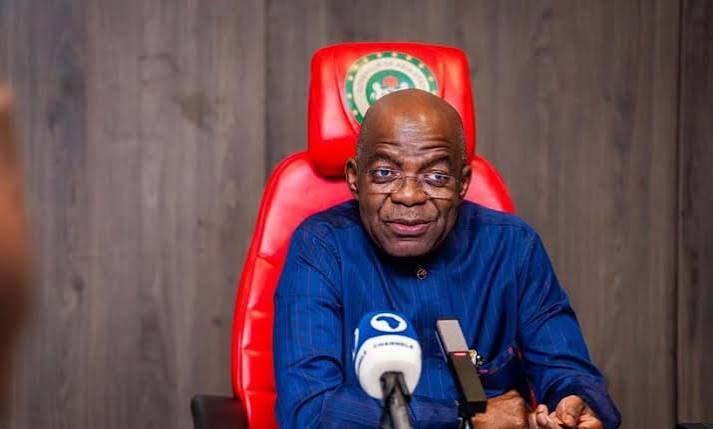
Prince Nwachukwu said the administration of Governor Alex Otti was committed to conducting government business with discipline, transparency and a focus on measurable results, stressing that the principles must guide operations across the 17 Local Government Areas.
He noted that Local Governments were no longer expected to function merely as administrative centres but should serve as effective drivers of development, economic opportunities and improved living conditions for the people.
The Commissioner said the State government was pursuing various initiatives in agriculture, youth development, rural infrastructure and local economic empowerment, adding that such interventions required substantial resources, proper coordination and responsible management.
According to him, the success of government programmes should not be measured by the amount of money released but by the tangible results achieved.
“The success of any government programme is not determined by the amount of money released. It is determined by what is achieved with that money.
“A project that exists only on paper is not development. An expenditure without proper accountability is not good governance. And an approval that disregards established procedures cannot be justified simply because the intention was good,” he said.
He emphasised that Executive Mayors and senior local government officials must take responsibility for maintaining financial discipline and administrative integrity by ensuring proper record-keeping, transparent procurement processes, effective supervision and timely financial reporting.
Prince Nwachukwu further warned that the delegation of responsibilities should not be mistaken for the abandonment of oversight, urging local government leaders to strengthen internal controls, proper documentation and compliance with financial regulations.
He expressed the expectation that the training would provide practical guidance to public officers, particularly in areas concerning their legal obligations and the proper management of public resources.
The Commissioner also called for practical recommendations from the programme to strengthen administrative and financial control systems across the 17 Local Government Areas.
“We cannot continue to attend workshops, collect certificates and return to our offices to do things exactly the same way. There must be a difference,” he said.
He assured the ICPC of the Ministry’s readiness to collaborate with the Commission in promoting integrity and institutional accountability, while urging participants to take the programme seriously.
In her goodwill message, the ICPC representative, Chinwe Egbeocha, thanked the Commissioner and the Ministry for expanding the programme to include all local government structures, noting that embracing the programme, showed the state’s readiness to fight corruption.
She disclosed that the ICPC office covering Imo and Abia states had been working in Imo state, and this is the first time it is coming to Abia state for such a sensitisation.
“This is the first place we are coming, and we like the reception. We are also happy that many people are in the hall, even before we came,” Egbeocha said.
She warned that it would not be business as usual, urging participants to pay attention and ask questions about corruption.
“This is an opportunity for some of you seeing ICPC staff in person, and an opportunity for you to ask all the questions agitating your minds about corruption. We are not going to talk about politics,” she said.
Earlier in her welcome address, the Permanent Secretary, Ministry of Local Government and Chieftaincy Affairs, Lady Oge Maduka, appreciated the ICPC for initiating the programme and partnering with the Ministry to strengthen accountability and ethical conduct in local government administration.
She also commended the Commissioner for his leadership and support towards the successful organisation of the programme.
Lady Maduka observed that corruption did not necessarily begin with large sums of money or major scandals, explaining that it could start with seemingly minor acts such as bending rules, ignoring established procedures or deliberately overlooking wrongdoing in public offices.
She reminded participants that public officers occupied positions of trust and that their decisions and management of resources had direct consequences for ordinary citizens, particularly at the grassroots.
The Permanent Secretary said the administration of Governor Otti had placed renewed emphasis on transparency, accountability and a different approach to governance, urging public servants to reflect these values in their daily responsibilities.
She maintained that good intentions alone were insufficient without adequate knowledge of the rules and the ability to identify situations that could expose public officers to violations of the law.
She urged participants to take advantage of the engagement, ask practical questions and ensure that the knowledge acquired translated into improved professional conduct and a public service culture anchored on integrity.
For a better society
_______________________________
Follow us across our platforms:
Instagram – https://www.instagram.com/championnewsonline/
Facebook – https://web.facebook.com/championnewsonline
LinkedIn – https://www.linkedin.com/company/champion-newspapers-limited/
https://x.com/championnewsng/
You can also like and comment on our YouTube videos.
https://youtu.be/QIBfD1tT80w?si=R4Qf3so2LxYu3GC2