

Sopuruchi Onwuka
The federal government has declared that Nigeria remains must own the implementation of its climate action in line with its overall economic agenda, insisting that the global community must accept the reality of oil producing nations that currently struggle with resources to finance climate resilience, energy security and economic growth.
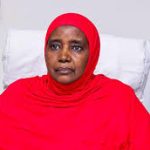
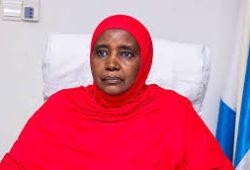
Speaking at the ongoing 31st Conference of Parties (COP31) in Antalya, Turkiye, Director General of National Council on Climate Change (NCCC), Tenioye Majekodunmi, called for a just transition that is equitable and nationally determined, adequately financed, and responsive to the development realities of emerging economies.
Meanwhile Nigeria led the third largest delegation to COP31 with over 1000 attendees drawn from federal and state government agencies, civil society organizations, development consultants, energy companies, petroleum industry host communities and media.
Majekodunmi who led the Nigerian Party to the global confab stated that Nigeria is determined to position climate action as a catalyst for sustainable economic transformation.
She stated that the country is pursuing a development pathway that recognises climate resilience, energy security, industrial competitiveness, and social inclusion as mutually reinforcing priorities.
Through the coordination of the NCCC, she said, Nigeria is strengthening the institutional foundations required to translate nationally determined contributions, adaptation priorities, and long-term development goals.
“We are moving from climate policy formulation to a stronger institutional and market execution. We have listed quite a lot of achievements in the last one and a half years, and we’ve put all those together in our achievement booklet, which you’ll all be getting in a couple of minutes,” she declared.
Daily Champion reports that COP 31 has been framed as an implementation COP, guided by the principles of dialogue, consensus, and action.
Majekodunmi stated that the principles speak directly to Nigeria’s national priorities, adding that the next phase of the country’s global climate action has been moved “beyond commitment on paper to investment in our communities, in our industries, in our infrastructure, and most importantly, our people.”
At the opening of Nigerian Day at the country pavilion, Majekodunmi restated the nation’s determination to position climate action as a catalyst for sustainable economic transformation under a development pathway that recognises climate resilience, energy security, industrial competitiveness, and social inclusion as mutually reinforcing priorities.
She made a strident call on the international community and development partners and the United Nation to assist Nigeria and other nations with the right financing, technology and other capabilities for economic and climate resilience.
“Nigeria comes to COP 31 not only to articulate our priorities, but to forge partnerships capable of translating ambition into action. We seek a future where finance reaches projects, technology transfer strengthens African industries, green jobs, supports decent livelihoods, and resilience reinvestments protect those most exposed to climate risk,” she declared.
In showcasing Nigeria’s determined efforts to cut emissions and adapt to cleaner energy future through fuel diversification, she pointed out that Nigeria remains relentless in its efforts to deliver on its climate commitments.
Majekodunmi made it clear that Nigeria has taken climate implementation as a project that must translate to economic opportunity.
In declaring the Nigerian Day open at the country pavilion, the Minister of State for Foreign Affairs, Ambassador Sola Enikanolaiye, thanked the NCCC “for such an excellent coordination of this event,” saying time has come for all Nigerians to feed into the nation’s climate action and national development.