

.As President, Obi, Sowore, others sign peace accord ahead of 2007
. INEC projects over 100m registered voters
.We’re committed to secure, credible elections– Information Minister
APC repositioning after Osun defeat
. As Jonathan condemns govs’ inversion of states during off-cycle polls
Cyril Mbah, Ignatius Okorocha, Chidimma Uchegbu and Jonas Ezieke with Agency report
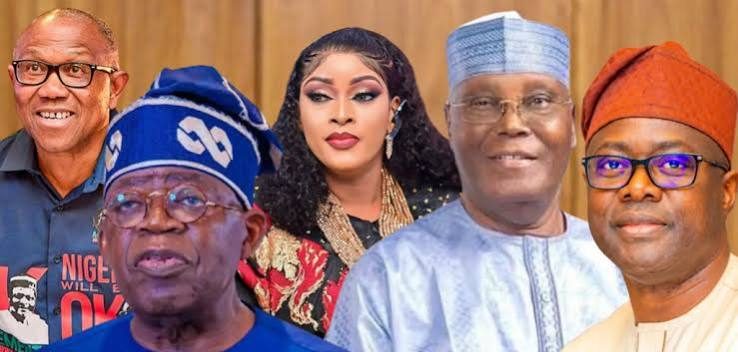
As the campaigns for the 2027 elections officially kick off, Presidential candidates and national chairmen of major political parties on Tuesday signed the first National Peace Accord ahead of the 2027 general elections in Abuja.
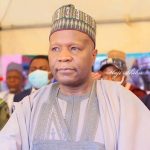
The accord was signed on behalf of President Bola Tinubu by the Secretary to the Government of the Federation, George Akume, alongside the All Progressives Congress National Chairman, Nentawe Yilwatda.
The presidential candidate of the Nigeria Democratic Congress, Peter Obi, and Omoyele Sowore of the African Action Congress signed the accord in person.
Other parties that participated in the signing ceremony, organised by the National Peace Committee, included the Labour Party, Democratic Leadership Alliance, National Democratic Party, National Rescue Movement, Social Democratic Party, Youth Party, Young Progressives Party and Zenith Labour Party, among others.
The ceremony was held at the International Conference Centre in Abuja.
Video footage of the event aired on Channels TV shows party leaders and presidential candidates approaching the table one after another to sign the accord.
However, former President Goodluck Jonathan has warned against the growing practice of serving governors, senior political office holders and party leaders converging on states where off-cycle elections are being conducted, saying the trend could threaten Nigeria’s democratic stability.
Jonathan raised the concern in a statement posted on his X handle on Tuesday while commenting on the recently concluded Osun governorship election.
He commended the Independent National Electoral Commission, security agencies, political parties and the people of Osun State for the peaceful conduct of the election, but expressed concern over what he described as an emerging trend in political conduct during off-cycle polls.
Jonathan said the conduct witnessed around recent elections in Osun, Ekiti and Ondo states was unusual and should not become normal in a democratic society.
“The growing practice whereby serving governors, senior political office holders, party leaders and other influential government functionaries, accompanied by large numbers of aides and heavy security details from outside a state, converge on states where elections are being conducted raises an issue that demands national attention.
“The conduct witnessed around the recent elections in Osun, Ekiti and Ondo States was, in my view, unusual. It is not a practice that should become normal in a democratic society,” he said.
The former president recalled similar situations during the 2013 Anambra and 2014 Ekiti governorship elections when he was president.
“I recall that, as President, similar situations arose during the 2013 Anambra and 2014 Ekiti governorship elections. On those occasions, senior political leaders mobilised and descended upon the states. Upon being briefed, I ordered party leaders and senior government officials to leave the states immediately,” he said.
Jonathan warned that the trend could create an atmosphere of apprehension, intimidation and undue pressure during elections.
“This trend is unwholesome. If left unchecked, it could threaten our fragile democracy and have serious long-term implications for democratic stability,” he said.
He acknowledged that political parties had the right to campaign, mobilise supporters and deploy legitimate party structures, but said the overwhelming presence of senior public officials and powerful political actors on election day could undermine peaceful competition.
“Political parties are entitled to campaign, mobilise their supporters and deploy their legitimate party structures. That is an essential part of democracy. However, there is a point at which political mobilisation, particularly when it involves the overwhelming presence of serving governors, senior public officials and powerful political actors from across the country on election day, can create an atmosphere of apprehension, intimidation, bullying and undue pressure,” he said.
Jonathan questioned whether the increasing deployment of political power and large-scale mobilisation by senior office holders during off-cycle elections was consistent with free and fair democratic competition.
“We must ask ourselves whether the increasing deployment of political power and large-scale mobilisation by senior office holders on election day in states holding elections is consistent with the spirit of free, fair and peaceful democratic competition,” he said.
He added, “This hardly happens in other democratic countries.”
Jonathan also warned against turning political contests into battles in which victory was pursued at all costs.
“We must not allow political competition to become a contest in which victory is perceived as something that must be achieved at all costs,” he said.
He said the practice could become more problematic if governors from opposing parties began deploying political and governmental influence to states holding competitive elections.
“What happens when governors from opposing political parties begin to descend on every state holding a competitive election? What happens when each party seeks to match political power with political power, governmental influence with governmental influence, and mobilisation with counter-mobilisation?” he asked.
Jonathan said such a development would deepen political tensions and make elections resemble contests for political survival rather than peaceful efforts to secure the mandate of voters.
He urged political actors to treat the issue as a national concern rather than a partisan dispute over the Osun election.
“I therefore believe that this matter should not be treated as a partisan dispute concerning the Osun election. It is a broader national issue concerning the future of our electoral democracy,” he said.
Jonathan also reminded former and serving public officials that their conduct carried greater responsibility.
“Those of us who have occupied public office must recognise that our conduct carries a greater responsibility. The power and influence attached to public office should be used to strengthen democratic institutions, not to create apprehension among political opponents or citizens,” he said.
The warning followed the declaration of Osun State Governor Ademola Adeleke as winner of the August 15 governorship election by the Independent National Electoral Commission.
Adeleke, the Accord candidate, polled 511,067 votes to defeat his closest challenger, All Progressives Congress candidate Bola Oyebamiji, who scored 444,815 votes.
In the build up to the 2027 elections, some eminent Nigerians under the umbrella of G100 have called on all Presidential candidates of leading political parties, leaders of opposition parties, civil society organisations and other stakeholders to join forces to dislodge the ruling All Progressives Congress APC form the nation’s seat of power.
They made the call at a press conference organised by the Minority Caucus of the House of Representatives National Assembly, where they lamented that Nigerians are suffering under the ruling APC and deserve a more humane government.
The group comprises some lawmakers who are members of the African Democratic Congress ADC, National Democratic Congress NDC, Peoples Democratic Party, PDP, Allied Peoples Movement APM, Accord Party and Labour Party LP and other prominent Nigerians.
Leader of the Caucus Hon Fred. Agbedi said that group had met with the Presidential candidates and other leaders of these parties and made their concerns known to them..
He said that they made it clear to these leaders that the only way that the opposition parties can upstage President Bola Tinubu during the polls is to come together and work harmoniously.
He said: “We need a strong and virile opposition. We cannot achieve this without the collective efforts of party leaders, individuals and other stakeholders.
“Whatever we need to do to deliver Nigerians as an opposition we ‘ll do”.
The group also said that the members of the opposition parties as presently constituted seem very fragmented and lack unity of purpose to dislodge the ruling All Progressives Congress APC from power
The Caucus said the G100 group is an organic initiative that will guarantee victory for the opposition parties during the 2027 general elections and added that they are ready to get it right this time.
In a related development, Minister of Information and National Orientation, Mohammed Idris, has reaffirmed the Federal Government’s commitment to strengthening the security and information environment necessary for peaceful, credible and transparent elections in 2027.
The Minister stated this on Tuesday in Abuja at the 8th Public Lecture, Impact Series and Awards of Excellence organised by Blueprint Newspapers Limited, with the theme: “Security Challenges and Integrity of Nigeria’s 2027 Elections.”
Idris commended Blueprint Newspapers for sustaining the annual platform, describing it as an important avenue for policymakers, professionals, academics, the media and other stakeholders to engage on issues of national importance.
He said the theme was timely, noting that the integrity of elections was shaped not only on election day but also by the security environment, the credibility of institutions, the conduct of political actors, the professionalism of the media and the quality of information available to citizens.
“For the administration of President Bola Ahmed Tinubu, the security and welfare of Nigerians remain fundamental responsibilities of government,” the Minister said, adding that the Federal Government would continue to mobilise the resources, personnel and technology required to confront terrorism, banditry, kidnapping and other threats to the safety of Nigerians.
The Minister also highlighted the growing threat posed by misinformation and disinformation, particularly with the rapid development of Artificial Intelligence, which has made it increasingly possible to create convincing but fabricated audio, video and images.
“Democracy cannot thrive where citizens are deliberately misled,” Idris said, noting that the Federal Ministry of Information and National Orientation, in partnership with UNESCO and other stakeholders, had established the International Media and Information Literacy Institute (IMILI) in Abuja to strengthen media and information literacy.
The Managing Director/CEO of Blueprint Newspapers Limited, Salisu Umar, said the annual lecture, which began in 2018, was established to provide a platform for discussing issues of national interest beyond the traditional newspaper space, while also recognising Nigerians who had demonstrated exemplary leadership and impact.
The Chairman of the Occasion, former Governor of Zamfara State and Senator representing Zamfara West Senatorial District, Senator Abdul’Aziz Yari Abubakar, said insecurity should not be treated as the responsibility of security agencies alone, stressing that political leaders, communities, citizens and other stakeholders must play their part.
Drawing from his experience in government, Senator Yari said the challenge of insecurity had persisted across successive administrations and electoral cycles and warned against politicising the issue.
“The issue of insecurity is not something to be traded with for the purpose of winning the hearts of the citizens,” he said, urging Nigerians to collectively confront the challenge and work towards making the country safer for present and future generations.
The Royal Father of the Day, His Royal Highness Alhaji (Dr.) Yahaya Abubakar, CFR, Etsu Nupe, who was represented by His Royal Highness Alhaji Ahmadu Aliyu Oga Onawo, the Andoma of Doma, commended Blueprint Newspapers for its contribution to national discourse and called on Nigerians to remain committed to the unity and development of the country.
In his message, the Etsu Nupe stressed that Nigeria’s challenges should not diminish the nation’s enormous human and intellectual potential, declaring that “there is no alternative to indivisible Nigeria” and urging Nigerians to take responsibility for building a stronger and more prosperous nation.
The Guest Speaker, Honourable Minister of Defence, General Christopher Musa (Rtd.), who was represented by Major General O.T. Akinjobi, said the changing security environment required a broader approach to election security ahead of the 2027 General Elections.
He explained that election security could no longer be limited to protecting polling units and electoral materials, as emerging threats now include cyber interference, misinformation, disinformation and attempts to undermine public confidence in democratic institutions.
“Election security can no longer be viewed simply as protecting polling stations. It is fundamentally the protection of democratic legitimacy,” he said, calling for intelligence-led security planning, stronger cybersecurity, inter-agency coordination, strategic communication and greater citizen participation.
The Information Minister congratulated Blueprint Newspapers, the speakers and recipients of the Awards of Excellence, stressing that recognising outstanding contributions to national development would encourage continued commitment to public service and professional excellence.
He expressed optimism that Nigeria’s democratic institutions would continue to grow stronger, while reaffirming the Federal Government’s commitment to peace, stability, national unity and sustainable development.
The event was attended by the Governor of Zamfara State, Dauda Lawal; Governor of Sokoto State, Ahmad Aliyu, represented by the Commissioner for Innovation and Digital Economy, Hon. Bashar Umar Kwabo; Governor of Cross River State, Senator Bassey Edet Otu, represented by his aide, Emmanuel Ogbeche; Governor of Enugu State, Peter Ndubuisi Mbah, represented by the Deputy Governor, Mr. Ifeanyi Ossai; and Governor of Taraba State, Agbu Kefas, represented by the Commissioner for Information, Barr. Zainab Jalingo.
Also in attendance were former Governor of Niger State, Senator Dr. Abubakar Sani Bello; former Governor of Bauchi State, Muhammad Abdullahi Abubakar, SAN; Honourable Minister of Art, Culture, Tourism and Creative Economy, Hannatu Musawa; Honourable Minister of Steel Development, Prince Shuaibu Abubakar Audu; Special Adviser to the President on Information and Strategy, Mr. Bayo Onanuga; National Chairman of the All Progressives Congress, Professor Nentawe Yilwatda; Director-General of Voice of Nigeria, Malam Jibrin Baba Ndace; Executive Secretary of the Nigerian Press Council, Nze Dili Ezughah; and Director-General of the Advertising Regulatory Council of Nigeria, Dr. Olalekan Fadolapo, among other distinguished dignitaries.
In the meantime, rattled by its loss to the Accord Party in Osun, the All Progressives Congress, (APC), appears to have retreated to the drawing board to re-strategise ahead of the 2027 general elections, rather than rush into early campaigning.
The ruling party declared that it will not launch immediate nationwide campaigns for the 2027 presidential and National Assembly elections when INEC opens the window on August 19, 2026.
Instead, the APC said it will wait until consultations with presidential hopefuls, governorship candidates, lawmakers and other critical stakeholders are concluded before rolling out a comprehensive campaign programme.
National Publicity Secretary of the party, Barr. Felix Morka, explained to newsmen that the delay is strategic and not a violation of the Electoral Act.
“The date of August 19 only marks the earliest point at which parties are legally permitted to commence presidential and National Assembly campaigns. It is not a deadline,” Morka said, while discussing with reporters at the APC National Secretariat on Monday evening after a post election meeting of the National Working Committee (NWC).
According to him, the pause will allow the APC to synchronize its messaging, align its structures nationwide, and avoid the disjointed rallies that have weakened previous outings.
The approach comes as the party seeks to recover political ground following its defeat in Osun, where it lost the governorship to the Accord Party despite federal incumbency.
With the campaign window opening on Wednesday, Nigeria’s 2027 election cycle formally shifts from preparation to political mobilisation.
But for the APC, the challenge will be to balance its position as the ruling party with the demands of a massive nationwide contest covering the presidency, 469 National Assembly seats, governorship and state assembly elections.
Under INEC guidelines, campaigns must end 24 hours before Election Day, giving parties a limited timeframe to make their final pitch to voters.
Party insiders say the APC’s immediate priority is to ensure that when its campaign machinery finally activates, it functions as a coordinated national operation rather than a patchwork of state-level efforts.
With 36 states, the FCT, two major election dates and over 93 million registered voters in view, the party’s next steps will determine how effectively it can convert its organisational strength into a winning the 2027 offensive.
For now, the message from the APC is clear: no panic, no rush. The battle for 2027 will be fought with strategy first and rallies later.
Meanwhile, the Independent National Electoral Commission (INEC) has projected that Nigeria’s registered voting population will surpass 100 million ahead of the 2027 general elections.
INEC National Commissioner, and Chairman of the Information and Voter Education Committee (IVEC), Mallam Mohammed Haruna, disclosed this on Tuesday in Abuja
Haruna spoke at INEC “Joint Implementation Meeting of the Departments of Voter Education and Publicity (VEP) and Gender and Inclusivity (G&I) for the 2027 General Elections.”
The meeting was to draft the communication and inclusivity roadmap for the 2027 General Election, to ensure the elections were free, fair, credible, peaceful, and inclusive.
Haruna noted that with the previous voter register standing at over 93 million, it is expected to cross 100-million when the just concluded nationwide Continuous Voter Registration (CVR) is finalised, placing Nigeria as the largest electoral democracy in Africa.
With 151 days to the first phase of the general elections, Haruna tasked INEC information officers with delivering effective publicity to mobilise all eligible citizens.
“Our job is to give the widest and most effective publicity to all five sets of elections to mobilise all Nigerians of voting age to choose their leaders. This job is at once simple and complex,” he said.
He noted that managing communication for over 100 million voters requires high professional standards, urging information officers to equip themselves with relevant skills and basic legal frameworks.
“First, we must have a grasp of the language we wish to communicate in and do so with the simplest words and in the most civil manner.
“Second, we must be knowledgeable about our country’s Constitution, the Electoral Law, and the Commission’s Guidelines.
“We must also be well-informed on other relevant legislation like the Freedom of Information and Data Protection Acts,” Haruna said.
He added that building on the success of recent off-cycle elections including Osun demanded harder work to deliver the freest and most credible general elections in the country’s history.
In his remarks, Chief Press Secretary to the INEC Chairman, Mr Adedayo Oketola, reiterated the commission’s commitment under Prof. Joash Amupitan to credible and inclusive elections, as well as implementation of the outcome of the meeting.
Oketola described the joint meeting as timely and vital for drafting an actionable communication and inclusivity roadmap.
He said that while technological infrastructure and operational logistics form the backbone of electoral administration, the two departments constitute the human face and voice of the INEC.
“You build public trust, simplify complex procedures, and ensure that no eligible citizen is left behind,” Oketola said.
He, however, warned that the communication landscape leading into 2027 presents threats such as misinformation and disinformation that aim to undermine voter confidence and fuel apathy.
For a better society
_______________________________
Follow us across our platforms:
Instagram – https://www.instagram.com/championnewsonline/
Facebook – https://web.facebook.com/championnewsonline
LinkedIn – https://www.linkedin.com/company/champion-newspapers-limited/
https://x.com/championnewsng/
You can also like and comment on our YouTube videos.
https://youtu.be/QIBfD1tT80w?si=R4Qf3so2LxYu3GC2