


.WHO warns Ebola not yet under control in DR Congo
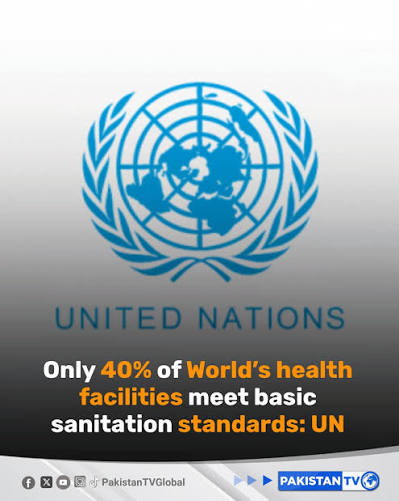
Only four in 10 healthcare facilities worldwide meet basic sanitation standards for accessible and usable toilets, the United Nations said Tuesday, while 11 per cent have no sanitation services at all.
In a report, the UN’s health and children’s agencies said only 40 per cent of healthcare facilities last year had toilets that adequately met the needs of patients and staff, including people with limited mobility.
The report from the World Health Organisation and UNICEF for the first time provided global estimates of basic sanitation services in healthcare settings.
Its 2025 estimate found significant gaps in access to basic sanitation standards, which it said required usable facilities including at least one toilet dedicated to staff, at least one sex-separated toilet with menstrual hygiene facilities and at least one toilet accessible for people with limited mobility.
Relying on data from 70 countries, the report showed that sanitation levels in healthcare facilities varied widely between regions, with only 23 percent of facilities in sub-Saharan Africa providing basic services, compared to 55 percent in central and southern Asia.
It found there was no sanitation service at more than one in 10 health facilities globally, serving 936 million people.
In addition to sanitation, the report estimated access in healthcare facilities to water, hygiene, environmental cleaning and waste management.
It found that an estimated 85 percent of facilities last year had basic water services, 72 percent had basic hygiene services and 71 percent basic healthcare waste management services.
Only 59 percent of facilities, meanwhile, met basic so-called environmental cleaning standards, which require both cleaning protocols and trained cleaning staff and is core to infection prevention and control.
A full 18 percent of facilities, serving around 1.5 billion people, met neither of the environmental cleaning requirements, said the report, which for this category relied on data from 54 countries.
The situation is particularly dire in poorer countries.
The environmental cleaning standard was met by just 24 percent of facilities in the world’s least-developed nations.
In a related development, the Ebola outbreak in the Democratic Republic of Congo is moving faster than any previous epidemic of the disease and risks spreading to more countries, the Director-General of the World Health Organisation, Tedros Ghebreyesus, warned on Tuesday.
“We must be frank: the epidemic is far from being under control,” Ghebreyesus told an emergency meeting on the outbreak.
“It had a big head start, and we are still playing catch-up.”
His comment came after the DRC on Monday said the outbreak had killed more than 2,300 people out of nearly 5,000 cases, making it the deadliest in the country’s history.
Declared on May 15, the DRC’s 17th Ebola outbreak is thought to have already been spreading for several weeks.
It has hit regions in the north and east where the presence of the state is weak, health infrastructure is largely lacking and myriad armed groups have roamed for decades.
Tuesday marked the second meeting of the WHO emergency committee since it declared on May 17 the outbreak a so-called Public Health Emergency of International Concern — its second-highest alert level.
It remained unclear when the committee would release its recommendations.
Currently, the United Nations health agency assesses the public health risk level at “very high” at the national level in the DRC, “high” for Uganda and other bordering nations, and “low” for the rest of Africa and the world.
Cases have so far been reported in six DRC provinces, including near the border with South Sudan, as well as in neighbouring Uganda.
“The risk of further national and international spread remains high,” Ghebreyesus warned.
“It is moving faster than any previous Ebola outbreak,” he said, according to a transcript of his remarks.
A 2018-2020 outbreak in the DRC, previously considered the country’s deadliest, killed 2,299 people out of 3,381 confirmed cases, according to WHO figures based on Congolese data.
The deadliest Ebola outbreak ever hit West Africa in 2013-2016, killing more than 11,300 people, mainly in Liberia, Sierra Leone and Guinea.
For a better society
_______________________________
Follow us across our platforms:
Instagram – https://www.instagram.com/championnewsonline/
Facebook – https://web.facebook.com/championnewsonline
LinkedIn – https://www.linkedin.com/company/champion-newspapers-limited/
https://x.com/championnewsng/
You can also like and comment on our YouTube videos.
https://youtu.be/QIBfD1tT80w?si=R4Qf3so2LxYu3GC2